Wynn’s Oil System Cleaner (sold in some markets as “Motor Cleaner”, 325 ml) is a mild, “drive-in” flush. You add it to the old oil before a change, let the engine idle 10-15 minutes, then drain and swap the filter. It’s no solvent bomb. The cleaning comes mostly from a detergent (a surfactant) plus plain dilution.
Last updated: 3 July 2026.
What is Wynn’s Oil System Cleaner?
It’s an oil-soluble additive for the oil circuit. You pour it into the old oil just before a change. Over the next few minutes it lifts sludge and varnish off the sump and the oil galleries and holds that muck in suspension, so it drains out with the old oil instead of settling back onto the parts. One 325 ml bottle handles up to about 6 litres of oil. Wynn’s clears it for petrol, LPG and diesel engines (turbo included), Low SAPS oils, and engines with a wet timing belt.
One naming trap: Wynn’s sells two products with almost the same name. There’s the mild Oil System Cleaner / Motor Cleaner, which is this one, and a stronger, concentrated “Motor Cleaner - Engine Flush”. Different products. This article is about the mild 325 ml version (European safety data sheet W47244).
Wynn’s - the brand in brief
Wynn’s is an American brand. Chestien Wynn started it in 1939 as the Wynn Oil Company in California. Since 2005 it’s been owned by the US group Illinois Tool Works (ITW), which bought it from Parker Hannifin. The European product comes out of Wynn’s Belgium N.V. in Sint-Niklaas, which has been running since 1958.
What is actually in Wynn’s Oil System Cleaner?
The table below is lifted straight from Section 3 of the safety data sheet for the European 325 ml version. Not marketing copy - the manufacturer’s own declaration in the hazard document.
| Ingredient (SDS Section 3) | CAS No. | Concentration | Role in the cleaner |
|---|---|---|---|
| C8-C26 branched and linear hydrocarbons (petroleum distillates) | 848301-67-7 | ≥ 50% | carrier base - dilutes the old oil and dissolves part of the deposits |
| C10 aromatic hydrocarbons (< 1% naphthalene) | 1189173-42-9 | 10-15% | aromatic fraction that helps dissolve gums and varnish |
| C16-18 and C18-unsaturated fatty-acid amides, N,N-bis(hydroxyethyl) | 68603-38-3 | 2.5-5% | surfactant - detergent and dispersant; the real “cleaning” agent |
| 2,2′-iminodiethanol (diethanolamine, DEA) | 111-42-2 | < 1% | trace amine - pH control / corrosion inhibitor; residual from making the amide |
So the base is a mild hydrocarbon distillate, not a hard-hitting pure aromatic solvent, and the thing doing the actual cleaning is a fatty-acid amide (a nonionic surfactant from the alkanolamide family). That’s why it counts as medium-strength, well short of the harshest flushes.
One more thing before you buy: the recipe changes by region. The US “Premium Oil System Cleaner” is a different mix, built on mineral spirits, the glycol ether 2-butoxyethanol and a trace zinc anti-wear additive. A US bottle and a European one aren’t the same chemistry, so don’t treat them as interchangeable.
How does it work - solvent or detergent?
Two things happen at once, but the heavy lifting is detergency, not brute-force dissolving.
The surfactant, that fatty-acid amide, is an amphiphilic molecule: a polar head on one end, a fatty tail on the other. It wraps around soot and sludge particles, pulls them off the metal and keeps them in suspension so they can’t settle back down. It’s the same trick the detergent and dispersant additives already in your motor oil pull every day - textbook tribology. The hydrocarbon base and its aromatic fraction do the rest: they dissolve gums and varnish and thin the thick, aged oil, so the whole lot drains out easily at the change.
Remember it’s diluted into 5-6 litres of old oil and only works for about a quarter of an hour, so its strength comes from detergency and dilution, not a violent solvent hit. That’s the line between a “drive-in” cleaner and the fast, solvent-heavy 5-minute flushes. For the difference between genuinely washing deposits out and just coating them, see our analysis of whether an engine flush really cleans or just coats.
Drive-in vs 5-minute vs machine flush
Wynn’s Oil System Cleaner is in the mild, add-to-oil camp. Here’s how it stacks up against the other approaches.
| Flush type | How it is used | Time | Chemistry / strength |
|---|---|---|---|
| “Drive-in” / long-interval (Wynn’s Oil System Cleaner) | add to old oil, warm up, idle; then drain and change the filter | ~10-15 min | gentler; detergent/dispersant + dilution |
| Fast “5-minute” | add to old oil, idle only, drain | ~5 min | stronger, more solvent-forward - often an aromatic base |
| Workshop (flushing machine) | external circulation of cleaner through the oil system with filtration | controlled | controlled flow, for heavier deposits |
At the other end from the mild Wynn’s are the strong, aromatic-based flushes. TEC 2000 Engine Flush is one of them, but it isn’t a bare solvent. Its safety data sheet lists an anti-wear package - a sulfurized olefin plus ZDDP, the same zinc-phosphorus additive you’ll recognise from a Liqui Moly sheet - that keeps a protective film on the sliding surfaces while the solvent strips the deposits. Chlorine-free, kerosene-free, on an aromatic base. You’ll find the full composition of every product in our engine-flush safety data sheets (SDS) database. Neither end is simply better. A stronger flush cleans faster; on a neglected, high-mileage engine a gentler one is often the safer bet. More on that just below.
How to use Wynn’s Oil System Cleaner
- Warm the engine to operating temperature, then shut it off.
- Pour the full 325 ml bottle into the old oil (good for up to about 6 l).
- Start it up and let it idle for 10-15 minutes. Some sellers say you can drive it gently for about 15 km instead, but keep it off-load.
- While it’s still warm, drain the oil and change the filter, then refill with fresh oil.
For a gearbox or differential, Wynn’s suggests about 5% and 1-8 hours of running without load before the change. Don’t run it longer than that. Leaving the engine churning on a slurry of loosened deposits doesn’t clean better; it only raises the risk, as the next section explains.
Is Wynn’s Oil System Cleaner safe? When NOT to use it
For a normally serviced engine, yes - it’s one of the gentler products on the shelf. But no flush is safe for every engine, and mild isn’t the same as harmless. The limits are worth knowing.
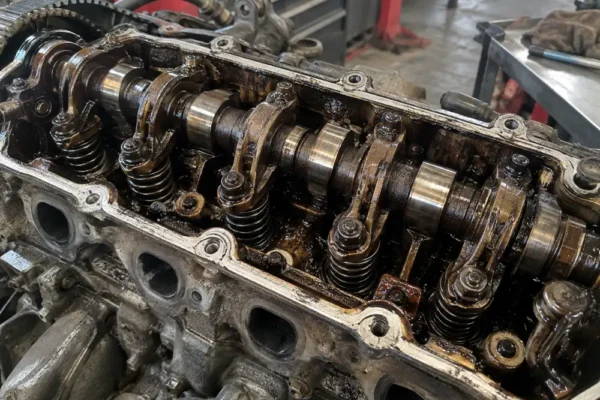
The danger zone is high-mileage, neglected engines. Sludge you loosen can load the oil pump pickup screen, and even a few seconds of oil starvation does more harm than the sludge ever did. The screen is the bottleneck because it is the only part of the circuit without a bypass valve. Go careful with any flush on an engine like that. If it already shows heavy-sludge symptoms, a workshop stripping and cleaning it by hand beats knocking a slug of sludge loose with chemistry. Low oil pressure, or clear signs of heavy sludging? Don’t flush blind. And keep it at idle - don’t rev it during the treatment, because driving under load pushes that freshly stirred-up slurry through the bearings and galleries at full pressure.
For an outside data point: when the Polish magazine “Auto” tested engine flushes, the oil drained after treatment carried over 30% more contaminants. That’s proof a flush really does pull something out, and also that not every flush on the market is safe for the engine. Elsewhere we go through how to choose the right flush for your car and how oil coking and sludge actually form.
One hard rule, no exceptions: a flush removes and suspends deposits. It doesn’t reverse mechanical wear, and there’s no such thing as self-cleaning oil. Worn bearings or worn rings? No flush anywhere will fix that.
Reviews and price (2026)
In Poland the 325 ml bottle usually goes for about 25-40 PLN (2026). Opinions are mixed and come mostly off forums, running from “did no harm, the oil came out darker” to warnings that on a really filthy engine any product can shift a bigger deposit plug loose. That’s the whole category, not a Wynn’s fault in particular. We couldn’t find an independent lab test on this exact product, nothing from a national motoring institute like Poland’s PIMOT, so we won’t claim results it doesn’t have.
FAQ - Wynn’s Oil System Cleaner
Is Wynn’s Oil System Cleaner a solvent or a detergent?
Both, but the detergent does most of the work. The base is a mild hydrocarbon distillate with a small aromatic fraction that dissolves and thins the oil, while the real cleaning agent is a surfactant (a fatty-acid amide) that lifts deposits and keeps them in suspension until they drain out with the oil.
How long do you run the engine on Wynn’s Oil System Cleaner?
About 10-15 minutes at idle once the engine is warm, then drain the oil and change the filter straight away. Don’t run it past the recommended time.
Will Wynn’s Oil System Cleaner damage my engine?
It’s one of the gentler products, but no flush is safe for every engine. The real risk is on high-mileage, neglected engines, where loosened sludge can block the oil-pump pickup. If you’ve got low oil pressure or heavy sludging, talk to a mechanic instead of flushing blind.
What is the difference between Oil System Cleaner and Wynn’s Engine Flush?
Oil System Cleaner (Motor Cleaner) is the milder, detergent-and-dispersant one. “Motor Cleaner - Engine Flush” is stronger and concentrated, with a shorter, sharper action. Two different products, similar names.
Does the formula differ between the US and Europe?
Yes. The European 325 ml version runs on a mild hydrocarbon distillate plus a fatty-acid amide surfactant, while the US “Premium Oil System Cleaner” uses mineral spirits, a glycol ether and a trace zinc anti-wear additive. Don’t assume they’re identical.
Is it suitable for a diesel with a turbo/DPF?
Wynn’s clears petrol, LPG and diesel engines (turbo included) and Low SAPS oils. Stick to the dosage and drain the oil right after the treatment.
Sources
- Safety data sheet (SDS) for Wynn’s Motor Cleaner / Oil System Cleaner 325 ml, W47244 - wynns.eu.
- Wynn’s - brand history and owner (Illinois Tool Works; Wynn’s Belgium, Sint-Niklaas): wynns.eu/about-wynns.
- Surfactant/dispersant mechanism in lubricants - peer-reviewed tribology (PMC/MDPI).
- Engine-flush test by the Polish magazine “Auto” (over 30% more contaminants in the drained oil).
- Diethanolamine (DEA) - hazard profile: IARC / ATSDR.