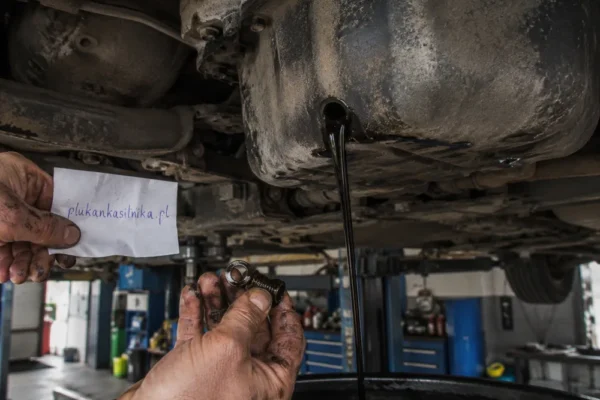
An autogas car actually has two separate injector systems: the LPG (gas) injectors and the original petrol injectors. They clog for different reasons and get cleaned in completely different ways. The one thing worth burning into memory before you read on: nothing you pour into the fuel tank ever reaches the gas injectors, because gas never flows through the petrol tank.
Why does an LPG car have two sets of injectors at all?
Because a sequential gas system starts and warms up on petrol, then switches to gas once the reducer reaches operating temperature. On a cold morning the engine fires on petrol, runs on it for the first minute or two, and only crosses over to gas when everything is warm. Per autocentrum.pl and LPG service descriptions, that is how nearly every modern sequential installation behaves.
So the petrol injectors work hard for a short window, then sit idle for the whole drive. The gas injectors do the rest. Two systems, two failure modes. Treat them as one and you will chase the wrong fault.
How do I know it is the gas injectors and not something else?
The symptoms show up on gas, not on petrol. Gas injectors foul internally with oily, paraffin-like deposits carried in by the gas itself, and cheap or dirty gas makes it worse. Per motofocus.pl and supercar24.pl, the usual signs are hesitation and surging, an idle that will not settle, the odd misfire, a clear drop in power, higher gas consumption, some smoke, and a switch-over from petrol to gas you can actually feel as a stumble.
The tell is simple. If the car drives fine on petrol and misbehaves the moment it goes to gas, the gas side is the suspect. If it runs badly on petrol after weeks of running on gas, look at the petrol injectors instead.
| Symptom | Which system | Likely cause | Fix |
|---|---|---|---|
| Stumble or surge only on gas | Gas injectors | Internal oily/paraffin deposits from the gas | Chemical or ultrasonic cleaning |
| Idle wanders, misfires on gas | Gas injectors | Fouling plus tired o-rings or plungers | Clean, then recondition with a repair kit |
| Rough running when you switch back to petrol | Petrol injectors | Idleness plus ageing petrol forming varnish on the tips | PEA additive in the petrol tank |
| Higher gas use, mild power loss | Gas injectors | Partial clogging, dirty filters | Clean injectors, replace filters |
| Valve rattle or lost compression over time | Valves, not injectors | Dry LPG burn causing seat recession | Valve saver additive, not injector cleaning |
How long should gas injectors last, and when do I check them?
A decent set of gas injectors runs a long time. Per motofocus.pl and installer forums, good-quality rails cover 100-200k km and beyond if you change the filters on schedule and feed the car reasonable gas. Budget injectors sometimes give up around 50k km. The sensible first look is around 20k km, just to see how they are ageing.
Filters matter more than most drivers think. The vapour-phase and liquid-phase filters want changing every 10-15k km per motofocus.pl. Skip them and the muck that should stop at the filter ends up inside the injector instead.
How often do gas injectors actually need cleaning?
Here is where honesty matters, because there is no manufacturer service norm for this. Per the LPG workshop gaz-time.pl, gen-4 systems tend to want a clean every 30-40k km and gen-5 systems every 45-50k km. Read that as a workshop rule of thumb, not a figure stamped on any official schedule. Your driving, your gas quality, and your filter discipline move those numbers around.
If you look after the filters and buy gas from stations you trust, you sit at the long end of those ranges. Neglect them and you meet the short end early.
How are gas injectors cleaned?
Two real methods, and they are not equal. The first is chemical cleaning, where a cleaning product is passed through the injector while it works, dissolving lighter deposits without taking anything apart. The second is ultrasonic: the injectors come off the car, go into an ultrasonic bath, and get tested on a bench afterward. Per lpg-forum.pl and dobrymechanik.pl, ultrasonic is the one to reach for when the fouling is heavy, because the bath gets into passages a flush cannot.
The mechanics of pulling and bench-testing gas injectors mirror what a diesel shop does, and the same ultrasonic cleaning principle applies once the parts are off the engine. If you want the broader picture on injector cleaning across fuel types, the method carries over more than you would expect.
Cleaning is not the same as reconditioning. Reconditioning means fitting new o-rings, plungers and springs from a repair kit, because rubber and moving parts wear out even when the injector is clean. Some rails, Valtek among them, allow a stroke adjustment during recon per the same sources. Clean removes deposits. Recon replaces worn parts. You often want both.
| Element | Method | Interval or cost (source) | Effectiveness |
|---|---|---|---|
| Gas injectors, light fouling | Chemical cleaning through the working injector | Gen-4 ~30-40k km, gen-5 ~45-50k km, per LPG workshops (not a maker norm) | Good for lighter deposits |
| Gas injectors, heavy fouling | Ultrasonic bath plus bench test | When symptoms persist after a flush, per lpg-forum.pl | Best for stubborn deposits |
| Gas injectors, worn parts | Reconditioning with a repair kit | New o-rings, plungers, springs, per dobrymechanik.pl | Restores mechanical function, not a cleaning |
| Gas filters | Replacement | Every 10-15k km, per motofocus.pl | Prevents fouling in the first place |
| Petrol injectors | PEA additive in the tank | Dose per the manufacturer’s label, prices vary | Dissolves varnish and carbon on the tips |
What about the petrol injectors that barely get used?
They have their own problem, and LPG workshop forums discuss it a lot. The petrol injectors spend most of their life idle, and the petrol sitting in the tank ages. Idle injectors and ageing petrol encourage varnish and gum on the injector tips. Fuel ageing itself is well documented by PIMOT and INiG research, so the mechanism is real, though the exact rate depends on how much petrol you carry and how long it sits.
You only notice when the car goes back to petrol, because that is the only time those injectors do any work. Long-idle petrol injectors often run rough for the first few minutes until they clear, or they do not clear at all.
This is exactly where a PEA additive earns its place. Polyetheramine dissolves tough deposits, varnish and carbon, right through the petrol fuel system: injectors, intake valves, combustion chamber. Per motofocus.pl and fueltechexperts.com, PEA stays thermally stable and reaches the hot zones where deposits form. It works on deposits, not on mechanical wear. And it does nothing whatsoever for the gas injectors, because it never touches them.
A practical habit for an autogas driver: run a tank of petrol with a petrol injector-cleaning additive (TEC 2000) now and then, keeping the petrol side exercised and clean rather than letting it stew. Dose it per the manufacturer’s label. There is no universal ml-per-km figure worth quoting, so ignore anyone who gives you one. Keeping both fuel systems in shape is a big part of looking after your engine over the long haul.
Does any fuel or gas additive clean the gas injectors?
No, and this is the myth that costs people money. Per PIMOT, no fuel and no gas “washes” injectors clean on its own. A tank additive cannot clean the gas injectors for the plain physical reason stated at the top: gas does not flow through the petrol tank, so nothing you add to petrol ever reaches the gas side.
Keep two ideas apart. Deposits are one thing, and an additive genuinely helps with those, on the petrol side. Mechanical wear is another, and no additive fixes a worn plunger or a tired spring. That needs reconditioning or replacement. Pouring cleaner in the tank and hoping it sorts a mechanically worn gas injector is throwing money away.
One more thing while you are in there: the valves
LPG burns dry, without the slight lubricating and cooling effect petrol gives the valve seats. Per motofocus.pl and gazeo.pl, that dry burn raises the risk of valve seat recession over time, and a valve saver such as Flashlube meters a tiny amount of protectant to guard the seats. Worth knowing, but keep it filed correctly: a valve saver protects valves. It is not injector cleaning, and it does nothing for a clogged injector of either kind.
| Myth | Fact |
|---|---|
| A tank additive cleans the gas injectors | Gas never flows through the petrol tank, so it cannot (per PIMOT) |
| Gas or fuel “washes” injectors clean by itself | No fuel or gas washes injectors, per PIMOT |
| A valve saver cleans injectors | It protects valve seats from recession, nothing more |
| PEA cleans everything, gas included | PEA works on petrol-side deposits only, not the gas injectors, not wear |
| If it runs badly on gas, add cleaner and drive | Deposits may respond, but wear needs recon or replacement |
Run the car on decent gas, change the filters every 10-15k km, look at the gas injectors around 20k km, and keep the petrol side from stewing with a PEA additive dosed to the label. Do that and both sets of injectors stay out of trouble far longer than the car that gets ignored until it stumbles.
Frequently asked questions
Can I clean my LPG injectors by adding something to the fuel tank?
No. Gas never flows through the petrol tank, so nothing you add to the tank reaches the gas injectors. A tank additive works only on the petrol injectors and the petrol fuel system. Gas injectors are cleaned chemically through the working injector or ultrasonically off the car, per LPG workshops.
How do I tell whether the problem is the gas injectors or the petrol injectors?
Watch when the fault appears. Hesitation, surging, unstable idle and power loss on gas point to the gas injectors, per motofocus.pl and supercar24.pl. Rough running when the car switches back to petrol points to the petrol injectors, which sit idle most of the time and can gum up.
How often should LPG injectors be cleaned?
There is no manufacturer norm. Per the LPG workshop gaz-time.pl, gen-4 systems tend to want cleaning every 30-40k km and gen-5 systems every 45-50k km. Treat these as workshop rules of thumb. Your gas quality and filter changes move the interval either way.
What is the difference between chemical and ultrasonic cleaning?
Chemical cleaning passes a product through the injector while it works, without dismantling anything, and suits lighter deposits. Ultrasonic cleaning means removing the injectors, bathing them in an ultrasonic tank and bench-testing them. Per lpg-forum.pl, ultrasonic is better for heavy fouling.
Is PEA good for LPG injectors?
No. PEA (polyetheramine) dissolves varnish and carbon deposits in the petrol fuel system, including the petrol injectors, intake valves and combustion chamber, per motofocus.pl and fueltechexperts.com. It does not clean gas injectors and does not fix mechanical wear. Dose it per the manufacturer’s label.
How long do LPG injectors last?
Good-quality gas injectors often run 100-200k km and beyond with regular filter changes and decent gas, per motofocus.pl and installer forums. Budget injectors sometimes reach only around 50k km. A first check around 20k km is sensible.
Does an additive fix worn gas injectors?
No. Additives help with deposits, not wear. A worn plunger, spring or o-ring needs reconditioning with a repair kit or replacement. Per PIMOT, no fuel or gas washes injectors clean, so keep deposits and mechanical wear as two separate problems.