Almost every driver wonders how to reduce petrol consumption and, at the same time, save money at the pump. In the current situation, optimising fuel expenses is even more desirable. But what should you do when your car burns too much fuel? What could be the reason for this state of affairs? You will learn everything from this article. Read on.
The car burns too much fuel, and that costs money
Until recently, petrol prices were high but held steady at one level. Admittedly, you could complain about the level of fuel taxation, which meant that, despite the fluctuating cost of a barrel of crude oil, we were still paying a lot at the stations. What is happening now, however, due to the unstable situation in Europe, the aftermath of the coronavirus pandemic and rampant inflation, exceeds even the boldest expectations. Increasingly often, Polish drivers are taken aback by sudden surges in fuel prices, which means that owning a car is slowly becoming something reserved for the highest earners.
Excessive fuel consumption - a warning sign
High fuel prices combined with excessive consumption are a twofold problem that deserves attention. An increase in fuel consumption is very often a warning signal and a sign of a fault within your vehicle. In such a situation, the best solution is to visit a mechanic, who will carry out a computer diagnosis and verify the condition of the car.
High petrol consumption - how to calculate your car’s fuel demand?
Before you set about assessing exactly how much your vehicle consumes, bear in mind that very often the information provided by the manufacturer is significantly understated. In extreme cases, the differences can be as much as 30%. Your point of reference should be the data from other users of the same vehicle model. This way, you will be able to compare the result with your own calculations.
When it comes to estimating real fuel consumption, the digital fuel-consumption display built into almost every car will certainly help you with this. It monitors injection times and, on this basis, provides an approximate petrol consumption. If you want to be sure about your consumption, follow the steps below:
- Fill up the tank completely and write down the current mileage. For easier calculations, let us assume the car has 200,000 km on the clock.
- Use up almost all of the fuel, go back to the station and fill up completely again. Don’t forget to write down the vehicle’s mileage and the amount of fuel filled up. Let us assume that at the next refuelling the car has 200,500 km, and you poured 40 litres into the tank.
- Divide the amount of fuel used by the distance covered and multiply by 100
40 ÷ 500 × 100 = 8
Your average consumption over a distance of 500 km is therefore 8 litres of fuel. In the event that this value indicates excessive consumption, read on through the rest of this article. In it, we will discuss the causes of, and ways to normalise, the petrol consumption of your car.
High petrol consumption - causes
Increased fuel consumption - vehicle faults
Technical faults can hide many things worth mentioning. After all, effectively eliminating the problem of high fuel consumption requires, above all, a correct diagnosis.
A faulty thermostat
In winter, when you get into the car, the engine needs up to a dozen or so minutes to warm up fully and function properly. As standard, the unit is cooled by the radiator, and in order to speed up warming up, the thermostat closes the flow to this component, which causes the coolant to circulate in what is known as the short circuit. This procedure allows for quickly obtaining warm air from the vents and warming up the engine. Once the coolant reaches the correct temperature, the flow to the radiator is opened. This, in turn, prevents the unit from overheating.
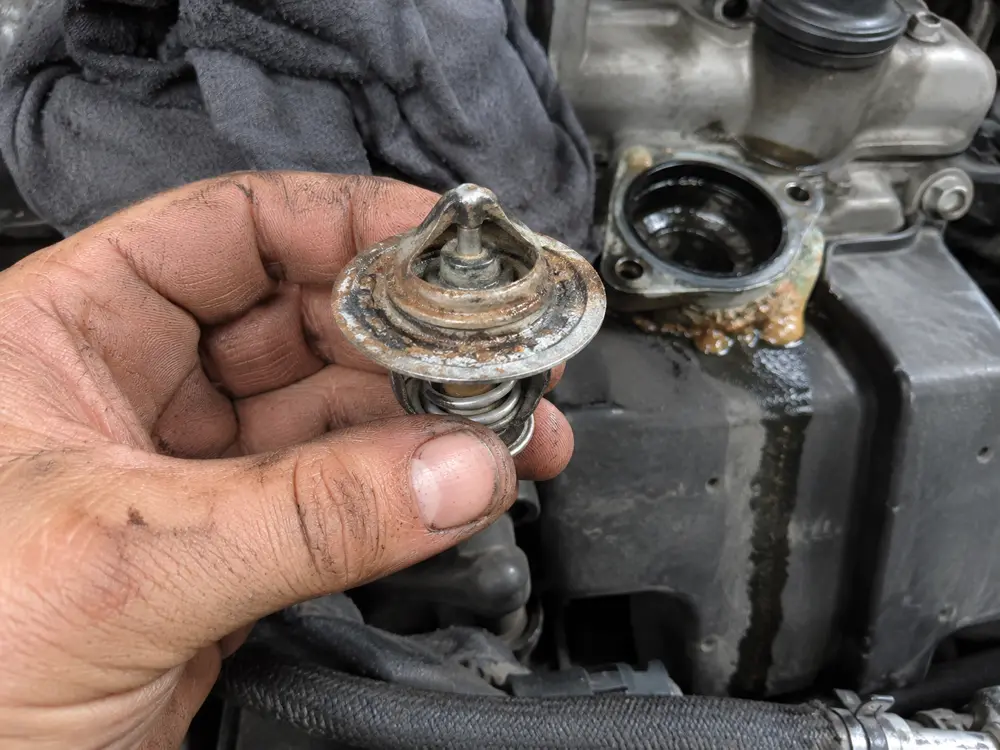
If the thermostat is damaged, we are dealing with increased fuel demand. In practice, this works as follows: the engine being warmed up is simultaneously cooled by the radiator, which lengthens the warm-up time and increases fuel consumption. There are cases where a faulty thermostat was responsible for an increase in petrol demand of as much as 30%.
Faulty fuel injectors
Fuel injectors are components that are very sensitive to the quality of the petrol used. Thanks to them, fuel is metered in the right proportions and injected directly into the cylinders under high pressure. To illustrate how important the work of the injectors is, it is worth using specific figures. Indeed, during gentle driving, this component performs as many as 600 injections per minute. In real conditions, on a route around 450 km long, more than 160,000 fuel injections take place. For this reason, using reputable stations is so important in the context of the proper functioning of the engine and all its subassemblies.
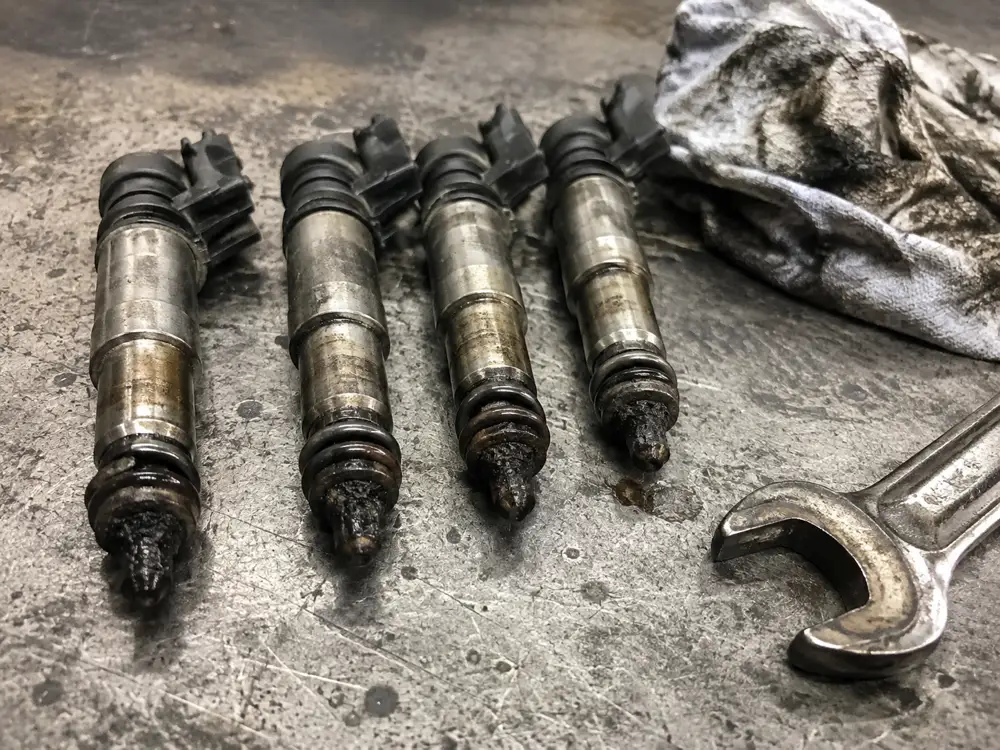
If the injectors are damaged, in addition to increased petrol demand you will certainly encounter rough engine running, a loss of power, a noisy engine and more difficult warming up. On the market you will find many products that function as fuel additives and protect the injectors against failures. They usually cost no more than 100 zł, yet they can save you even several thousand on a mechanic’s services.
A faulty Lambda Sensor
This small sensor installed in the exhaust system measures the composition of the exhaust gases and allows a real-time assessment of the current fuel composition. If you are dealing with the best-quality petrol, per 1 kg of fuel the engine should draw no more than 14.7 kg of air. However, in a situation where your petrol has a “too rich” composition, the computer passes the information directly to the injectors to reduce the amount of mixture supplied. In the case of a too lean composition, the situation is reversed.
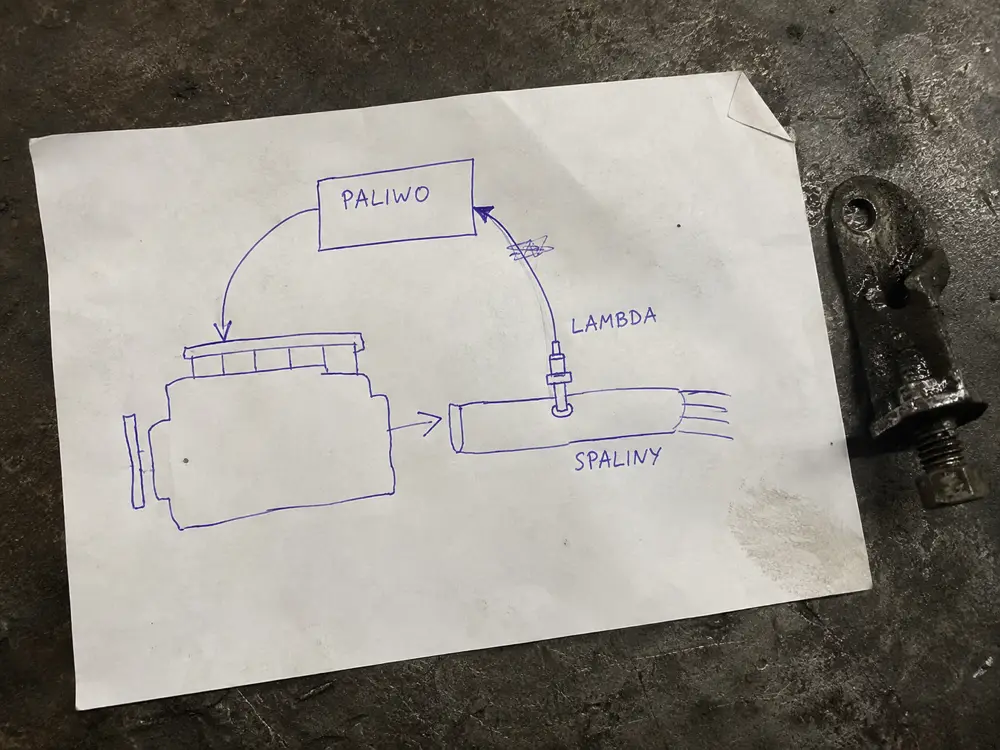
If the lambda sensor does not function correctly, this results in incorrect information being passed by the computer to the engine. Very often this leads to operation in limp mode and an increased demand for fuel.
Faulty sensors - MAF, intake temperature and the MAP Sensor
The set of sensors your car is equipped with measures the most important elements connected with the combustion of the fuel mixture. The mass airflow meter is responsible for the amount of air entering the intake system, and on the basis of this measurement the composition of the mixture and the amount of fuel injection are determined. The temperature sensor is responsible for the air temperature. Importantly, the cooler the air, the more its density increases, and this signals to the computer that the amount of injection needs to be changed. The MAP Sensor monitors the pressure prevailing in the intake system. If any of these three sensors is not fully operational, fuel consumption is higher, and you have to refuel more often.
Tyre pressure that is too low
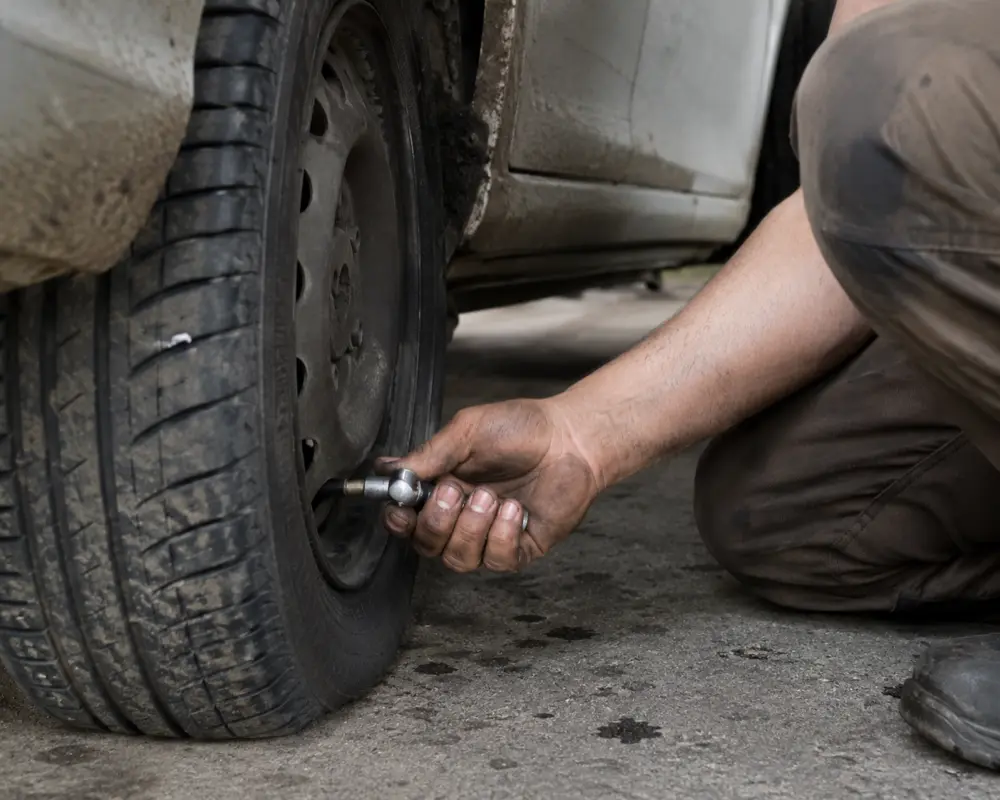
A very frequently occurring cause of increased consumption. Low pressure causes heightened frictional resistance and, as a result, greater consumption. Admittedly, these are not high values, but if you care about “recovering” even 5% of lost petrol, then sorting out the matter of tyre pressure is a good start.
Using the air conditioning
In summer, the air conditioning often turns out to be a lifesaver and a way of dealing with high temperatures. You need to know, however, that frequent and intensive use of this kind of amenity has a relatively large impact on the amount of mixture burned. So if you can air out the car and lower the temperature inside this way, choose this method instead of switching on the air conditioning every time.
Worn filters and spark plugs
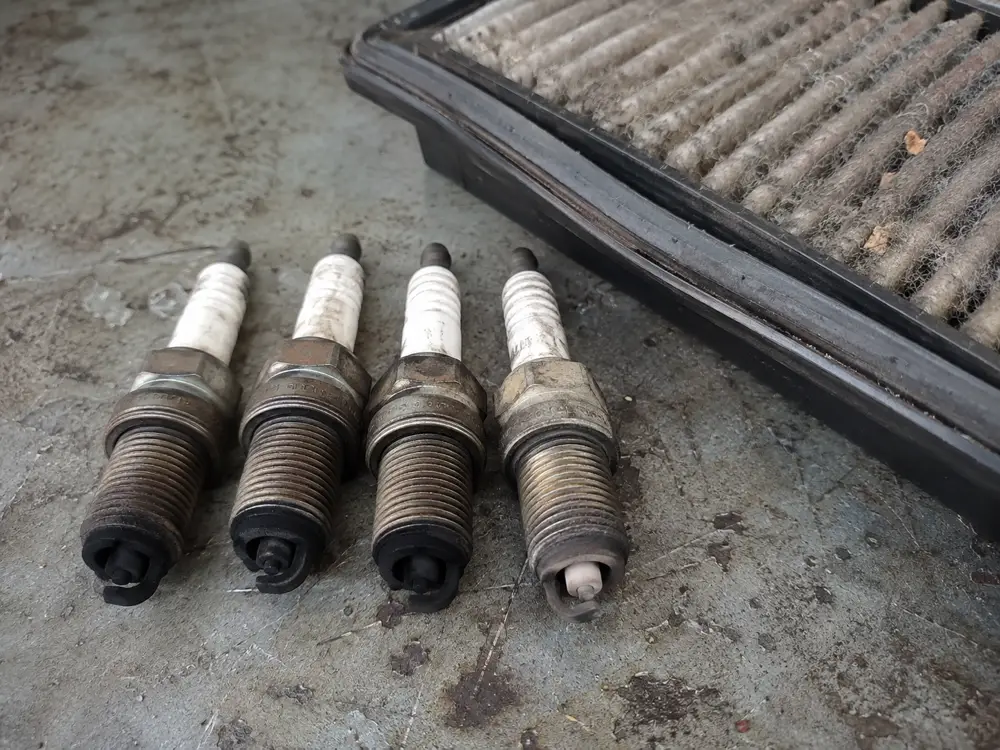
Neglecting the regular replacement of spark plugs and air filters can be a cause of problems. The good condition of these components does not directly affect fuel consumption, but it matters in the context of the proper functioning of other subassemblies and the engine itself. So if you care about avoiding breakdowns, remember to replace these components regularly.
A cause of high fuel consumption - uneconomical driving
Eco-friendly driving is treated by many drivers as a hindrance on the road and “crawling along” at a speed of 20 km/h. This is, however, a myth that means our streets are full of self-styled sheriffs. What is worth knowing is that following the principles of ecological and economical driving has a major impact on reducing fuel consumption. See how simple it is!
- Use navigation - thanks to it, you will manage to avoid sitting in traffic jams and pointlessly burning petrol when it is not necessary.
- Avoiding stressful situations - it is precisely these that are most often responsible for hard pressing of the accelerator pedal and, consequently, increased petrol demand.
- Controlled acceleration - if you decide to accelerate, do not press the accelerator pedal all the way to the floor, as this usually makes no sense at all. Also try not to warm up the car while stationary. The engine will reach the appropriate temperature while driving.
- Avoid “jerky” driving - you lose the most fuel when you accelerate and brake abruptly. Try to drive in a composed and calm manner.
Excessive fuel consumption - how to deal with it?
Now that you already know the causes of increased petrol consumption, it is a sign that we can move on to considering how to deal with this problem. First of all, it is necessary to bring the car to perfect technical condition. So if any of the faults mentioned above affects your vehicle, you should turn to a mechanic for professional help. The second issue is planning your journey and avoiding congested roads. Don’t forget either about calm driving without abrupt braking and accelerating. A mundane but effective piece of advice is to empty an overloaded boot. Don’t overdo the air conditioning and use add-ons such as seat or steering-wheel heating sensibly. It also won’t hurt to regularly use fuel additives, which will help you protect the injectors from failure. An interesting solution is engine-oil agents. Some of them create a protective barrier on the surface of the unit and fill in worn surfaces. Also bear in mind that regular inspections and an immediate reaction in the event that any fault occurs are key to normalising fuel consumption.