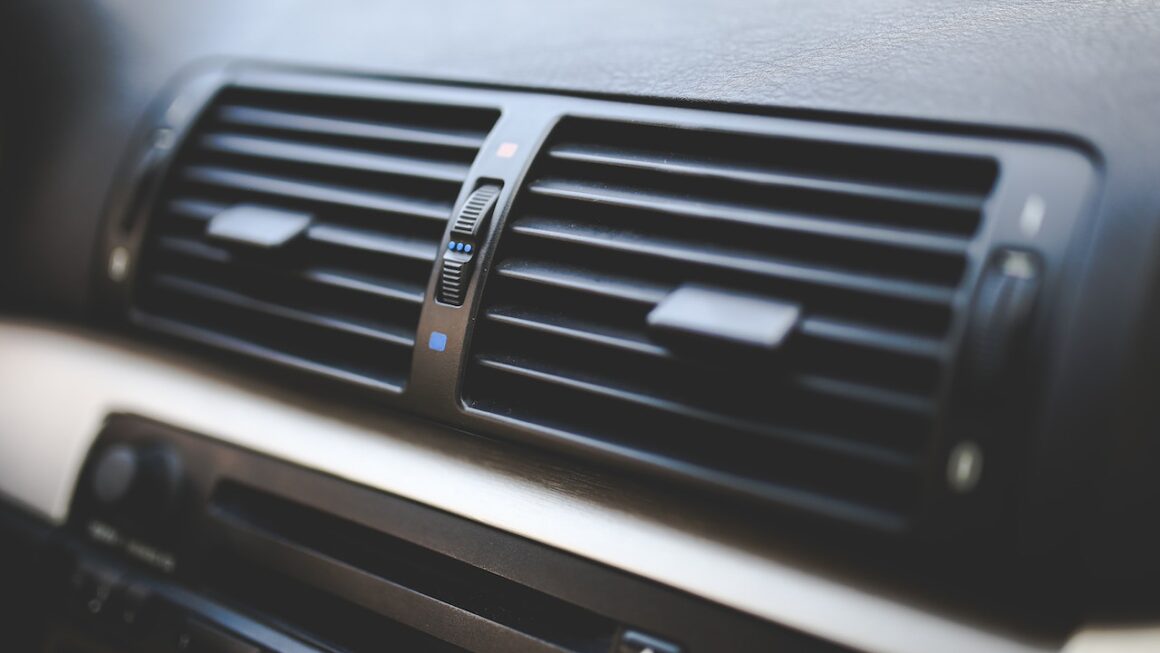
For most drivers, car air conditioning is associated with the summer months, when temperatures outside the windows exceed 20°C and more. This system significantly improves driving comfort - especially when the interior has become very hot. It is worth knowing, however, that switching on the popular “AC” makes sense not only in summer. In today’s article we will answer a few important questions concerning, among other things, whether and how to use air conditioning in winter. Enjoy the read.
Should you turn on the air conditioning in your car in winter?
When we say air conditioning in a car, the first thing that comes to mind is the pleasant coolness that spreads through the vehicle’s interior when temperatures outside are high. That is why these days it is hard to imagine a journey without the “AC” running, as it improves travel comfort and has a positive effect on the driver’s concentration. Since this system is associated with cold, it is no surprise that some people wonder whether to turn on the air conditioning in winter. The answer is simple: absolutely yes. Why? More on that in the following paragraphs.
An unused air conditioning system in winter = a greater risk of system damage
Driving with the air conditioning on in winter is not common practice not only because this system is associated with cooling the vehicle’s interior, but also because of “savings”. Why the quotation marks? They did not appear without reason - although it is true that a running air conditioning system increases fuel consumption (slightly, by an estimated 0.5 l to 1.5 l per hour of operation), in reality, when it is not used for several months (counting the autumn and winter seasons and the beginning of spring), it can very easily break down, and the repair can be really costly. So: you can dream about savings at best.
Driving without air conditioning in winter: what can get damaged?
It is worth being aware that the carrier of oil in the air conditioning system is the refrigerant. If it is not used for a long time, this will lead to the separation of the substance, resulting in irregularities in the lubrication of individual components.
What is at risk of damage? The most important element of the system, namely the compressor. This component is lubricated only when the air conditioning is switched on. Not using it accelerates wear due to the lack of oil distribution, which results in the formation of corrosion on, among other things, the compressor clutch. But that is not all - scratches as well as metal shavings, which are ruinous for the system, can also appear in the unit.
Car air conditioning in winter is also important for safety reasons
Using car air conditioning in winter also matters for driving comfort and safety during the journey. As for the frosty winter air, you should bear in mind that it is highly humid. This in turn means that in winter condensation builds up very quickly on the windows, and this greatly limits visibility. Its accumulation is also encouraged by rain and snow, which is often brought inside the vehicle (e.g. on shoes).
And this is where the option of heating with the air conditioning comes in, thanks to which you can get rid of the condensation and dry out the air inside the cabin in just a few moments. What is more: switching on the system also helps counteract the formation of fungi, which like to settle in the ventilation ducts. These in turn can pose a threat to the health of the driver and passengers.
How to use air conditioning in winter?
When wondering how to use the air conditioning in your car in winter, it is worth remembering one thing: regularity. It is recommended to run the system for several to a dozen or so minutes at least once a week. Although this may seem too short, in reality it is completely enough to lubricate the individual components, dry out the air, get rid of the condensation, and prevent microorganisms from forming.
A good complement to everyday practices related to using the air conditioning in a car during the winter period is reaching for a special anti-fungal agent such as TEC 2000 Airco Fresher Service Spray. Using this type of product allows you to clean the air conditioning system of bacteria and fungi, while at the same time providing a feeling of freshness in the cockpit for a long time.
Does the air conditioning compressor work in winter during severe frost?
Modern air conditioning systems are equipped with special anti-icing protection, which is why it may happen that, in the case of very low temperatures (around -5°C and lower), the air conditioning will not work. This, however, is nothing dangerous and does not indicate a fault. Once the temperature rises, the compressor should automatically start working.