Coolant should retain its original colour from the start to the end of its service life. However, there are cases in which it becomes contaminated. What causes this? How can it be prevented? Today’s post will deal precisely with dirty coolant - welcome.
What is coolant responsible for?
Coolant is a fluid that carries away the thermal energy generated during combustion in a running engine and transfers it to the radiator. It forms a special protective coating on the cooling lines, which prevents their corrosion and protects them against scale build-up, and also safeguards the engine against freezing, boiling and cavitation.
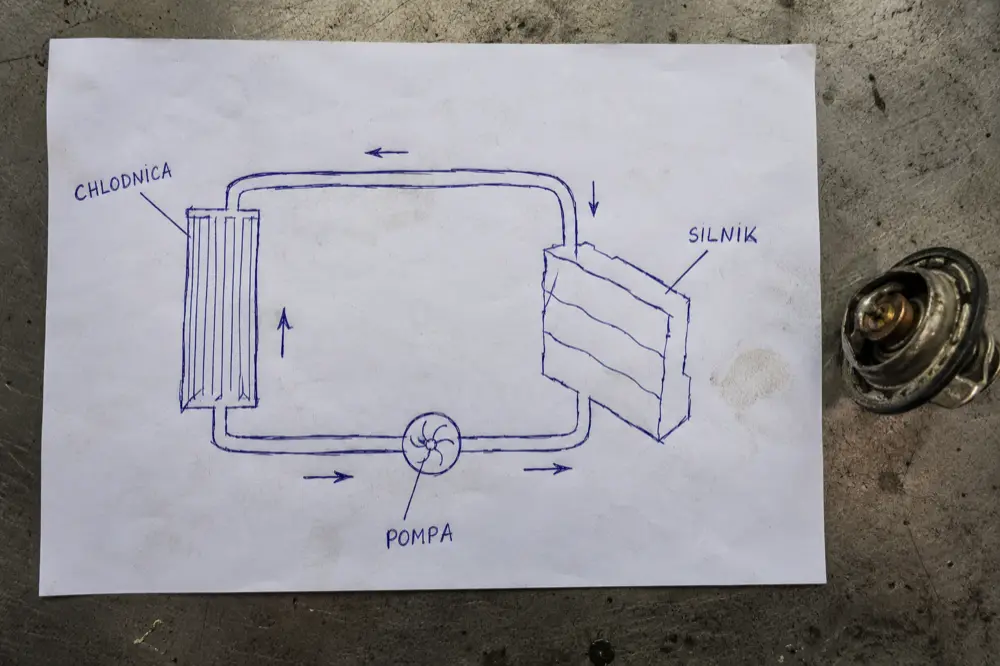
This substance must, on the one hand, be resistant to the effects of high temperature, while on the other withstand the action of frost - which is why its properties must remain unchanged regardless of the conditions prevailing outside.
There are currently three different types of coolant available on the market
- IAT (Inorganic Additive Technology) - based on inorganic salts, whose primary additive are silicates that form a fairly thick protective layer,
- OAT (Organic Acid Technology) - in these products the inorganic salts have been replaced with organic ones; they form thinner protective layers, which translates into better heat dissipation capability,
- HOAT (Hybrid Organic Acid Technology) - modern fluids produced using hybrid technology, containing silicates and organic acids; they form a very durable protective layer on surfaces and stand out for their long service life of up to 5 years.
I have already written about the coolant leak, its causes and effects, in a previous post; today, however, I would like to address another problem related to the cooling system that you may encounter in your car - coolant contamination.
What colour is coolant?
Most IAT technology fluids have a murky green or blue colour, whereas OAT fluids are most often red, pink, orange or violet. Although the colours very often indicate the type of product, we should not rely solely on this information, because this is not a rule that holds in every case. That is why you should pay particular attention to the markings when choosing a coolant suitable for a given car. Why do manufacturers opt for intense colours of their products? In the event of any leak, its location can be identified more effectively, because the fluid is more visible. This definitely makes it easier to detect the problem.
Dirty coolant - causes
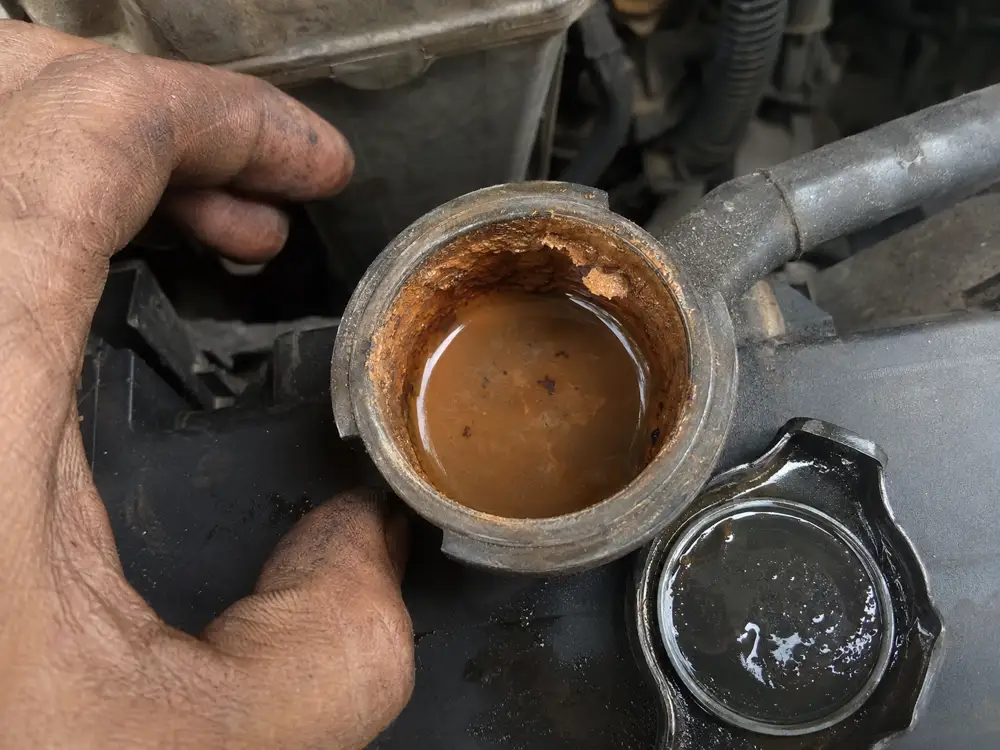
Coolant should not change colour on its own - if such a situation occurs, it probably means that some contaminants have got into it. Below I will present the cases in which dirty coolant may occur and I will try to find a solution.
Old coolant
Old coolant is the source of a great many problems. A worn-out product loses its properties and no longer fulfils its role, which is a very important one. After many kilometres driven it has an increasingly lower resistance to high temperature, which causes the engine to overheat excessively. This will entail consequences in the form of rapid engine oil degradation - the engine will lose its protection, and its metal components will begin to deteriorate. The elevated temperature may also lead to the head gasket burning out (more on this below).
Ultimately, dirty coolant can therefore cause damage to the engine and, in the worst case, immobilisation of the car. That is why its regular replacement and proper condition are crucial in ensuring optimal operating conditions for our car.
Rust in the cooling system
If water gets into the system, or was previously used as a coolant substitute, the precipitation of so-called boiler scale may occur. Deposits will begin to accumulate in the radiator, which will contribute to accelerating the rusting process of the system’s metal components, and in extreme cases will cause the water pump to seize.
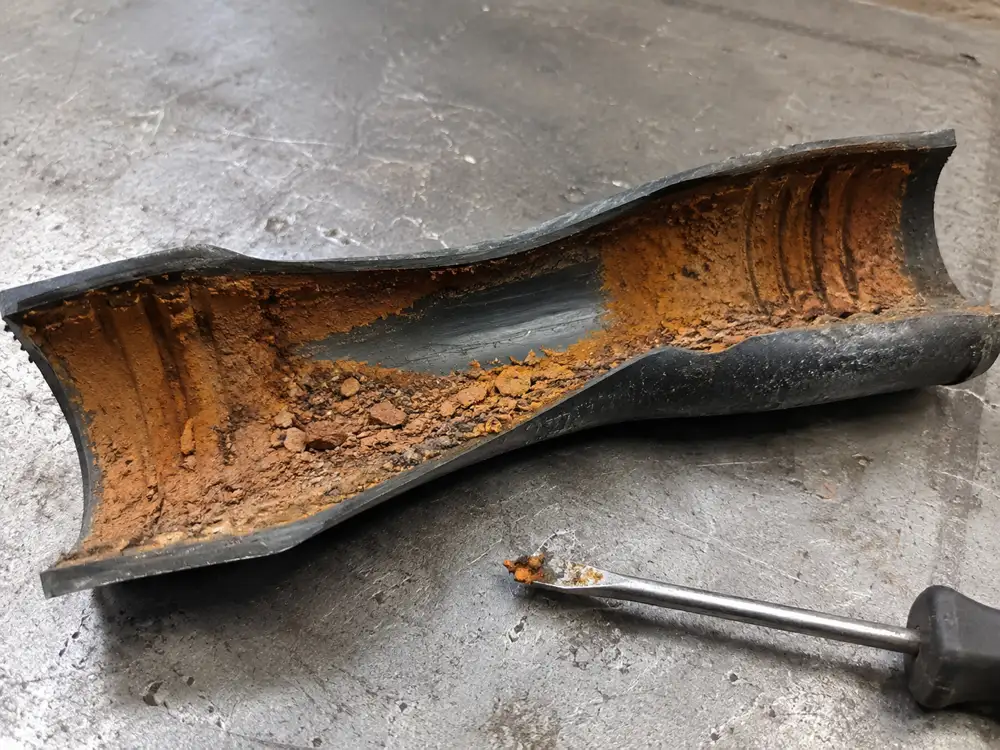
Corrosion in the cooling system can also appear due to the use of an incorrect coolant. When buying a mixture, you should be guided primarily by the car manufacturer’s recommendations, and also find out whether the fluid is all-season and will provide cooling system protection in all weather conditions. It is also important whether it was produced in accordance with the latest technology and using the highest-quality ingredients, and whether it can be mixed with other products.
Oil in the coolant - a serious problem
We will have the biggest problem when it turns out that the contamination in the coolant is caused by oil getting into it. This can lead to rapid damage to rubber components such as hoses or seals, which means we will be dealing with dangerous leaks.
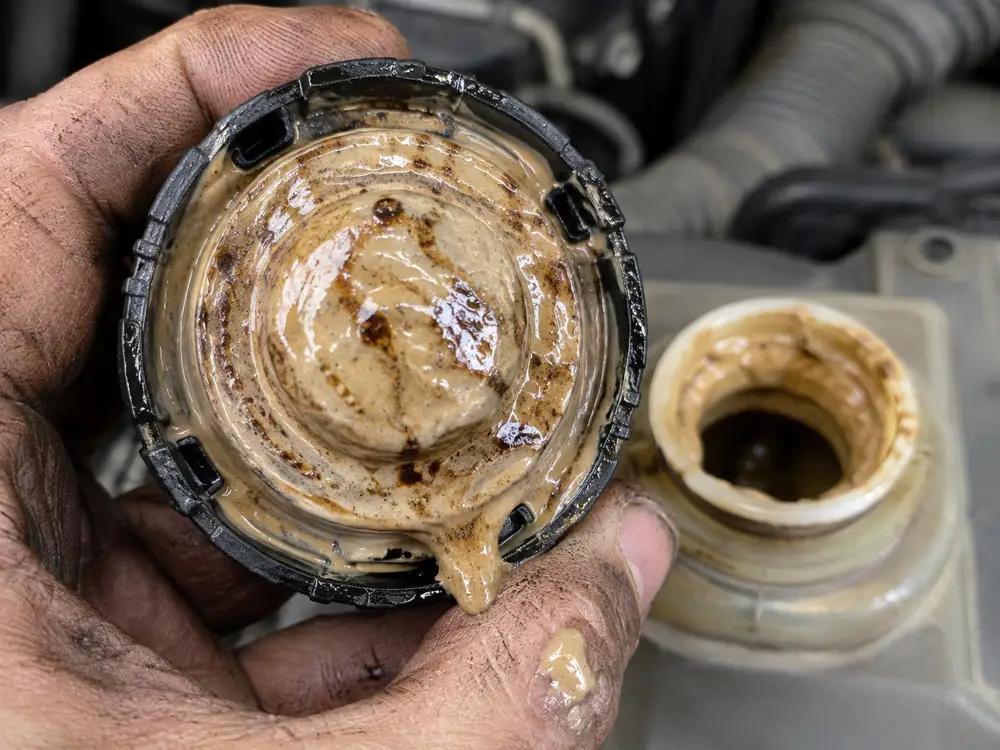
How will we know that oil is getting into the coolant? We should observe a change in its colour, smell and consistency - it will start to resemble watered-down engine oil. Characteristic stains will also appear on its surface - you may come across various terms for such a phenomenon, such as “pudding”, “mayonnaise” or “butter”. Coolant dirtied by oil will therefore slowly begin to take on the consistency of a thick sludge, which will coat the inside of the radiator, preventing it from dissipating heat.
There can be many reasons for oil getting into the coolant. The most common of these is head gasket damage. Unfortunately, this is a serious failure that will involve high repair costs. The cause of this component wearing out may be the aforementioned neglect associated with irregular replacement - dirty coolant causes the system to malfunction and the components to be exposed to greater loads.
In such a situation, the better news for any driver is damage to the radiator itself, the replacement of which is not as complicated and does not involve large expenses. Most often it is destroyed as a result of a mechanical fault, due to its location. Since it is most often mounted underneath the vehicle, it is very easy to snag it on various kinds of objects (branches, protruding stones, a high kerb).
When is the best time to wash the radiator?
The best moment to clean the radiator is during a coolant change - we should do it during every such process. It should be changed on average every 3-5 years, however the specific service life of this product is influenced by many factors - the wear and type of the engine and the class of the product used.
If, however, we observe any contamination in the coolant, we should replace it as soon as possible. All the aforementioned oil stains, dirt, rust or scale can lead to clogging of the channels in the radiator and the heater.
Spring is a very good period for changing the coolant and flushing the radiator, because over the winter a lot of salt gets into the system, which, combined with high humidity, has an adverse effect on all systems in the car. During proper cleaning with effective products, we are able to remove it from the radiator components.
Effective products for washing the radiator
Before changing the coolant, it is best to clean the entire system - we then have the certainty that no remnants of the old product, contaminants or rust will remain in it.
The whole process consists of starting the engine and warming it up to the optimal temperature, adding a cleaning product to the system and leaving it running at idle for about 20 minutes. Personally, I most often use the product TEC 2000 Radiator Flush, because it removes all kinds of contamination superbly and provides excellent protection of all the cooling system’s components.
I hope you now know how dirty coolant adversely affects the operation of your car. Remember to replace it regularly and to check its condition from time to time. This will help you avoid potential problems and costly visits to the mechanic.