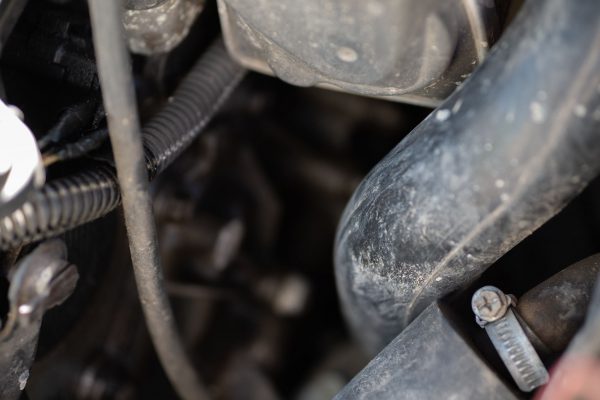
You can’t mix a safe, effective engine flush in your garage. Kerosene, acetone, paint thinner - they all thin the oil, go after the seals, and do nothing to hold the loosened muck in suspension. So the sludge you knock off the walls just goes looking for the worst place to land. A ready-made flush, matched to your oil system, does the same job for less money and a fraction of the risk.
Can you make an engine flush yourself at home?
Not in any way that makes sense. Sure, anyone can mix a liquid that dissolves something inside an engine. Pour kerosene into a bit of solvent and you’re done. But dissolving was never the whole job. A flush has to keep the dirt in suspension so it leaves with the oil, guard the moving parts while that oil is running thin, and do both at a set concentration for a set time. Three cans off the workshop shelf won’t give you that.
I’ve watched this play out for years. A bloke wants to save a few quid on a proper flush, tips in some homemade brew, and a fortnight later he’s paying for a new oil pump or a set of seals that have started weeping. The saving turns into a bill several times the size.
Why can a homemade flush (kerosene, acetone) damage the engine?
Because each of those ingredients does something you really don’t want happening inside an oil system. Let me take them one at a time.
Kerosene and diesel thin the oil and steal your lubrication
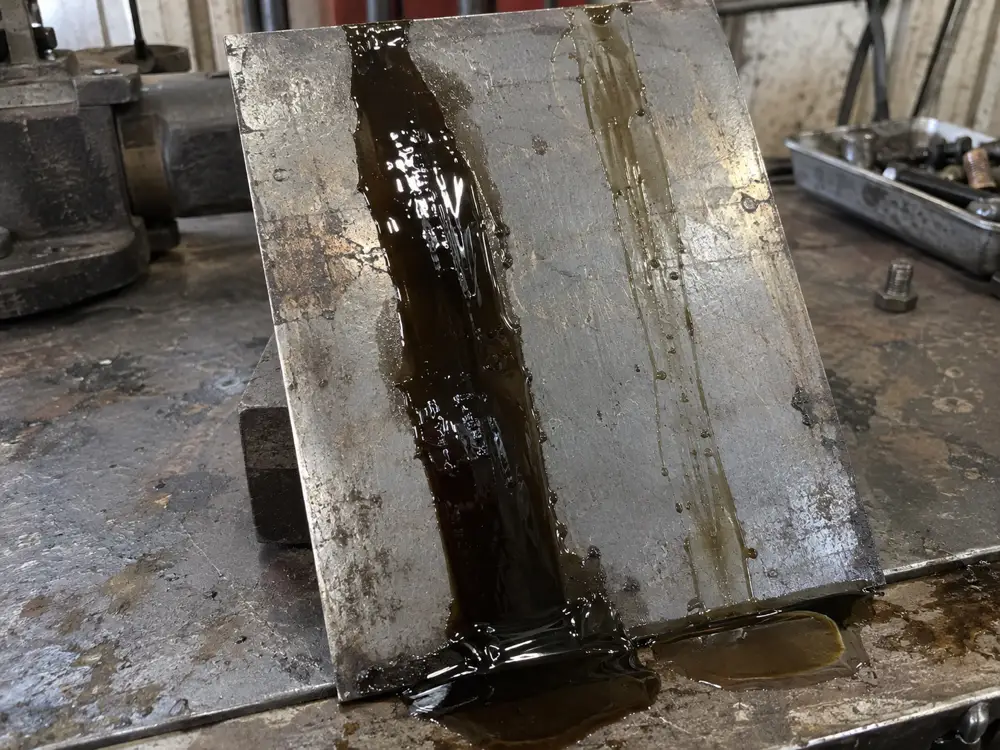
Kerosene and diesel dilute the oil, badly. Viscosity drops, and with it the load-carrying strength of the oil film, that microscopic layer keeping metal off metal. Put the engine under load and the bearings, the camshaft, the piston rings all start running nearly dry. That’s the straight road to accelerated wear. And don’t confuse this with tipping a treatment into a diesel fuel tank. We’re talking about pouring a thinner straight into the OIL SYSTEM, which is a different animal entirely.
Acetone and solvents wreck your seals
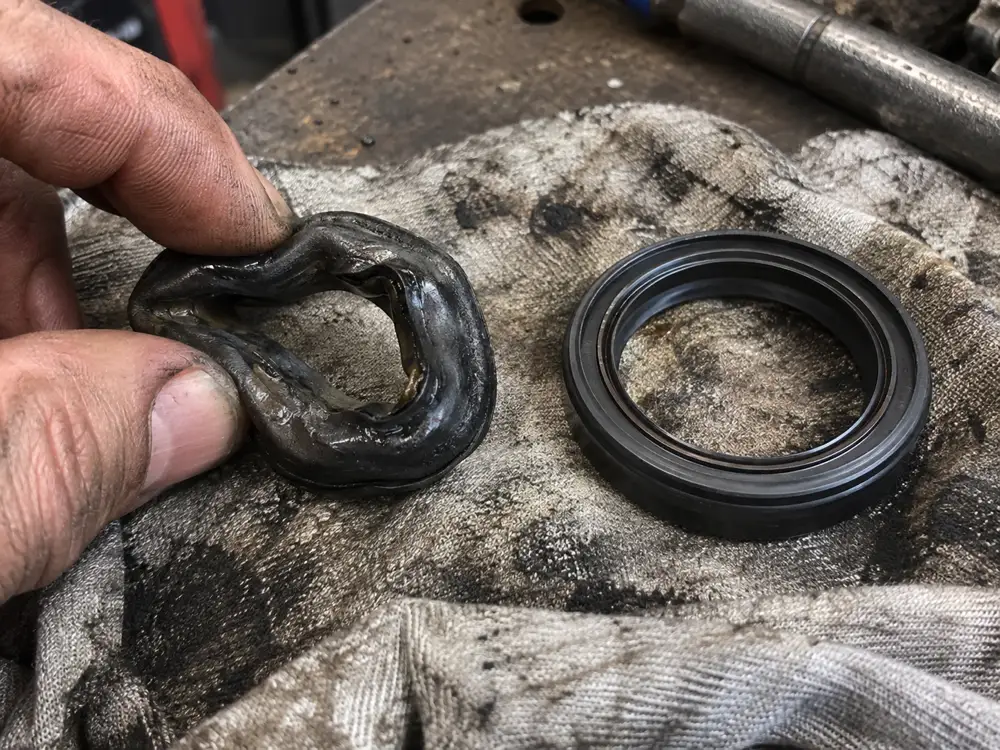
Acetone and paint solvents chew through elastomers. Crankshaft seals, O-rings, gaskets, they swell, harden or crack once these get at them. You usually spot it a week later, when oil starts dripping from under the engine. Near a hot exhaust manifold, in a warm engine, that’s a real fire risk, not a scare story.
No dispersant, and that’s the nastiest catch of all
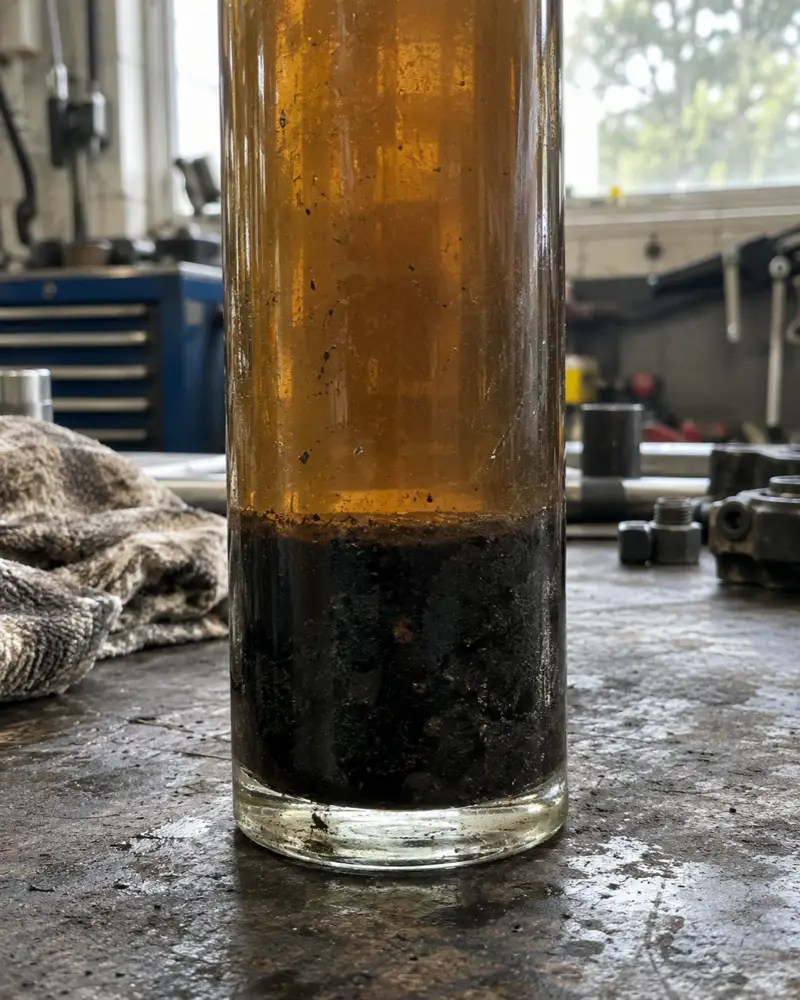
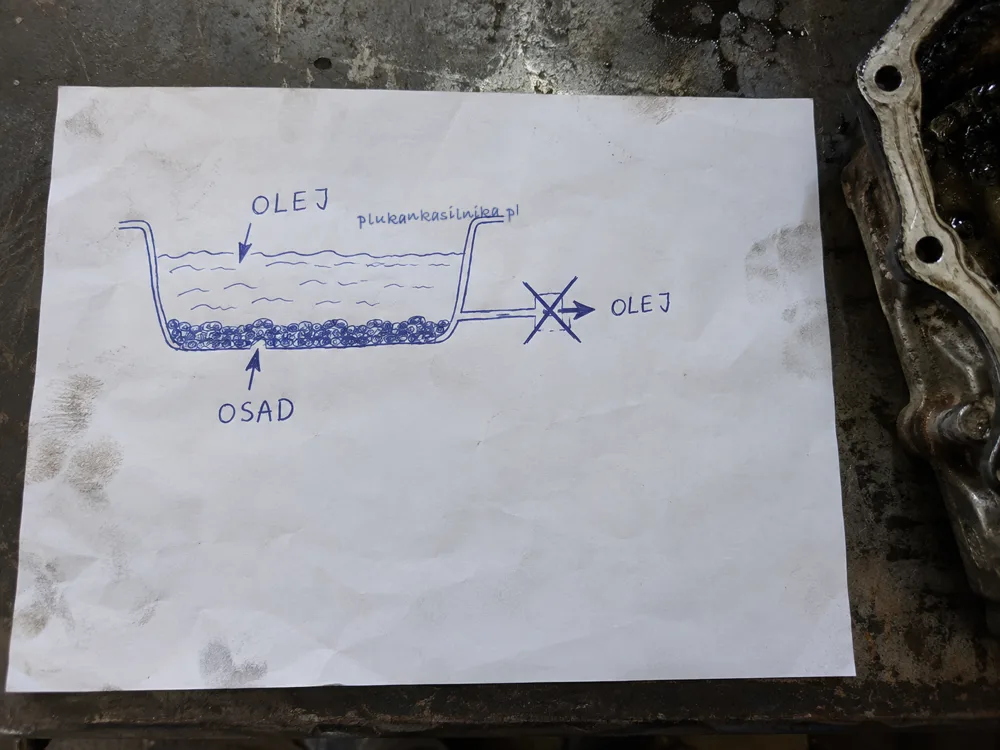
Almost nobody thinks about this one, and it’s the one that matters most. A bare solvent will happily lift the deposits off the walls. What it won’t do is hold them there in suspension. So the loosened flakes set off with the oil flow and end up on the first screen they meet, the oil pump pickup. That screen is where they stop, because the galleries sit downstream of it and of the filter. I had an engine on the bench once with a seized pump pickup after exactly this kind of home kerosene flush. The owner had loosened the deposits alright. They just had nowhere to go, so they choked the pump’s suction. A ready-made flush carries a dispersant package that breaks the dirt down and keeps it floating right up to the moment you drain the oil. Skip that, and flushing can be worse than doing nothing at all.
No dose control and no wear protection
The maker of a ready-made flush fixes the solvent concentration and the contact time, enough to dissolve deposits, not enough to go after the seals. They also blend in an anti-wear additive (the ZDDP type) that keeps the rubbing surfaces protected through those ten or fifteen minutes on thinned oil. A homemade mix has neither the dose nor the protection. You pour by eye and hope.
How is a ready-made flush different from a homemade mix?
The difference was never in the dissolving, because both do something there. It’s in what happens next, to the dissolved dirt and to the metal it drifts past. I’ve laid it out against the things that actually decide whether an engine comes out of a flush healthier or more beaten up than it went in.
| Criterion | Homemade mix (kerosene / acetone / solvent) | Ready-made flush |
|---|---|---|
| Dissolving deposits | Yes, it dissolves | Yes, it dissolves |
| Holding dirt in suspension (dispersing) | No, flakes settle on the oil pump pickup screen | Yes, a dispersant package keeps the dirt broken down |
| Wear protection during the flush | None, rubbing parts run on thinned oil unprotected | Anti-wear additive (e.g. ZDDP) protects during the flush |
| Safety for seals and elastomers | Risk of swelling, hardening and cracking (acetone, solvents) | Formulated so it doesn’t attack seals |
| Dose and time control | None, you pour by eye | Dose and time from the maker’s instructions |
| Flammability and work safety | High volatility and flammability, risk near a warm engine | Formulated to work inside a running engine |
| Risk to the engine | Real (seized pump, leaks, wear) | Low when used as directed |
If you want to know what actually sits inside these products, we go by the real safety data sheets, not guesswork. Take TEC 2000 Engine Flush. Its SDS lists an aromatic hydrocarbon solvent base, chlorine-free and with no kerosene in the mix, working alongside a genuine anti-wear package: a sulphurised olefin plus ZDDP. Those two are in there to hold an oil film on the bearings and cam lobes while the flush thins everything down, the one bit of protection a bare solvent simply can’t give you. The maker also declares it safe for seals and for Nikasil-lined bores. We write the full composition out in our engine flush safety data sheets. How each flush stacks up on what’s really in it, we compare in the best engine flush ranking by SDS.
Are kerosene or diesel any good for flushing the oil system?
No, and it’s one of the most stubborn myths in the trade. Kerosene doesn’t “wash” anything, not in the way most people picture it. It only thins the oil. And thinned oil lubricates worse, so instead of helping, you strip the engine of its protection at the worst possible moment. There’s no magic “self-cleaning” oil that lifts sludge on its own, either. A flush removes DEPOSITS. It does not undo the mechanical WEAR that a tired oil has already let happen. I’ve gone into this properly in the piece on why an engine flush beats kerosene, and the split between kerosene, water and diesel I cover in what to flush your engine with.
How do you flush an engine properly with a ready-made product?
The procedure itself is simple, and it takes about a quarter of an hour. The one rule that matters: don’t load the engine while the oil is already thinned by the flush.
- Warm the engine with a short drive. Warm, not hot.
- Pour the flush into the OLD oil, right before the change you’ve already planned. Take the dose off the label, because it depends on the oil system capacity.
- Start it up and leave it idling, low revs, for a good 10-15 minutes. Don’t drive it, don’t blip the throttle. The oil is thin now and won’t hold full lubrication under load.
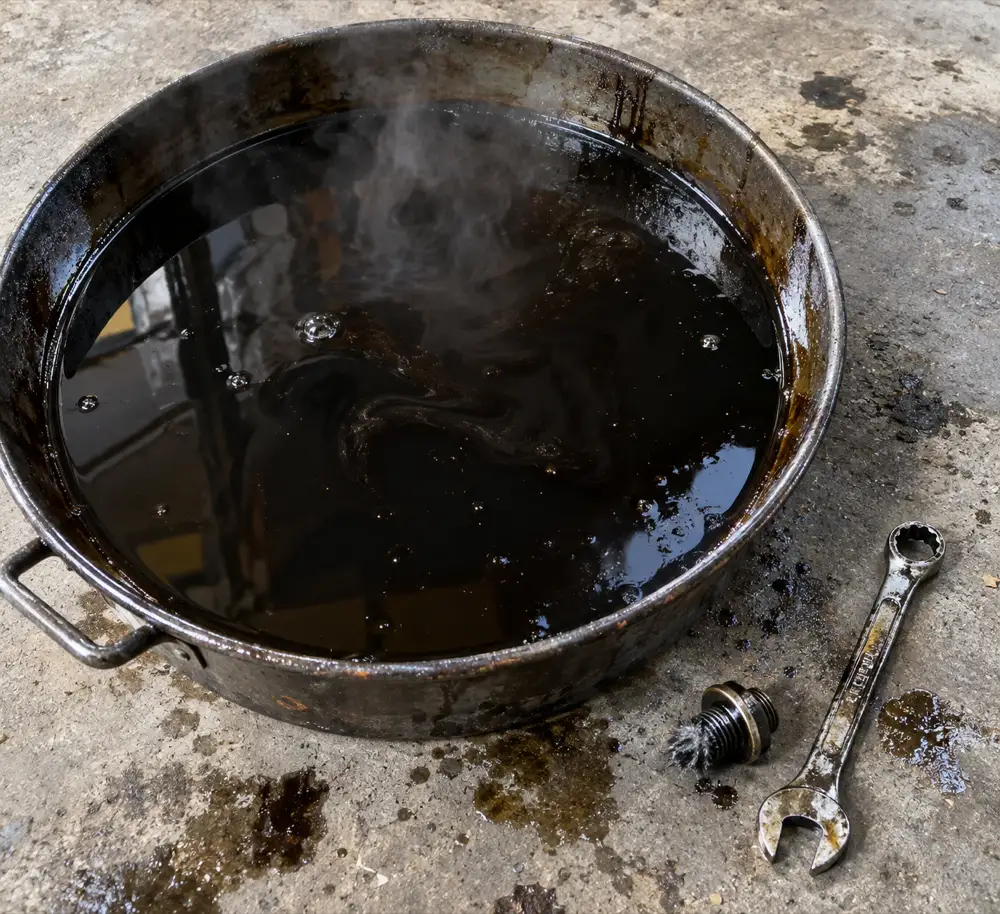
- Drain the old oil, the flush and the dissolved dirt together.
- Change the oil FILTER. This isn’t optional. It caught the loosened contaminants, and leaving it in throws the whole flush away.
- Pour in fresh oil and run the engine for a moment so it works through the system.
How much flush do you pour into the engine?
As much as the label on the pack says, and not a gram more “to be sure”. The dose tracks the capacity of the oil system, and that’s a different number in a small petrol engine than in a big diesel. So there’s no single universal figure in millilitres I can hand you here, and I’m not going to invent one. The maker set the concentration so the solvent has time to dissolve deposits but not time to start doing harm. Overdose it and you break that balance. Stick to the label. If you’d sooner just buy a matched product, you’ll find them in the shop under engine flushing and protection.
FAQ
Can you pour kerosene into the oil?
You can, but it isn’t worth it. Kerosene thins the oil and lowers its ability to lubricate, so under load the engine runs almost dry. There’s also no dispersant to hold the dissolved dirt in suspension, so the deposits can settle exactly where they’ll do damage.
Does acetone harm the engine?
Yes, mainly the seals. Acetone is aggressive toward elastomers, so crankshaft seals and gaskets can swell, harden or crack, and then oil starts to drip. It’s also highly volatile and flammable, so in a warm engine it adds a fire risk.
Is a homemade flush cheaper?
Only on paper, on the day you buy the ingredients. If loosened sludge blocks the oil pump pickup or a solvent opens up a leak, the repair bill runs many times higher than the price of a ready-made flush. It’s the kind of saving that can bite hard.
Will a homemade flush cause leaks?
It can, especially if the mix contains acetone or a strong solvent. Those substances act on rubber and elastomer seals and after a few days can bring on leaks that weren’t there before.
What about the “kerosene plus acetone” myth? Can you make a flush from that?
It’s one of the most popular myths and also the worst idea, because it stacks two faults into one. Kerosene takes away lubrication, acetone attacks the seals, and the whole thing still has no dispersant, so the dissolved dirt doesn’t leave with the oil. That’s why I won’t give any proportions here. There are no good proportions for something that harms by design.
What can I use instead of a flush if I don’t want to buy one?
The safest “homemade” method is to shorten the oil change interval and use a good oil with a detergent package. The engine cleans itself gently, at every change, with no solvents and no risk. Slower than a flush, but without putting the oil pump and the seals in danger.
Does every engine need flushing before an oil change?
No. A flush makes sense when the oil has been changed rarely, the engine has mileage with an unknown history, or you can see sludge under the filler cap. In a car serviced regularly, with short intervals, there’s usually nothing to flush.