While the engine is running, various kinds of contaminants make their way into its interior, and this is completely normal. It results from normal operation, which leads to the formation of carbon deposits, a by-product of fuel combustion, as well as from the wear of the oil itself and a decline in the efficiency of the power unit. Ignoring these and other deposits in the power unit can, however, end badly. They increase the risk of malfunctions and have a negative impact on the car’s performance. In today’s post we will answer the question: is it worth flushing the engine before an oil change?
Flushing the engine before an oil change - what benefits does it bring
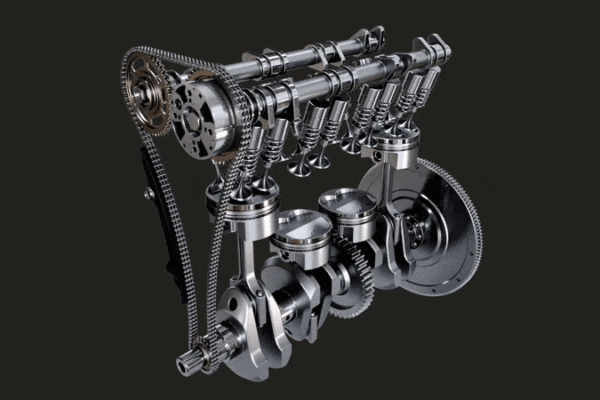
The purpose of flushing the engine is to get rid of carbon deposits, sludge, soot, dust and other micro-contaminants. This is extremely important, because their excess directly affects the car’s parameters. Power problems? Excessive fuel consumption? These may be signs of an overly contaminated power unit, mainly on the walls of the combustion chamber, the rings and the piston crown, and the valves.
You might also wonder whether it is worth flushing the engine before an oil change, given that this service fluid itself should already take care of cleaning. It is true that one of the functions of oil is to remove contaminants, yet it is not able to handle this task on its own. Although it will get rid of most of the unwanted substances, some of the dangerous carbon deposits or sediments will remain in hard-to-reach places. Using an engine flush will allow the engine to be cleaned completely and protect it against these deposits building up in the future.
Flushing the engine during an oil change - any contraindications?
Browsing automotive forums and social media, you will certainly come across posts by people who have a negative attitude toward engine flushes. Many arguments are made there claiming to show the unfavourable impact of such products on engine operation. How much truth is there in this?
Not much, and these opinions are voiced by people who know little about the subject, or who, for unexplained reasons, have a poor opinion of new technologies. Such conservatives often claim that plain kerosene is enough for cleaning, since it is, after all, the main ingredient of engine flushes anyway. Although this is correct (in the case of most products available on the market), the effectiveness of these products is largely determined by the active additives, which give them their dissolving and cleaning properties.
Flushing with kerosene was indeed a commonly used practice for years and it has no negative impact on the engine, but it was done mainly because there was no alternative. Nowadays it is better to reach for a good engine flush, which provides far better results and, thanks to tested formulas, does not harm the car.
The only case in which complications may occur after cleaning the engine is using it on an old power unit. It might seem that such machines need flushing the most, so where does the problem lie?
In a high-mileage engine a large amount of deposits has already accumulated, and once dissolved during the use of the flush, they may not be completely removed from it. Leaks that were previously masked by carbon deposits may also appear, which is why it is a mistake to think that an engine flush causes the engine to lose its seal - thorough cleaning merely highlights the engine’s defects and speeds up the inevitable leaks at components that were already worn beforehand.
This can lead to contamination of the new oil, rapid clogging of the filter and an engine malfunction. That is why, in the case of older cars, you should be careful after carrying out the flush and, if necessary, repeat the whole process several times within a short period.
How to flush the engine before an oil change?
You already know what impact cleaning the engine before an oil change has; now it would be worth presenting exactly what such a procedure looks like. It is nothing complicated - all you need to do is perform a few simple steps that do not take much time. The most important thing is that you do not have to perform this task separately - you can combine it with the oil change, which needs to be carried out anyway.
First, bring the engine up to operating temperature, and only then pour the flush into the old oil. The order matters here: cold oil is thick, the product spreads through it unevenly and deposits in the cooler spots are left untouched. Then leave the engine idling for about 10 to 15 minutes, under no load and with no driving. This time may vary depending on the type and wear of the power unit - in this matter you should follow the recommendations of the engine flush manufacturer. Finally, we drain the old oil together with the dissolved contaminants and replace it with new oil.
When should you use an engine flush?
While using the vehicle, many factors may appear indicating that it is worth carrying out a cleaning. Contamination can affect the engine’s operation if you notice that:
- the engine burns oil,
- the vehicle blows out dark or blue smoke,
- oil overflows excessively through the breather,
- compression is too low.
If you have bought a new car or engine and do not know its maintenance history, it is also worth starting with an oil change and carrying out a flush.
Flushing the engine will also be a great idea if you are planning to switch from semi-synthetic or mineral oil to a full synthetic. Such a change can cause rapid degradation of an oil with a different characteristic due to a large amount of contaminants. Performing a flush will remove them and provide the oil with an optimal environment to work in.
We do, however, recommend using an engine flush at every oil change. This will allow you to keep your power unit in excellent condition, and as we know, it is better to prevent problems than to worry later about troublesome and costly repairs.
What to flush the engine with during an oil change?
At present, the market offers a really wide selection of truly high-quality engine flushes. It is worth reaching for products from renowned manufacturers with great reputations in automotive circles, such as TEC 2000 or Motul. This way you gain a guarantee of effectiveness and complete safety.
We hope that, thanks to today’s text, you now know that it is worth flushing the engine before an oil change - this simple, cheap and quick task brings plenty of benefits for your vehicle.