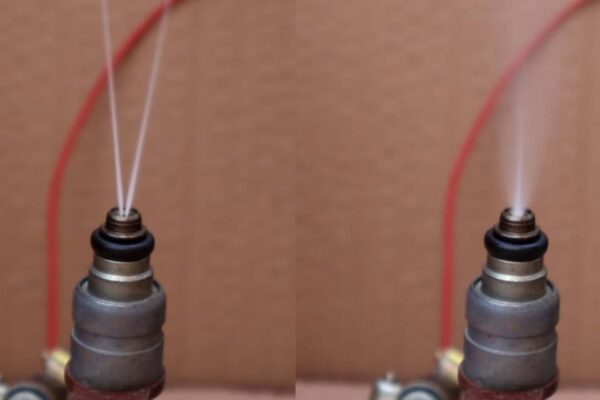
How to correctly set the injection timing in a car? This is a question often asked by car owners who want to take care of their vehicle’s technical condition. Fuel injection is one of the key elements of the engine’s fuel system. As is well known, if the injection timing is set incorrectly, it can lead to vehicle failure and negatively affect its performance. In this article, we will present step by step how to correctly set the injection timing in a car.
Why is it worth setting the injection timing in a car?
Fuel injection is one of the key elements of the engine’s fuel system. Correctly set injection timing affects:
- engine power,
- acceleration,
- fuel consumption,
- exhaust emissions,
- vibrations.
If the injection timing is not set correctly, it can lead to a range of problems, such as:
- high fuel consumption,
- acceleration problems,
- increased exhaust emissions,
- poor torque,
- improper engine behaviour.
That is why it is important to regularly check and set the injection timing in a car.
Step by step: How to set the injection timing in a car?
Before starting the injection correction you should find the manufacturer’s specification. In the owner’s manual we will find information on how the injection timing should be set. If such a document is not available, we can contact the car manufacturer or an automotive service centre, or look for the data on the website.
Turn off the engine and locate the injection sensor
Next, you need to turn off the engine and locate the injection sensor. This is usually a small device located near the injector.
Locate the injection timing indicator
The injection timing indicator is another element that needs to be located. This indicator may be located on the injection pump or near the injection sensor.
Adjust the injection timing
Next, you need to proceed with adjusting the injection timing. To do this, you need to:
- turn the camshaft so that the pointer reaches the target point, in accordance with the manufacturer’s specification,
- expose the injection timing indicator and begin the adjustment,
- adjust the injection timing in accordance with the manufacturer’s instructions or using a special tool (e.g. an injection timing gun).
Check the results of the adjustment
After adjusting the injection timing, you should test the results of the adjustment. It is best to do this during a test drive. Check:
- acceleration,
- exhaust emissions,
- fuel consumption.
If any problems arise, you should consult an automotive service centre.
Find a professional mechanic
If you do not have experience in car repairs, it is worth using the services of a professional mechanic. A good mechanic will be able to correctly set the injection timing in a car and detect any problems with this parameter. It is worth choosing only trusted service stations that have the appropriate tools and experienced specialists.
Correctly set injection timing affects many of the car’s parameters, such as power, acceleration or fuel consumption. That is why it is worth regularly checking and adjusting this parameter. Remember that adjusting the injection timing is not a very complicated process, but if you do not have experience in car repairs, it is worth using the services of a professional mechanic. Thanks to this, your car will run smoothly and reliably.