The best engine flush is not one particular brand. It is a product matched to your engine type (petrol or diesel), its condition, mileage and the character of its chemical base as declared on the SDS. Two things decide together: how strong the base is, and whether the sheet lists a lubricant buffer. A strong base with a documented anti-wear package is a different category from a strong base without one. Always buy from a trusted source.
Last updated: 11 July 2026
What is an engine flush and how does it work?
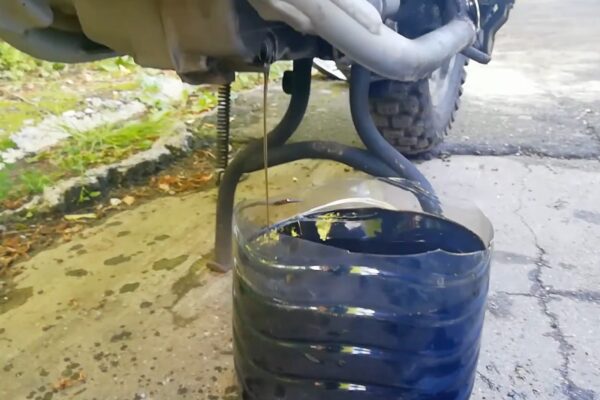
An engine flush is an additive for the OIL, not for the fuel. It is the first thing I correct with customers, because plenty of myths circulate around it. You do not pour it into the tank with the petrol. It goes into hot engine oil, right before an oil change.
The important work happens in the ring grooves, not in the sump
People usually talk about a flush as something that deals with sludge at the bottom of the sump. That is true, but it is not the main part of the job, and it is not the reason the product is worth using.
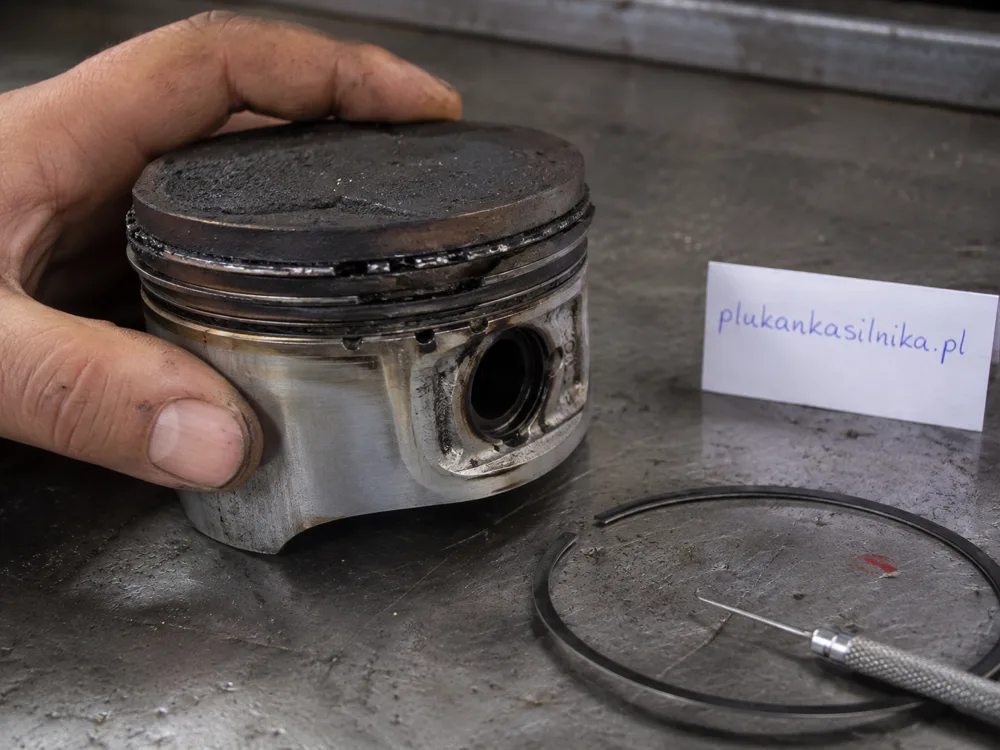
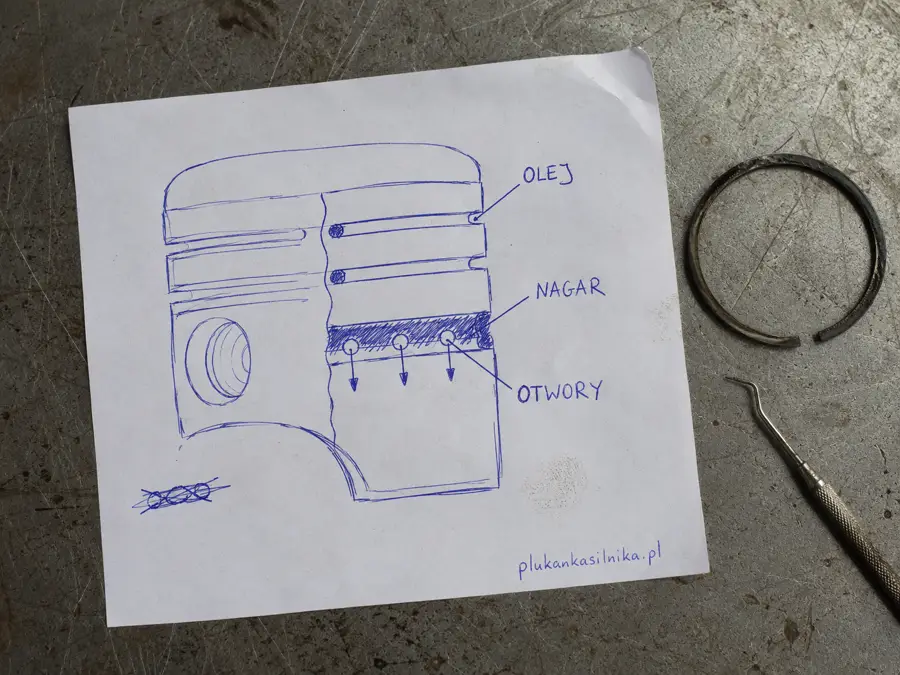
The oil control ring scrapes oil off the cylinder wall on every downstroke. That oil does not stay there: it drains back to the sump through small holes drilled in the piston, behind the ring groove. The whole lubrication system depends on those holes staying clear.
The trouble is that a little oil is left in the groove every time, and the groove is one of the hottest places in the engine. At high revs that small amount bakes and turns into hard carbon. Not soft sludge that washes away, but a layer closer to varnish.
From there it goes like this. Carbon fills the groove and blocks the return holes. The ring loses freedom of movement and stops following the cylinder wall. Oil that cannot be scraped and drained stays on the bore and gets burnt. Oil consumption climbs, compression drops, and carbon builds faster because more of it reaches the chamber.
This starts from the first kilometres, including in an engine that looks well kept. You look under the filler cap, see bright metal, and assume everything is clean. Under the rings it can be a different story, because carbon settles there layer by layer from new and nothing removes it on its own. The oil will not do it, however good the oil is.
Hence a conclusion that most guides skip: regular flushing makes more sense than one rescue treatment at a hundred thousand kilometres. Done at every oil change, or every second one, it never lets carbon set hard in the grooves. Done once, on an engine whose rings already sit in a solid crust, it is often too late.
What else the flush takes with it
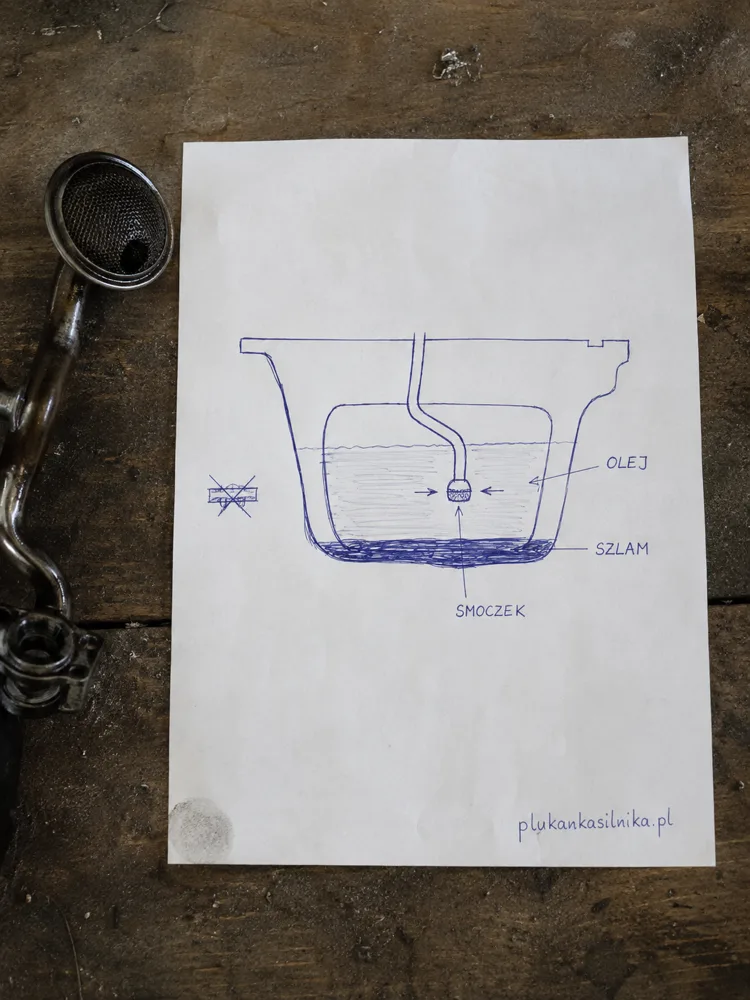
The rest of the deposits are sludge in the sump, oil varnish on the walls and carbon under the valve cover. The flush dissolves them and holds them in suspension so they leave with the drained oil. That is why you drain immediately after the treatment rather than leaving the car overnight: if the sludge settles back, it can be drawn onto the oil pump pickup screen.
In practice it works like this. Bring the engine to operating temperature, pour the flush into the oil and leave it idling for ten to fifteen minutes, with the exact time on the label. The product circulates with the oil through the whole system. Then you drain the old oil along with the dissolved dirt, change the filter and fill with fresh oil. You change the filter every time, because it is what catches the loosened particles.
And here is the question almost everyone asks. There is no “self-cleaning” oil and none that “washes the engine by itself”. Cleanliness rests on changing the oil on time. A flush supports that change; it does not replace proper servicing.
One more distinction, and it matters, because these two get lumped together. Rings coked up with carbon are a deposit, so a solvent has something to work on, and after a few treatments the movement sometimes comes back. Mechanically worn rings, slack clearances, scored bores and tired bearings are geometry, and no chemistry reverses that. A flush restores cleanliness, not youth.
Which engine flush is the best? (short answer)
The best one is the flush matched to your engine, not the one with the biggest advert. There is no single winner for everyone. A low-mileage petrol engine, a diesel with a DPF at 250,000 km, and a high-hour motor with weeping seals all need a different approach.
When I choose, I look at four things: engine type, condition and mileage, the character of the chemical base (visible from the safety data sheet), and where you buy it. You will find the full ranking with SDS-based composition comparisons on our best engine flush hub.
Types of engine flush by chemical base
The biggest edge in choosing comes from understanding what a given flush is built on. We analysed 166 safety data sheets (SDS) for oil flushes from 118 manufacturers and grouped them by the chemical base declared in Section 3. This is real data from our database, not impressions off a forum.
One caveat, to keep it honest. An SDS classifies only hazards (H-codes) and states the composition; it does NOT rate “cleaning strength” or effectiveness. The split below into stronger and milder action is inferred from the base chemistry (a strong aromatic solvent dissolves harder deposits than a light aliphatic-oil base), not read off the card. Real effectiveness is proven by testing, not by the composition alone.
| Base type | How it acts | For which engine / condition | Cards in our database |
|---|---|---|---|
| Aromatic base with a lubricant buffer (ZDDP + EP additive in the SDS) | Strong dissolving of deposits, with protection for the rubbing surfaces retained | High mileage too, because the protection is documented on the sheet | 1 |
| Aromatic base with no buffer | Strong dissolving of hard deposits and carbon, short action time per the instructions | Heavily coked engines, badly neglected servicing | 16 |
| Aggressive solvent base | Most intensive dissolving, needs care and strict adherence to the instructions | Very hard, baked-on deposits | 2 |
| Heavy naphtha base (naphtha / kerosene type) | Moderate, gentler character | Higher-mileage engines, older seals | 19 |
| Light aliphatic base (light aliphatic hydrocarbons) | Mild action, safer for seals | High mileage, routine cleaning at the oil change | 39 |
| Mixed base | A compromise between strength and gentleness | Universal, typical engine condition | 40 |
| No base data on the card | Cannot be judged from the sheet alone | Needs checking with the manufacturer | 49 |
A simple conclusion falls out of this. Most of the market (mixed, light aliphatic and naphtha bases) is gentler-acting; strong aromatic bases are the minority, and they are the ones that deal with hard carbon. That group includes TEC 2000, built on an advanced blend of hydrocarbon solvents with an aromatic base, chlorine-free, kerosene-free, with an additive package. You will find its full composition in our engine flush safety data sheets database, and you can line several brands up in our engine flush comparison.
Petrol versus diesel engine flush: what is the difference?
The working principle is the same, but the deposits differ, so the choice does too. This is not a marketing split into a “blue version and a black version”, it is a real difference in what each engine lays down in the oil.
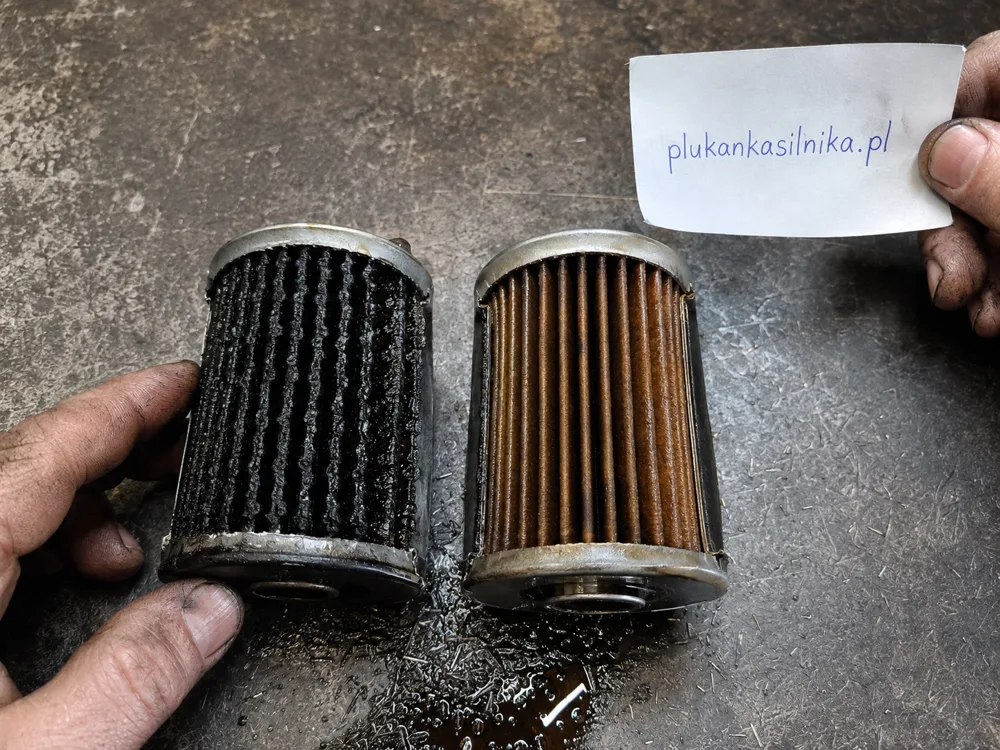
Diesel. A compression-ignition engine produces a lot of soot, and some of it ends up in the oil, especially with city driving, frequent DPF regenerations and short trips where the oil gets diluted with fuel. The result is dark, thick sludge and harder deposits. A higher-mileage diesel that has never been flushed more often needs a stronger base to shift the settled dirt. Even then, stick to the time the maker states, because a strong base works fast and is not meant to be left in overnight.
Petrol. A petrol engine usually makes less soot, but it can lay down oil varnish and deposits at higher temperatures, particularly with hard driving or stretched oil-change intervals. There are generally fewer deposits than in a neglected diesel, so a petrol engine in good shape is often fine with a mixed or gentler base, unless a lot of varnish has gathered under the valve cover.
In practice the condition of the specific car matters more than the fuel it burns: a well-kept diesel will be cleaner than a neglected petrol engine. So treat the “petrol / diesel” label as a starting point, and match the strength to the condition.
How to match a flush to mileage and engine condition
Mileage and service history tell you more than the model year. Here is how I sort it out on the ramp.
Low mileage, regular servicing. The engine is essentially clean, so a flush plays a preventive role at the oil change. A mild to mixed base is plenty; no point reaching for the strongest product when there is nothing much to dissolve.
High mileage, known oil changes. There is some deposit, but the engine has been looked after. A mixed or light aliphatic base does the job without overloading older seals, which have already hardened a little, so do not jump straight to the most aggressive product.
High mileage, unknown history or visible neglect. This is where the temptation to pour in something strong is greatest, and where you need to be most careful. If there is thick sludge under the filler cap and the oil looks like tar, a strong aromatic base really will move the deposits. But there is a risk: dirt that had been “sealing” small leaks can, once dissolved, expose them. So some mechanics work in stages, or pick a gentler product. We cover that risk in will an engine flush cause leaks.
I will repeat it, because it matters most. A flush removes deposits, it does not fix mechanics. If the engine burns oil through worn rings, that problem lives in the workshop, not in the can.
What to look for when choosing (6 criteria)
1. Engine type. Check that the maker clears the product for petrol, diesel, LPG or engines with a DPF. That is the first filter.
2. Base and composition per the SDS. The safety data sheet tells you what the product is built on and what hazards it carries, and from the character of the base you infer whether it acts more strongly or more gently. You do not need to be a chemist. Just look into our safety data sheet database and compare base types.
3. Brand and reputation. An established brand with an available SDS and a clear statement of uses is less of a gamble than a nameless product with no documentation.
4. Counterfeit risk. Popular brands get faked; how to spot the genuine article is covered in the buying section below.
5. Price as an investment, not a cost. A flush costs a fraction of repairing a blocked lubrication system, so it is not worth saving a few coins on a product meant to protect an expensive engine. What the job actually costs is broken down in how much does an engine flush cost.
6. Reviews and mechanics’ experience. Reviews can be noisy, but repeatable signals (a product handling carbon well, or being gentle) are worth having. Weigh them against the character of the base, not against a slogan.
Where to buy and how to avoid a counterfeit
Buy from a trusted source. Flushes from popular brands get counterfeited, and a fake is a lottery: you do not know what you are pouring into the oil. Watch for a price well below the market, the quality of the print and label, batch numbers, and whether the seller provides the safety data sheet.
If you are after TEC 2000, the safest route is an official source. TEC 2000 products (a British brand, TEC 200 Ltd) are sold at tec2000.com, where you are certain of the genuine article. The rule is the same for every brand: the official distributor or a trusted shop, not a random listing with no description.
One more warning from the workshop. Do not improvise by pouring in plain kerosene or diesel fuel “instead of a flush”. It circulates on forums as a home remedy, but it risks loss of lubrication and damage to the seals. There is proper chemistry for this, formulated to dissolve deposits without leaving the engine unprotected.
FAQ
Is an engine flush safe?
Yes, if you use it per the instructions and match it to the engine’s condition. The risk shows up mainly on very neglected, high-mileage engines, where dissolved deposit can expose small leaks. On a well-kept engine the job is routine.
How often should you use a flush?
Usually at an oil change, and not at every one. The exact frequency is stated by the product’s maker. Treat it as a supporting step, not something to do every time you fill up.
Petrol or diesel flush: does it matter?
It does. A diesel lays down more soot and sludge, a petrol engine more often oil varnish. Check that the maker clears the product for your drive type, and match the strength to the engine’s condition.
Will a flush replace an oil change?
No. A flush is an oil additive used right before the oil is drained; after the job you still drain the old oil and fit a new filter. There is no “self-cleaning” oil that frees you from regular servicing.
Strong or mild flush for high mileage?
At high mileage and with older seals a gentler base (mixed or light aliphatic) is the more common choice. A strong aromatic base with no buffer is reserved for hard, thick carbon and used briefly, per the instructions. A strong aromatic base with a buffer (ZDDP plus an EP additive on the sheet) is a separate category and does not inherit that limit.
Can you pour in kerosene instead of a flush?
I advise against it. Kerosene or diesel fuel “off your own bat” risk loss of lubrication and damage to the seals. A ready-made flush is formulated to dissolve deposits without leaving the engine unprotected.
Will a flush fix an engine that burns oil?
No. A flush removes deposits, it does not repair mechanical wear. If oil is disappearing through worn rings or valve guides, that is a job for the workshop.
Guide updated 11 July 2026. The base-type data comes from an analysis of 166 safety data sheets for oil flushes from 118 manufacturers in our database.