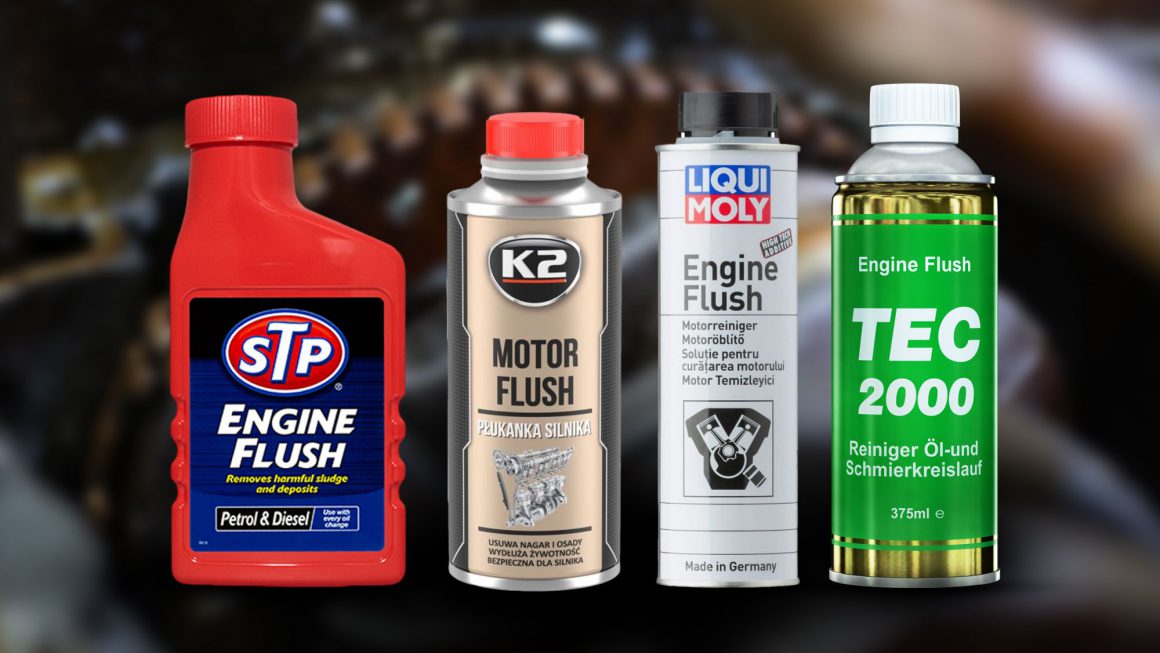
More drivers reach for an engine flush these days, and it’s easy to see why: a clean engine runs longer and behaves better. The trouble starts at the shop shelf. There are dozens of these bottles and they all promise the same thing. So what do you go by, the price or a handful of reviews online? We ran our own engine flush test to cut through the noise. Here’s what we found.
The test footage: 27 minutes, no cuts
Rather than describe the result, we show the whole recording. It is uncut: the products stand side by side under the same conditions, and you can watch how each one behaves over time. Watch it and judge for yourself.
Products in the footage (from the left): Kleen-Flo Engine Flush, Forte New Generation Motor Flush, K2 Motor Flush, Mannol, Xado Lubricant System Cleaner, Motul Engine Clean, Liqui Moly Engine Flush 2640 and TEC 2000 Engine Flush.
One note that helps when comparing shelf prices: Liqui Moly Engine Flush 2640 and Liqui Moly Pro-Line Engine Flush 2427 (the workshop line, a 500 ml can) have the same hydrocarbon base and the same two additives, ZDDP and calcium sulfonate, each at 1-<2.5% in Section 3 of their European safety data sheets. What differs is the can size and the recommended dose. We cover it in our comparison Liqui Moly 2640 vs Liqui Moly 2427 Pro-Line.
What the footage does not settle: it is not a laboratory test measuring the amount of deposit removed, and not a wear test. It shows how the products behave under repeatable conditions, which is an observation, not the result of a standardised method. You can check the composition of each product in our safety data sheet library.
What is an engine flush?
First, what an engine flush actually is, because that tells you what to expect from it and what to look for.
It’s a cleaner you add to the old oil just before a change. Its job is to break loose the muck that builds up inside an engine over the miles: carbon, soot, the sticky varnish-like film that oil leaves behind as it ages. That build-up isn’t harmless. It speeds up wear and, left long enough, starts causing faults. A flush circulates with the oil through the whole lubrication system, so it works wherever oil reaches, including around the piston rings. It does not reach parts outside the oil circuit.
How to use an engine flush?
The good news is there’s next to nothing to it. You use a flush at the oil change, so it slots straight into a service you were doing anyway.
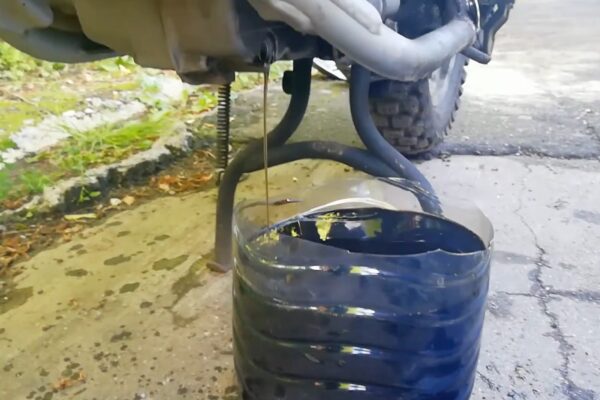
Pour it into the warm, old oil. Let the engine idle for 10 to 15 minutes, no revving, just let it tick over and give the additive time to circulate. The flush is there to loosen deposits baked onto the metal that the oil alone did not shift. Then drain the old oil straight away, while it is still hot, and refill with fresh. What the flush loosened leaves with the old oil, so the new oil starts life in a cleaner engine.
How we judged the flushes
So which one do you buy? To answer that we compared a batch of them side by side and put them in order by our own assessment. Three things decided the order.
Effectiveness came first. A flush has one job, to pull out the deposits that gum up the engine and drag down the way it runs. Don’t expect to feel the difference at the wheel after a single treatment. We judged what the footage shows.
Then price against what you actually get. The price on the shelf says little on its own, because the products differ in pack size and recommended dose. What counts is the cost of one flush.
Last, what’s really in the bottle. The safety data sheet of each product gives its composition and its hazards. A sheet lists only substances classified above a threshold, though, so it does not show the full formula.
Our test results
For flushes compared by safety-data-sheet composition, see our best engine flush ranking. Two of them, TEC 2000 and Liqui Moly, we compare separately by safety data sheet in TEC 2000 vs Liqui Moly. Here we stick to the results of our own test.
With those three in mind, and with the footage in front of us, here’s how they stacked up.
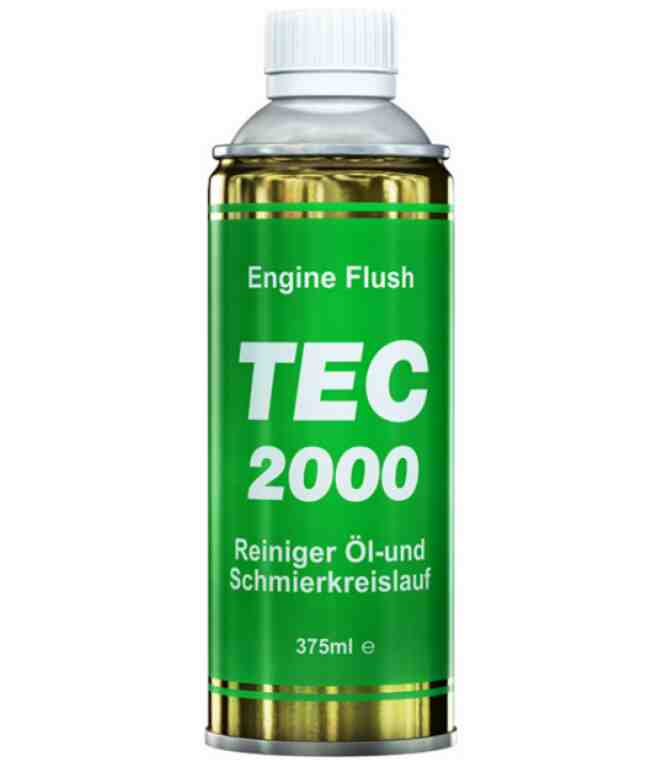
1. TEC 2000 Engine Flush
The TEC 2000 Engine Flush formula is built on two types of solvent and two lubricating agents. The solvents are meant to help remove carbon, deposit, soot and sludge, and the lubricating agents to protect the oil film during the flush. The maker declares it free of kerosene and chlorinated hydrocarbons and rates it safe for seals and Nikasil bores.
The TEC 2000 safety data sheet lists two protective additives: a sulfurized olefin and ZDDP. Don’t count on higher compression or more power from a single treatment. A flush removes deposit; it does not undo mechanical wear.
2. XADO Vitaflush
XADO Vitaflush is next on the list. The available safety data sheet describes it as a flushing additive for the oil system and lists, in Section 3, petroleum sulfonic acids, calcium salts (10-<25%), a detergent.
3. K2 Motor Flush
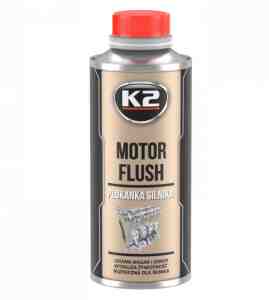
K2 Motor Flush is the budget-friendly pick, sold for both petrol and diesel engines. It is meant to clear out the usual carbon, soot and oil residue. The safety data sheet of K2 Motor Flush (version 4 of 12 May 2021) lists, in Section 3, a reaction mass of ethylbenzene and xylene (under 70%), an aromatic solvent.
4. Liqui Moly Engine Flush
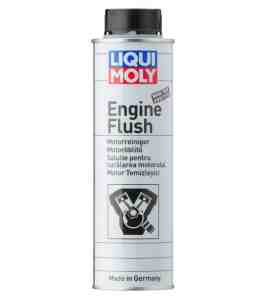
Liqui Moly rounds out the list, and the name needs no introduction in the trade. The safety data sheet of Liqui Moly Engine Flush 2640 lists a light C10-C13 hydrocarbon base (70-<90%, under 2% aromatics) plus two additives, ZDDP and calcium sulfonate, each at 1-<2.5%. ZDDP is an anti-wear additive, calcium sulfonate a detergent. It is sold for petrol and diesel engines.
Engine flushes - opinions
Putting TEC 2000 Engine Flush first in this list is our own call. You can find opinions about it from drivers and mechanics online, on social media and on YouTube.