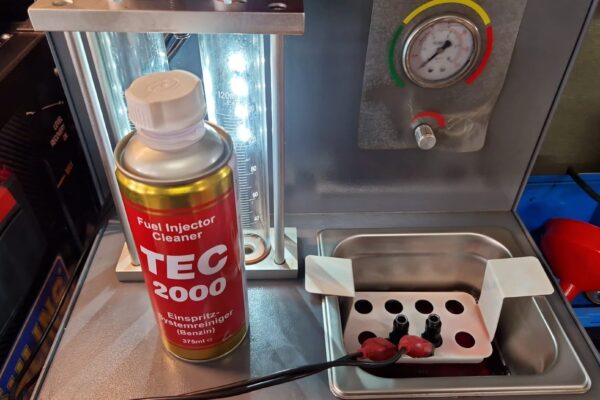
TEC 2000 vs Moje Auto: Which Engine Flush Is Better?
Short answer: premium versus budget. Moje Auto (MA Professional) is the cheap one. About €4 for 400 ml, built on a clean synthetic GTL base (Fischer-Tropsch), and its safety data sheet lists no lubricant additive. TEC 2000 Engine Flush costs roughly 4-5× more per ml. It runs an aromatic solvent base with a real additive package, chlorine-free and kerosene-free, and its safety data sheet names two anti-wear agents: ZDDP and a sulfurized olefin. Neither bottle holds kerosene.
Here is the run of it: what each safety data sheet actually says, who really makes Moje Auto, what independent sources say about flushing, how to dose and time each one, and - the part that matters most at these prices - whether the pricier bottle earns its keep.
Author: Mariusz Komosa, automotive mechanic · Last updated: 1 July 2026
Who this guide is for
For the driver or mechanic standing over a warm engine before an oil change, weighing the cheapest bottle on the shelf (Poland’s budget Moje Auto) against a premium name (TEC 2000). Most comparisons just parrot the shop blurb. This one reads both safety data sheets and tells you what is actually in the can, Moje Auto included, which almost nobody bothers to do.
Moje Auto: who actually makes it?
Moje Auto (the consumer line, going since 2004) and MA Professional (the workshop line) both belong to Amtra Sp. z o.o., a Polish maker and distributor of car chemicals. Both are Amtra’s own house brands, not someone else’s juice with a new label on it. You will hear that the flush is really XADO or Tribotec underneath. Nothing public backs that up, and the safety data sheet argues against it: no XADO-style revitalizant additive anywhere in it. It is Amtra’s Polish budget brand, plain and simple.
TEC 2000 is a different story. A British brand (TEC 2000 Limited), petrochemical roots going back to 1973, launched under the TEC 2000 name in 1994, made in the UK. In Poland it comes through tec2000.pl. Worth spelling out, because people online keep taking it for a Polish label.
Composition and base: what the safety data sheets say
Composition decides how hard a product goes at the deposits and how gently it treats your seals. This is where the two really part ways. Everything below comes off the safety data sheets (SDS), not the back of the box.
Moje Auto: a synthetic GTL base (Fischer-Tropsch)
The sheet for Moje Auto / MA Professional Engine Flush 400 ml (art. 20-A38, SDS dated 2025) declares a single hazardous ingredient:
That ingredient is a synthetic GTL hydrocarbon (gas-to-liquid), built from natural gas by the Fischer-Tropsch process rather than distilled from crude. Its whole selling point is purity: next to no aromatics, next to no sulfur. In that narrow sense the Moje Auto base is “cleaner” than your typical kerosene or aromatic solvent.
There is a catch. C18-C50 is a heavy fraction: oily, barely volatile, weak at dissolving much of anything. It behaves more like a thin synthetic carrier oil than a solvent that bites into baked-on carbon. And the sheet names no lubricant additive (ZDDP) and no detergent. Whatever cleaning chemistry might be in there would sit in the unclassified balance under 25%, off the sheet. So “dissolves hard carbon” stays a claim on the label, not something the document backs.
TEC 2000: a strong aromatic-based solvent system
TEC 2000 Engine Flush runs an aromatic solvent base with an additive package, chlorine-free and kerosene-free. This is the active kind of solvent. It dissolves carbon rather than just loosening flakes of it. The full breakdown, CAS numbers and hazard classes and all, sits in our safety data sheet database.
And the sheet backs the protective side of the blend, which is where it earns the price. It carries two anti-wear additives: ZDDP, the zinc-phosphorus chemistry you know from engine oil, and a sulfurized olefin, a sulfur-based anti-scuff agent. Both hold up the oil film while the flush runs, and the blend is declared safe for seals and Nikasil bores. A safety data sheet is never the whole recipe. But on the point that counts here, protecting the wear surfaces, TEC 2000 has it in writing, not just on the label.
Note: neither flush contains kerosene
“No kerosene” gets sold as a TEC 2000 selling point. Here it is not one. Moje Auto has none either, its base being a synthetic GTL that is arguably cleaner on aromatics. Same in our TEC 2000 vs K2 comparison, where K2 has no kerosene either. The differences that actually count sit elsewhere: the strength and type of solvent (TEC 2000 runs a strong aromatic base) and the price. And one more, straight off the sheets: TEC 2000 lists anti-wear additives (ZDDP plus a sulfurized olefin) that the Moje Auto sheet does not. A real difference in the paperwork, not a marketing line.
Head to head: Moje Auto vs TEC 2000
| Feature | Moje Auto (MA Professional) | TEC 2000 Engine Flush |
|---|---|---|
| Maker / brand | Amtra Sp. z o.o. (Poland) | TEC 2000 Ltd (United Kingdom, since 1994) |
| Size | 400 ml | 375 ml and 2500 ml |
| Indicative price | ~€4 / 400 ml | ~€15 / 375 ml |
| Price per 100 ml | ~€1 | ~€4 |
| Base (per SDS / maker) | Heavy GTL Fischer-Tropsch synthetic (C18-C50), 75-85% | Hydrocarbon solvents, aromatic base, chlorine-free |
| Kerosene / naphtha | No | No |
| Declared lubricant additive | None in the SDS | Yes - ZDDP + sulfurized olefin (anti-wear, in the SDS) |
| Declared detergent | None in the SDS | Yes - cleaning agents (additive package) |
| Dosing | Whole 400 ml per 3-6 L of oil (800 ml for 6-12 L) | 375 ml per 4-5 L of oil |
| Working time | 10-15 min at idle | ~15 min (up to 25-30 min for heavy fouling) |
| Driving with it | No - drain after idling | No - drain after idling |
Here is the same pair set against the wider field of oil flushes, every entry checked against the makers’ safety data sheets. More head-to-heads live in our engine flush comparison and the best engine flush 2026 ranking:
| Brand | Product | Base / strength | Lubricant buffer (SDS) | Kerosene | Key feature | Verdict |
|---|---|---|---|---|---|---|
| LIQUI MOLY | Pro-Line Engine Flush | Mixed · Strong | ZDDP 1-2.5%, no EP additive | No - hydrocarbons C10-C13, under 2% aromatics (70-90%) + paraffinic fractions | Dearomatised C10-C13 base with ZDDP at 1-2.5% and calcium sulfonate at 1-2.5% (Section 3). The regular Engine Flush 2640 has the same declared composition as Pro-Line | Effective premium solvent; the sheet lists ZDDP protecting surfaces during the flush |
| Wynn's | Motor Cleaner - Oil System Cleaner 325 ml | Mixed · Medium | None in the SDS | Heavy petroleum distillates (≥50%) + C10 aromatic hydrocarbons 10-15% | Kerosene base with C10 aromatics and amine; notably higher aromatic content than premium brands | Strong dissolving action from aromatics, but kerosene base with diethanolamine raises questions about compatibility with modern seals |
| Bardahl | Engine Flush / Pre-Drain Cleaner 300 ml | Kerosene/heavy · Strong | None in the SDS | Hydrocarbons C10-C13 (80-95%) + kerosene 1-10% | C10-C13 solvent dominant; kerosene addition boosts dissolving power, no lubricant additive | Solid solvent formula with kerosene addition; absence of lubricant means no seal protection during the flush cycle |
| MANNOL | Motor Flush 9900 | Mixed · Medium | Calcium sulfonate (detergent), no ZDDP | Mineral oil base; only disclosed hazardous ingredient is ethoxylated isotridecanol (<0.5%) | Very sparse SDS - mineral oil base with calcium sulfonate, limited composition data | Budget option with limited SDS data; difficult to assess full composition without complete safety sheet |
| Moje Auto | MA Professional Engine Flush 400 ml | Heavy synthetic (GTL) · Gentle | None in the SDS | No - synthetic GTL Fischer-Tropsch base (heavy distillates C18-C50) 75-85% | The only declared component is a GTL synthetic (Fischer-Tropsch, CAS 848301-69-9) at 75-85%; the sheet lists no lubricant additive or detergent and does not declare the remainder | Budget flush on a heavy C18-C50 synthetic base, gentle on seals (the sheet lists H304 only). A heavy fraction dissolves less than light solvents, and the sheet declares no lubricant additive |
| TEC 2000 ⭐ BEST PICK | Engine Flush | Aromatic · Very strong | ZDDP + sulphurised olefin (EP) | No | Advanced hydrocarbon solvent blend (aromatic base) + additive package with ZDDP (anti-wear, CAS 6990-43-8, listed in SDS v3.1); chlorine-free, no kerosene | Top pick - effective and seal-safe |
| Motul | Engine Clean Auto | Aromatic · Medium | None in the SDS | Hydrocarbons C10-C13, <2% aromatics (50-100%) + light paraffinic distillate (10-25%) | Pure C10-C13 solvent base; no ZDDP or other lubricant additives | Proven solvent from a premium brand, but purely solvent-based - TEC 2000 additionally offers a lubricant component protecting seals |
| K2 | Motor Flush T371 250 ml | Aromatic · Very strong | None in the SDS | Reaction mass of ethylbenzene and xylenes (<70%); aromatic hydrocarbons | Aromatic base (ethylbenzene + xylenes) - powerful solvent, classified as flammable and harmful by inhalation | High-activity aromatic formula effectively removes deposits, but xylenes carry higher OHS risk than the light C10-C13 alkanes used by premium competitors |
| Mathy | MATHY-C Motor Interior Cleaner (Engine Flush) 400 ml | Mixed · Medium | ZDDP 1-3%, no EP additive | Hydrocarbons C12-C15, <2% aromatics (50-100%) + sodium petroleum sulfonate (5-10%) | Unique 3-component formula: C12-C15 solvent + sulfonate detergent + ZDDP (1-3%) | One of the few competitors with a ZDDP component; similar approach to TEC 2000 (solvent + lubricant balance), though with a different type of lubricant additive |
| STP | Engine Flush 30-011 450 ml | Mixed · Strong | ZDDP 1-3%, no EP additive | Hydrocarbons C11-C14, <2% aromatics (50-100%) + heavy paraffinic distillate (10-25%) | C11-C14 solvent with paraffinic base oil and ZDDP (1-3%) - three component classes | Competent formula with ZDDP providing anti-wear protection; similar philosophy to TEC 2000, but solvent base dominates |
| Castrol | Engine Shampoo (Castrol Flush) 300 ml | Light aliphatic · Gentle | Molybdenum dithiocarbamate (friction modifier) | Hydrotreated heavy paraffinic distillate (≥75-90%); light solvents as minor fractions (≤3%) | Exceptionally oil-heavy base (≥75% heavy distillate) + trace molybdenum dithiocarbamate friction modifier | Gentle paraffinic oil-based formula - minimal seal risk, but limited dissolving power; TEC 2000 achieves solvent+lubricant balance without such a dominant oil base |
| Comma | Engine Flush (Petrol/Diesel) 400 ml | Mixed · Medium | ZDDP under 1%, no EP additive | Hydrotreated heavy paraffinic distillate (15-25%) as main disclosed ingredient; full composition not revealed in SDS | Limited SDS data; declared ZDDP (<1%) and alkyl phenol (<1%) as additives | Insufficient SDS data makes full assessment difficult; ZDDP presence is positive, but low concentration and lack of composition transparency |
| Forté | New Generation Motor Flush 400 ml | Aromatic · Strong | None in the SDS | Hydrocarbons C10-C13 with aromatics 2-25% (≥50%) + C10 aromatics (10-25%) + glycol ether DPM (10-25%) | 3-solvent formula with notable C10 aromatic and DPM glycol ether content; no lubricant additive | Aggressive solvent formula (aromatics + glycol) effectively breaks down varnish and sludge; no lubricant component - seals unprotected during flush |
Comparison data is being expanded and verified from manufacturer sources.
Price and value: the biggest difference
Per millilitre, Moje Auto runs about five times cheaper than TEC 2000. One Moje Auto flush costs about what a coffee does. TEC 2000 you actually notice on the receipt. Neither point is a knock on either brand. They are built for different shelves.
| Product | Size | Indicative price | Per 100 ml | Covers |
|---|---|---|---|---|
| Moje Auto Engine Flush | 400 ml | ~€4 | ~€1 | 1 change (3-6 L) |
| TEC 2000 Engine Flush | 375 ml | ~€15 | ~€4 | 1 change (4-5 L) |
| TEC 2000 Engine Flush (canister) | 2500 ml | ~€90 | ~€3.6 | ~6 changes |
So: if all you want is a cheap routine rinse, Moje Auto wins on price, full stop. If you want the stronger solvent (that aromatic base) plus the anti-wear additives its sheet confirms, then paying up for TEC 2000 makes sense, as long as you actually need the harder hit.
How to use them: dosing and timing
Both are “pre-drain” products. You pour them into the old, warm oil right before you drain it, let it idle, then drop the oil with all the loosened muck and fit a fresh filter.
- Moje Auto: the whole 400 ml bottle for a 3-6 L system (800 ml if you are running 6-12 L). Idle 10-15 min, drain, swap the filter.
- TEC 2000: 375 ml for 4-5 L of oil, engine warm, idle around 15 min - push it to 25-30 for heavy carbon - then drain.
Do not drive on either one. A flush thins the oil and strips out some of its additives. Put that under load and you are asking for trouble. This is a parked, idling job, nothing more.
Safety: can a flush do harm?
A chemical flush is a tool you use with judgment, not something you tip in “just in case” at every oil change. Machinery Lubrication treats it as a weigh-the-risk call, and they are right to. Foreign chemistry in the system can open up leaks around worn seals. Sludge stirred up from the sump can settle on the oil-pump pickup screen. That is a real danger in an engine neglected for years, though it rarely involves hard carbon, which comes off layer by layer. And in fairness one thing has to be added: what blocks a pickup screen most often is not chemistry at all, it is silicone squeezed inwards while the sump was being sealed.
Then there is the oil film while the flush runs. Machinery Lubrication notes that thinning the oil with a flushing fluid can drop its viscosity by as much as half, and a thinner film protects less over those dozen-odd minutes. True of any solvent flush, these two included. Fair caveat: nobody has measured anti-wear loss precisely across a 10-15 minute flush, so read it as a mechanism the viscosity numbers support, not a scorecard between products. Either way the practical end is the same - flush parked, at idle, no driving.
Bottom line: on a car serviced on schedule, a flush is optional. Where it earns its keep is a used car with no service history, one with visible sludge, or a switch to a better oil. And on a wreck basically “held together by its sludge,” an aggressive flush is usually the wrong move.
Which should you choose?
Choose Moje Auto if you want the cheapest, gentle rinse at a routine oil change and the engine is in decent shape. The clean GTL base is easy on seals, and nothing touches it on price. Just go in knowing the sheet lists neither a lubricant nor a detergent - it is a simple, cheap carrier, and for that job that is fine.
Choose TEC 2000 if you want the stronger, active solvent on an aromatic base, and the engine is more carboned up or came to you with an unknown past. Its sheet confirms two anti-wear additives, ZDDP and a sulfurized olefin, to hold up the oil film while the flush works. You pay clearly more per millilitre, and you get a more active formula with more dissolving power for it. Buy the 2500 ml canister and the cost per change drops hard if you are flushing several cars.
One thing they share: used sensibly (parked, before an oil change, no driving) both are safe on a typical, healthy engine. What splits them is the price shelf and the protective chemistry the sheets confirm - anti-wear additives in TEC 2000, none listed in Moje Auto’s.
Frequently asked questions (FAQ)
Who makes the Moje Auto flush?
The Moje Auto flush is made by Amtra Sp. z o.o., a Polish car-chemicals maker. “Moje Auto” is the consumer line, “MA Professional” the workshop line, and both are Amtra’s own brands. The popular rumour that XADO or Tribotec makes it has nothing public behind it.
How does TEC 2000 differ from Moje Auto?
Composition and price, mostly. Moje Auto is a cheap flush on a clean synthetic GTL base (Fischer-Tropsch), with no lubricant additive on its sheet. TEC 2000 is the pricier one: an aromatic solvent blend with an additive package, chlorine-free and kerosene-free, and its sheet confirms two anti-wear additives (ZDDP and a sulfurized olefin) that Moje Auto’s does not list. Neither contains kerosene, so “no kerosene” is not a difference between them.
Is the Moje Auto flush safe for an old, high-mileage engine?
Usually yes, as long as the engine is not “held together by its sludge.” The gentle GTL base is seal-friendly. But in a badly sludged engine, any flush can expose a leak or shift a big deposit, so go careful and ask a mechanic first.
How long do you run a flush and how do you dose it?
Both run at idle for 10-15 minutes, then you drain the oil. Moje Auto: the full 400 ml for 3-6 L of oil (800 ml for 6-12 L). TEC 2000: 375 ml for 4-5 L, up to 25-30 min for heavy carbon. Do not drive on either.
Does a flush reduce the oil’s anti-wear protection while running?
It can, indirectly, by thinning the oil - per Machinery Lubrication the mix can lose as much as half its viscosity, and a thinner film protects less. True of any solvent flush. That is why you do not run it under load: idle, parked, no driving. And no study has pinned the effect down precisely over a dozen-minute flush, so it is a mechanism, not a hard number.
Which flush is better for a diesel or LPG engine?
Both are cleared for petrol, diesel and LPG - they flush the oil system, so the fuel type is not the deciding factor. What decides it is how dirty the engine is and what you want to spend, not what it burns.
Sources and further reading:
- Safety data sheets (SDS): Moje Auto / MA Professional Engine Flush 400 ml (art. 20-A38, 2025) and TEC 2000 Engine Flush safety data sheet (SDS v3.1, 2026).
- Machinery Lubrication - When to Perform an Oil Flush and Flushing Oil (risk and viscosity drop).
- Scientific Reports (Nature), 2025 - degradation of anti-wear additives in engine oils.