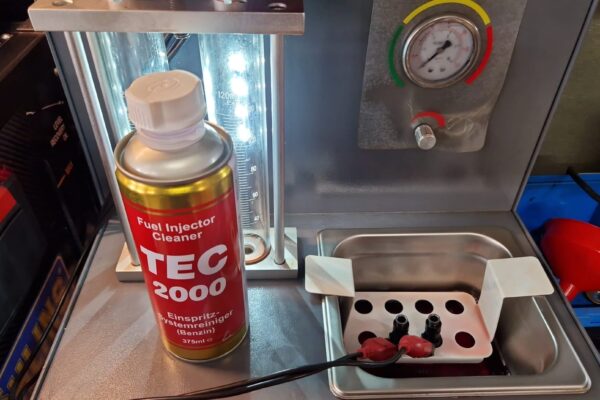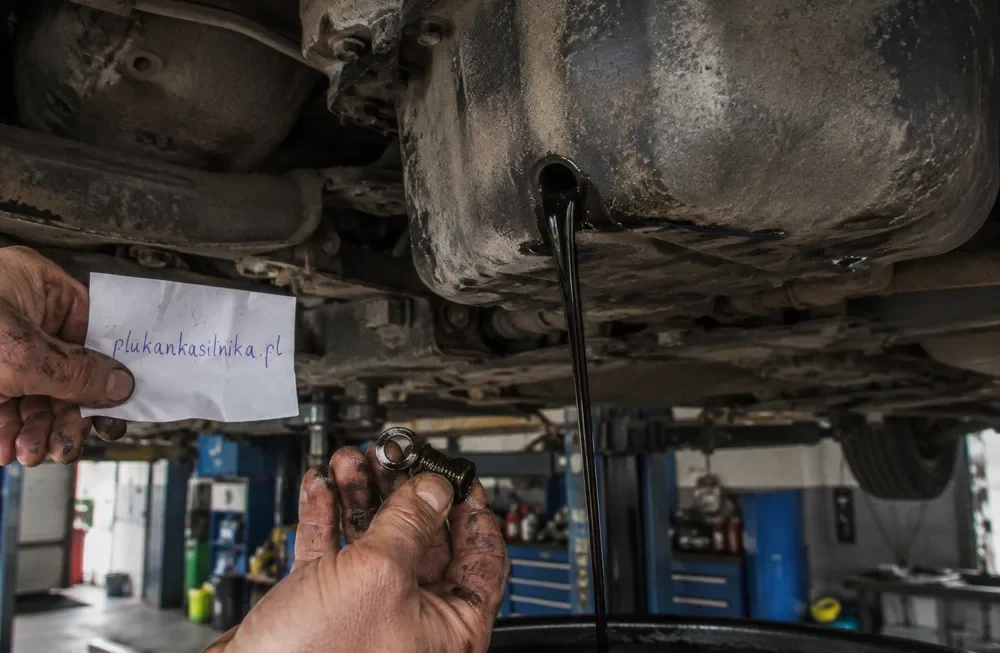
Pull the drain plug and watch what comes out. Sometimes it’s just dirty oil. Sometimes it’s black sludge and varnish stuck to the floor of the pan. A normal oil change never touches sludge like that. That’s where the question starts: TEC 2000 or Liqui Moly engine flush, and which one clears the oil galleries without chewing up your seals. Below is the straight version - what’s in each, how safe they are, what they cost, how you run them. Built off the makers’ own paperwork and Liqui Moly’s safety data sheet. No sales gloss. Data first, verdict at the end.
What an engine flush is and when to use one
An engine flush is a liquid additive, nothing more. You tip it into warm used oil right before you drain, let it dissolve the sludge and baked-on varnish, and the muck leaves with the old oil. Ten, fifteen minutes at idle. Then it all drains out, oil and filter together. One bottle, done during a normal oil change.
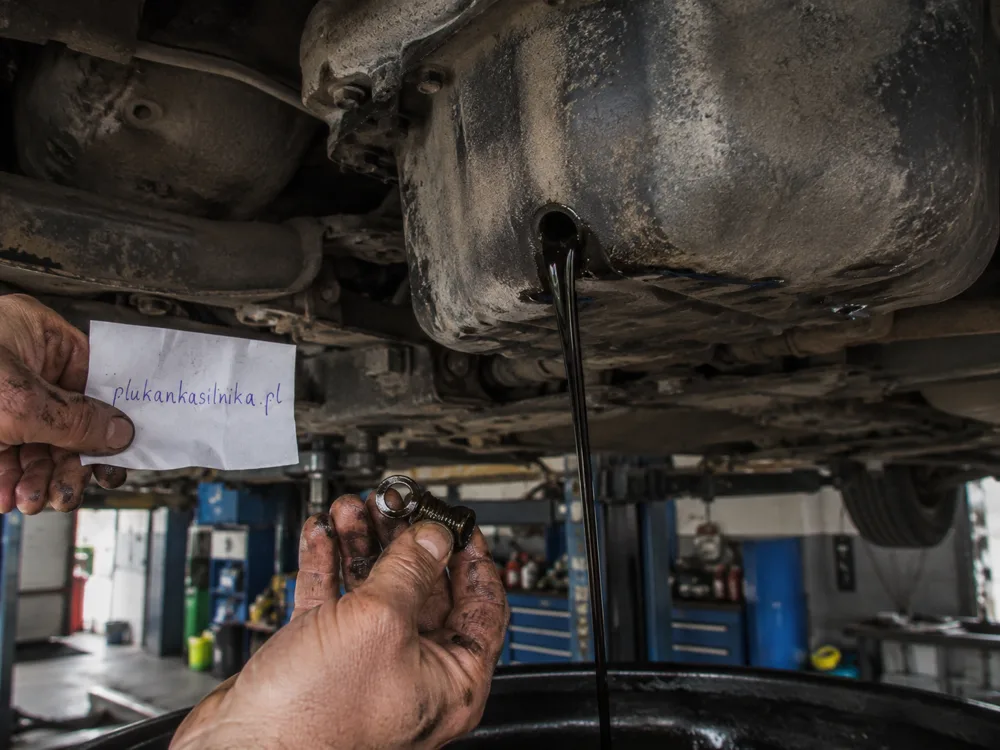
When’s it worth it? A car with no service history. A used buy where nobody can tell you what’s been run through it. A jump to better oil. Oil that turns dark and thick faster than it should. Lifters ticking on a cold start because the galleries are packed with crud. A flush won’t fix a mechanical fault - it cleans, that’s all - but on an engine that’s been collecting deposits for a decade, the clean-up matters. Matters most on modern engines, where a bit of muck is enough to knock oil pressure about. We got into how touchy these systems are in our piece on how a drop of water can seize the engine.
Who is this comparison for?
This one’s for the driver who’s already sold on flushing and has it narrowed to two names: TEC 2000 Engine Flush and Liqui Moly Pro-Line Engine Flush. You want the “which do I buy” settled before you drive to the shop or roll under the car yourself. Right place.
Both are universal. Four-stroke petrol, diesel, LPG, turbo or not - all of them take it. What decides the pick is the chemistry, and how that chemistry treats rubber and silicone seals. So that’s where most of this sits.
The key differences - TEC 2000 vs Liqui Moly
The big split is the base. TEC 2000 runs a kerosene-free, oil-free base on non-chlorinated hydrocarbons - two cleaning solvents, plus two lubricating anti-scuff components riding underneath. Liqui Moly Pro-Line runs on petroleum distillates, confirmed in its own safety data sheet, with a detergent package. Two different bets. One maker walks away from the usual petroleum solvents. The other leans hard on a classic petrochemical base.
The table lines them up side by side: base type, petroleum distillates yes or no, the main features, our running verdict.
| Brand | Product | Base / strength | Lubricant buffer (SDS) | Kerosene | Key feature | Verdict |
|---|---|---|---|---|---|---|
| LIQUI MOLY | Pro-Line Engine Flush | Mixed · Strong | ZDDP 1-2.5%, no EP additive | No - hydrocarbons C10-C13, under 2% aromatics (70-90%) + paraffinic fractions | Dearomatised C10-C13 base with ZDDP at 1-2.5% and calcium sulfonate at 1-2.5% (Section 3). The regular Engine Flush 2640 has the same declared composition as Pro-Line | Effective premium solvent; the sheet lists ZDDP protecting surfaces during the flush |
| Wynn's | Motor Cleaner - Oil System Cleaner 325 ml | Mixed · Medium | None in the SDS | Heavy petroleum distillates (≥50%) + C10 aromatic hydrocarbons 10-15% | Kerosene base with C10 aromatics and amine; notably higher aromatic content than premium brands | Strong dissolving action from aromatics, but kerosene base with diethanolamine raises questions about compatibility with modern seals |
| Bardahl | Engine Flush / Pre-Drain Cleaner 300 ml | Kerosene/heavy · Strong | None in the SDS | Hydrocarbons C10-C13 (80-95%) + kerosene 1-10% | C10-C13 solvent dominant; kerosene addition boosts dissolving power, no lubricant additive | Solid solvent formula with kerosene addition; absence of lubricant means no seal protection during the flush cycle |
| MANNOL | Motor Flush 9900 | Mixed · Medium | Calcium sulfonate (detergent), no ZDDP | Mineral oil base; only disclosed hazardous ingredient is ethoxylated isotridecanol (<0.5%) | Very sparse SDS - mineral oil base with calcium sulfonate, limited composition data | Budget option with limited SDS data; difficult to assess full composition without complete safety sheet |
| Moje Auto | MA Professional Engine Flush 400 ml | Heavy synthetic (GTL) · Gentle | None in the SDS | No - synthetic GTL Fischer-Tropsch base (heavy distillates C18-C50) 75-85% | The only declared component is a GTL synthetic (Fischer-Tropsch, CAS 848301-69-9) at 75-85%; the sheet lists no lubricant additive or detergent and does not declare the remainder | Budget flush on a heavy C18-C50 synthetic base, gentle on seals (the sheet lists H304 only). A heavy fraction dissolves less than light solvents, and the sheet declares no lubricant additive |
| TEC 2000 ⭐ BEST PICK | Engine Flush | Aromatic · Very strong | ZDDP + sulphurised olefin (EP) | No | Advanced hydrocarbon solvent blend (aromatic base) + additive package with ZDDP (anti-wear, CAS 6990-43-8, listed in SDS v3.1); chlorine-free, no kerosene | Top pick - effective and seal-safe |
| Motul | Engine Clean Auto | Aromatic · Medium | None in the SDS | Hydrocarbons C10-C13, <2% aromatics (50-100%) + light paraffinic distillate (10-25%) | Pure C10-C13 solvent base; no ZDDP or other lubricant additives | Proven solvent from a premium brand, but purely solvent-based - TEC 2000 additionally offers a lubricant component protecting seals |
| K2 | Motor Flush T371 250 ml | Aromatic · Very strong | None in the SDS | Reaction mass of ethylbenzene and xylenes (<70%); aromatic hydrocarbons | Aromatic base (ethylbenzene + xylenes) - powerful solvent, classified as flammable and harmful by inhalation | High-activity aromatic formula effectively removes deposits, but xylenes carry higher OHS risk than the light C10-C13 alkanes used by premium competitors |
| Mathy | MATHY-C Motor Interior Cleaner (Engine Flush) 400 ml | Mixed · Medium | ZDDP 1-3%, no EP additive | Hydrocarbons C12-C15, <2% aromatics (50-100%) + sodium petroleum sulfonate (5-10%) | Unique 3-component formula: C12-C15 solvent + sulfonate detergent + ZDDP (1-3%) | One of the few competitors with a ZDDP component; similar approach to TEC 2000 (solvent + lubricant balance), though with a different type of lubricant additive |
| STP | Engine Flush 30-011 450 ml | Mixed · Strong | ZDDP 1-3%, no EP additive | Hydrocarbons C11-C14, <2% aromatics (50-100%) + heavy paraffinic distillate (10-25%) | C11-C14 solvent with paraffinic base oil and ZDDP (1-3%) - three component classes | Competent formula with ZDDP providing anti-wear protection; similar philosophy to TEC 2000, but solvent base dominates |
| Castrol | Engine Shampoo (Castrol Flush) 300 ml | Light aliphatic · Gentle | Molybdenum dithiocarbamate (friction modifier) | Hydrotreated heavy paraffinic distillate (≥75-90%); light solvents as minor fractions (≤3%) | Exceptionally oil-heavy base (≥75% heavy distillate) + trace molybdenum dithiocarbamate friction modifier | Gentle paraffinic oil-based formula - minimal seal risk, but limited dissolving power; TEC 2000 achieves solvent+lubricant balance without such a dominant oil base |
| Comma | Engine Flush (Petrol/Diesel) 400 ml | Mixed · Medium | ZDDP under 1%, no EP additive | Hydrotreated heavy paraffinic distillate (15-25%) as main disclosed ingredient; full composition not revealed in SDS | Limited SDS data; declared ZDDP (<1%) and alkyl phenol (<1%) as additives | Insufficient SDS data makes full assessment difficult; ZDDP presence is positive, but low concentration and lack of composition transparency |
| Forté | New Generation Motor Flush 400 ml | Aromatic · Strong | None in the SDS | Hydrocarbons C10-C13 with aromatics 2-25% (≥50%) + C10 aromatics (10-25%) + glycol ether DPM (10-25%) | 3-solvent formula with notable C10 aromatic and DPM glycol ether content; no lubricant additive | Aggressive solvent formula (aromatics + glycol) effectively breaks down varnish and sludge; no lubricant component - seals unprotected during flush |
Comparison data is being expanded and verified from manufacturer sources.
Same job, different route. TEC 2000 works off a strong aromatic base, no kerosene, no chlorinated hydrocarbons. Liqui Moly works off a proven petroleum-distillate base. And both sheets now list the same anti-wear additive: ZDDP (zinc dialkyldithiophosphate). That used to be Liqui Moly’s point alone. Not any more. TEC 2000’s safety data sheet, version 3.1 (2026-07-09), spells out ZDDP too, alongside a sulfurized-olefin anti-wear component. More on that below.
Composition and seal safety
On seal safety, TEC 2000 has the edge. The maker states no kerosene, no chlorinated hydrocarbons, no acids to gnaw at rubber and silicone. Liqui Moly sits on petroleum distillates, confirmed in its safety data sheet. Details below.
TEC 2000 Engine Flush composition
TEC 2000’s official safety data sheet - SDS version 3.1, dated 2026-07-09 - puts the base as non-chlorinated hydrocarbon and, in the maker’s own words, a base that “does not consist of kerosene or oil.” What’s in it: a blend of aromatic-hydrocarbon cleaning solvents sitting over an additive package. That package now shows two documented anti-wear agents - a ZDDP additive (zinc dialkyldithiophosphate, CAS 6990-43-8) and a sulfurized olefin - both there to hold a protective film on the mating surfaces while the solvent scrubs. The exact percentage shares are in our safety-data-sheet database. TEC 2000 makes a thing of the missing chlorinated hydrocarbons, and that’s what keeps the harsh chlorinated fumes off the bench.
One correction to the older write-ups still floating around. For years the maker kept the lubricating additive off the sheet to guard the formula, and that’s how the “TEC 2000 has no ZDDP” line got started. Version 3.1 lists it outright, so that old line is just wrong now (more in the FAQ). Fair warning on the other side: aromatic solvents are volatile organic compounds, they’re flammable, and “no chlorinated fumes” doesn’t mean no fumes at all. For the seals, though, what counts is what the maker leans on - no acids, neutral pH, nothing in there to harden or shrink rubber, silicone or composite gaskets.
Liqui Moly Pro-Line Engine Flush composition
Liqui Moly’s strong suit is a composition laid out cleanly on its official safety data sheet, and that sheet confirms a petroleum-distillate base. The US-market version (SDS v9.0 dated 2025-06-17, art. 2037/22246) lists in Section 3 “Distillates (petroleum), hydrotreated light” (CAS 64742-47-8) at 80-100%. The Australian version (art. 2427) leads with an isoparaffinic C11-13 hydrocarbon solvent (CAS 64742-48-9, 70-90%). Then the rest: refined mineral oil (1-5%), ZDDP/zinc dialkyldithiophosphate (CAS 68442-22-8, 1-5%), calcium sulfonate (CAS 722503-68-6, 1-5%).
A correction here too, because the online write-ups muddle it. The literal word “kerosene” isn’t in Liqui Moly’s sheet. What the sheet confirms is a petroleum-distillate base in the kerosene/white-spirit range - a close chemical cousin of kerosene, filed formally as a hydrotreated light distillate. The maker calls it neutral toward seals and catalytic converters, that’s their official line, and it’s worth taking seriously. So the split is this: TEC 2000 steps away from a kerosene-type base on purpose, Liqui Moly builds on one and says it’s fully safe.
Want to dig into deposits and how touchy modern diesel systems get about contamination? Two reads: our piece on IDID deposits in common rail systems and the one on the impact of FAME biodiesel on fuel systems.
Regular Liqui Moly flush vs Liqui Moly Pro-Line: an identical declared composition
Two Liqui Moly flushes sit side by side on the shelf at different prices. Plain Engine Flush (art. 2640) in a 300 ml can, and Liqui Moly Pro-Line Engine Flush (art. 2427) in a 500 ml can. The Liqui Moly Pro-Line name reads like a stronger, workshop-grade version. Section 3 of both safety data sheets says otherwise: the declared composition is identical, in identical bands.
Here are both sheets, line by line.
| Component per Section 3 | Liqui Moly Engine Flush 2640 (300 ml) | Liqui Moly Pro-Line Engine Flush 2427 (500 ml) |
|---|---|---|
| Hydrocarbon base | 70-90% hydrocarbons C10-C13, n-alkanes, isoalkanes, cyclics, less than 2% aromatics (REACH-IT List-No. 918-481-9, CAS field blank) | 70-90% alkanes, C11-13-iso- (CAS 64742-48-9) |
| Paraffinic distillate, heavy, hydrotreated (CAS 64742-54-7) | 0-5% | 0-5% |
| Paraffinic distillate, heavy, solvent-dewaxed (CAS 64742-65-0) | 0-5% | 0-5% |
| Paraffinic distillate, light, solvent-dewaxed (CAS 64742-56-9) | 0-5% | 0-5% |
| ZDDP, zinc dialkyl dithiophosphate (CAS 68442-22-8) | 1-2.5% | 1-2.5% |
| Detergent: methyl-C20-24-alkylbenzenesulfonic acid, branched, calcium (CAS 722503-68-6) | 1-2.5% | 1-2.5% |
Everything lines up. The same three paraffinic distillates in the same bands, the same ZDDP at the same concentration, the same calcium detergent. The carrier base also sits at 70-90% in both sheets; it is simply filed under a different identifier. The 2640 sheet gives REACH-IT List-No. 918-481-9 with a blank CAS field, the 2427 sheet gives CAS 64742-48-9. Our reading, not a line from either sheet: both entries are solvents of the same class, described differently by the manufacturer.
Two caveats, so this stays honest. First, the bands in a safety data sheet are wide, so “identical declared composition” is not proof of an identical recipe down to the decimal. Second, the 2640 sheet is a European document, while the 2427 sheet we link to was issued by the manufacturer’s Australian arm. The components match, but do not read the Section 2 classifications across the two, because they were written under different rules.
There is one difference the composition does not show, and it matters in practice: the dose. The manufacturer states that 300 ml of Engine Flush treats 6 litres of oil, while 500 ml of Liqui Moly Pro-Line treats up to 5 litres. That is roughly 50 ml per litre against 100 ml per litre. Liqui Moly Pro-Line therefore works at about double the concentration. Same chemistry, stronger dose.
What that means at the till: paying up for “Liqui Moly Pro-Line” buys a bigger can and a higher concentration in the sump, not a different formulation. Work out the price per 100 ml against the recommended dose before you reach for the pricier tin.
Check it at the source. Manufacturer safety data sheets: Liqui Moly Engine Flush 2640 (version 0037) and Liqui Moly Pro-Line Engine Flush 2427 (version 4.1, Australian issue).
What about Liqui Moly 5200? That one is a different flush
Oelschlammspuelung, catalogue number 5200, often gets lumped in with the two above because it is also called a flush. Its safety data sheet shows a different product, not a different size of the same one.
| Component per Section 3 | Liqui Moly Engine Flush 2640 / Liqui Moly Pro-Line 2427 | Oelschlammspuelung 5200 |
|---|---|---|
| Hydrocarbon base (918-481-9 in 2640 / CAS 64742-48-9 in 2427; 918-481-9 in 5200) | 70-90% | 20-40% |
| 2-butoxyethanol (CAS 111-76-2), a glycol ether | no entry in Section 3 | 10-20% |
| Paraffinic distillate, heavy (CAS 64742-65-0) | 0-5% | 1-10% |
| Calcium detergent | 1-2.5% CAS 722503-68-6 | 1-10% alkylated (long-chain) calcium arylsulfonate, no CAS given in the sheet |
| ZDDP (CAS 68442-22-8) | 1-2.5% | 1-2.5% |
The gap is fundamental. The hydrocarbon base drops from 70-90% to 20-40%, and 2-butoxyethanol appears in the list at 10-20%, a polar solvent from the glycol ether family. Worth noting: the entries in Section 3 of the 5200 sheet add up to somewhere between 33% and 82.5%, so a sizeable part of the formulation is not disclosed there at all. That is unremarkable. A manufacturer must declare hazardous components and those under limits, not the whole recipe. It is also a good illustration of the rule we repeat in every comparison: no entry in a sheet does not mean the substance is absent from the product.
The 5200 sheet does not declare more calcium detergent, it declares a wider band: 1-10% against 1-2.5% in the other two. Those ranges overlap, so the sheets alone do not show that 5200 contains more of it. ZDDP stays at the same 1-2.5%.
The classification of the finished mixture differs too. Worth knowing, because it changes what you need in terms of ventilation and protection. That is not a knock on the product, it is information from its own sheet. Source: Oelschlammspuelung 5200 safety data sheet (version 0025).
There is another signal in Section 1.2 of both documents, the one on intended use. The 2640 sheet says “cleaning agent”, the 5200 sheet says “additives”. The manufacturer itself puts them in different roles. So if you are comparing flushes poured into old oil right before it is drained, put 2640 next to 2427. Number 5200 belongs to a different category, and comparing it on the strength of the word “flush” alone will mislead you.
How this looks against TEC 2000
Read across the sheets and the two brands are betting on different chemistry, not on the same thing at a different price.
Liqui Moly (2640 and 2427) builds on a hydrocarbon base, described in the 2640 sheet as containing less than 2% aromatics. On top of it sits ZDDP at 1-2.5% and a calcium detergent in the same band.
TEC 2000 Engine Flush goes the other way. Its sheet lists a C9 aromatic base at 50-100% and toluene at 10-20%. The anti-wear package is sulfurized olefin under 2.5% plus ZDDP under 0.5%.
Straight about the numbers: on ZDDP alone, Liqui Moly declares more (1-2.5% against under 0.5%). TEC 2000 adds sulfurized olefin, an extreme-pressure additive that the Liqui Moly sheets do not list. Liqui Moly bases its protection on one mechanism (ZDDP); TEC 2000 on two (ZDDP plus sulfurized olefin as an EP additive), and on top of that the aromatics in its base condition the rubber, the seal-swell effect described in our methodology. Both brands protect the sliding pairs during the flush; they just do it with a different set of additives.
What does that mean for cleaning power? Here we are in general solvent chemistry rather than in the sheets themselves, and it should be read that way. Dissolving power is described by the kauri-butanol value (KB) under ASTM D1133, and on that scale aromatic solvents sit distinctly higher than dearomatised paraffinic fractions. An aromatic base attacks hard lacquer and baked carbon more aggressively; a base low in aromatics works more gently. None of the sheets discussed here quotes a KB value for the specific product, so this is an inference from the class of solvent, not a measurement of these preparations.
And the thing that has to be said plainly: a safety data sheet does not measure cleaning performance and will not settle which product lifts more deposit out of a particular engine. It shows the declared composition and the classification, and that is all you may read from it.
Real-world effectiveness - removing carbon, sludge and deposits
Both work the same way. Dissolve the varnish and sludge, pull the deposits - soluble or not - into suspension, drain it all out with the old oil. Where they differ is base strength and working time. Not the principle.
Liqui Moly claims cleaner oil pressure, handy with hydraulic lifters, and better flow after a cold start. TEC 2000 leans on its solvent blend plus the lubricating additives to keep the mating surfaces covered while it runs. Straight with you: there’s no side-by-side “before/after” lab test of the two under identical conditions. So we’re not going to hand you a percentage of contaminants removed. That would be a made-up number. Independent testing shows the general thing and no more - a flush can clearly lift the contaminant load in the drained oil, which you read as a darker drain. The actual result rides on where the engine started, the oil in it, and how closely you follow the steps.
Safety for seals, catalytic converter and turbocharger
Both are declared safe for catalytic converters and turbochargers, and Liqui Moly puts DPF/GPF particulate filters on the list too. On seals, TEC 2000 has the stronger case - stated absence of acids, neutral pH.
On a high-mileage engine, the seals are what people fret about before a flush. Rubber that’s gone hard over the years doesn’t like a sudden change in chemistry. That’s why TEC 2000 leans on its stated absence of acids and its neutral pH - nothing in there to attack old rubber - and the maker declares the formula safe for seals and Nikasil-type coatings. Liqui Moly runs on petroleum distillates and calls itself seal-neutral, again the maker’s official word. One rule sits over both brands, though. If the engine already burns or weeps oil, or the seals are tired, a hard clean can turn a weep into a drip - those deposits were half-sealing the micro-leaks to begin with. On a motor like that, think before you tip the bottle in. We go further in our guide on flushing a high-mileage engine.
How to use it - step-by-step instructions
The procedure is near enough identical for both. Tip it into warm used oil, idle ten to fifteen minutes, drain, change the filter. Here’s the sequence, done right:
- Warm the engine to operating temperature, around 60°C. Warm oil is thinner and carries the flush better.
- Switch off and pour the flush in through the oil filler. Liqui Moly dosing: one 500 ml can per 3-5 L of oil. TEC 2000: whatever the pack states for the size.
- Start it up and let it idle. Liqui Moly says 10-15 minutes. TEC 2000 says roughly 10-15 minutes, up to 25-30 minutes with heavy carbon (the figures wander between the maker’s own materials, so go by the specific pack). Don’t rev it - the flush does its work at idle.
- Switch off and drain the old oil straight away, deposits and all.
- Change the oil filter. Not optional. Skip it and some of the muck stays behind.
- Fill with fresh oil of the correct spec.
The most common mistakes when flushing an engine
The classic mistake is running it longer than told, “to be sure.” Or worse, driving on it. You don’t drive on a flush. It works parked, at idle, full stop. The rest of the usual list: skipping the filter, flushing an engine fresh off a rebuild (new seals and break-in don’t want it), and going in hard on a badly neglected motor - all that loosened sludge can plug a gallery or the oil-pump pickup. On a really gunked-up engine, gentle and in stages beats one big hit.
Price and value - how much TEC 2000 and Liqui Moly cost
Liqui Moly Pro-Line Engine Flush in 500 ml runs about €8-10 (roughly 36-45 PLN) online. TEC 2000 Engine Flush costs 54-69 PLN for 375 ml, and the 2.5 l version about 385 PLN, which works out cheaper per millilitre.
Don’t judge value on the sticker alone. Look at cost per job, and how far the pack stretches. Liqui Moly’s 500 ml does one typical passenger car (3-5 L of oil) - one can, one flush. The bigger packs, Liqui Moly’s 5 L or TEC 2000’s 2500 ml, drop the per-job cost over many treatments, which suits a workshop or someone running a few cars. For a one-off oil change the gap between the two is small enough that composition and how much you trust the base should decide it. Not a couple of euros. Fuller line-up in our engine flush comparison.
The verdict - which flush to choose
Want a base pulled away from kerosene, no chlorinated hydrocarbons, no acids, seals front of mind? Go TEC 2000 Engine Flush. Prefer a classic, strong petrochemical base with the composition laid out in full on a safety data sheet? Liqui Moly Pro-Line is a sound pick.
Our call for the everyday driver, especially one with a higher-mileage car of unknown history: TEC 2000. It comes down to the stated absence of kerosene, chlorinated hydrocarbons and acids, at a neutral pH - the profile least likely to upset old rubber and silicone - backed by a documented anti-wear pack that keeps the surfaces covered while it cleans. Liqui Moly stays a solid, openly documented product, but its petroleum-distillate base is classic petrochemistry. Pick on the composition and your own engine, not the badge. Either way: change the filter, and don’t rev the engine during the flush.
FAQ - common questions about flushing an engine
Which flush is more effective at removing carbon and deposits - TEC 2000 or Liqui Moly?
Both dissolve sludge and varnish well - same working principle, deposits held in suspension so they leave with the old oil. There’s no public, comparative lab test of the two under identical conditions, so nobody can hand you a hard number for one brand’s edge. What you get depends on the engine’s condition and on following the procedure.
How do the two compositions differ, and is it safe for seals?
TEC 2000 states a non-chlorinated hydrocarbon base, no kerosene, no acids, built to spare the seals - and its sheet documents an anti-wear pack, ZDDP plus a sulfurized olefin. Liqui Moly sits on petroleum distillates (confirmed in its safety data sheet) with ZDDP and calcium sulfonate, and calls itself seal-neutral. On the seal question the stronger argument belongs to TEC 2000, thanks to the missing acids and the neutral pH.
How much do the two flushes cost and which offers better value?
Liqui Moly Pro-Line 500 ml is roughly €8-10 (about 36-45 PLN). For TEC 2000, the 2.5 l pack at about 385 PLN gives the lowest cost per treatment. For a single oil change the per-treatment gap is small, so value comes down to how far the pack stretches more than the number on the can.
Are both flushes suitable for diesel and petrol engines?
Yes. Both are built for four-stroke petrol, diesel and LPG, turbo or not. Liqui Moly also declares safety for DPF/GPF filters and catalytic converters.
How do you use a flush correctly before an oil change?
Warm the engine, pour the flush into the old oil, idle ten to fifteen minutes (Liqui Moly 10-15 min; TEC 2000 around 10-15 min, up to 25-30 min with heavy carbon), then drain. Change the filter before you refill - not optional. And no revving while it runs.
Can an engine flush harm the engine?
In a healthy, regularly serviced engine the risk is low, as long as you follow the instructions. Go careful on badly neglected units - loosened sludge can clog galleries - and where the seals already leak. And don’t flush straight after a rebuild.
Which flush to choose - the verdict for the typical driver?
For most drivers, especially with a higher-mileage car, we lean TEC 2000 Engine Flush - stated absence of kerosene, chlorinated hydrocarbons and acids, plus a documented anti-wear pack. Liqui Moly Pro-Line is a solid, openly documented alternative built on petroleum distillates.
plukankasilnika.pl editorial · 2026-06-25 · last updated: 2026-07-13
Sources
- Liqui Moly Pro-Line Engine Flush - official LIQUI MOLY product page (US)
- Official LIQUI MOLY SDS - 2037/22246 Liqui Moly Pro-Line Engine Flush (US/Canada, v9.0, rev. 2025-06-17)
- Official LIQUI MOLY SDS - 2427 Liqui Moly Pro-Line Engine Flush (Australia)
- TEC 2000 - What is in an engine flush? (tec2000.pl blog)
- TEC 2000 Liqui Moly Engine Flush 2500 ml - product page (tec2000.pl)
- TEC 2000 Engine Flush - safety data sheet (SDS), version 3.1 dated 2026-07-09 (lists ZDDP, CAS 6990-43-8). Composition in our safety-data-sheet database.
Curious how two brands from the same corporate group compare? See our breakdown, Würth Engine Flush vs Liqui Moly - a composition comparison (SDS).
TEC 2000 or Liqui Moly engine flush - which to choose?
In short: both flush an engine effectively; the difference is mainly the base. TEC 2000 Engine Flush uses a strong aromatic base - a powerful solvent for hard carbon and sludge - Liqui Moly a milder aliphatic base (petroleum distillates). Since the sheet update of 2026-07-09, both brands document the same anti-wear additive: TEC 2000 (v3.1) lists ZDDP explicitly (CAS 6990-43-8), just as Liqui Moly has long done, and TEC 2000 carries a sulfurized olefin on top. On documented anti-wear protection they’re in the same league.
In the workshop the choice comes down to how neglected the engine is, and that’s a matter of base character - aromatics cut deposits harder than lighter aliphatics. The table shows what actually follows from both brands’ sheets, and what the sheet can’t tell you at all.
| Feature | TEC 2000 Engine Flush | Liqui Moly Pro-Line 2427 |
|---|---|---|
| Solvent base (from the sheet) | Aromatic (light aromatic hydrocarbons) | Light aliphatic (isoalkanes C11-C13, petroleum distillates) |
| Base character (chemical inference, not a test) | Strong deposit solvent | Milder solvent |
| Lubricating / anti-wear additives | ZDDP (CAS 6990-43-8) and a sulfurized olefin on SDS v3.1, plus a protected lubricating package | ZDDP (CAS 68442-22-8) plus a calcium detergent, listed on the sheet |
| Seal safety | Seal-safe formulation (manufacturer statement, components do not dry out) | Safe (manufacturer statement) |
| Maker / origin | TEC 2000, United Kingdom (TEC 2000 Ltd) | Liqui Moly, Germany |
What a safety data sheet does NOT tell you about a flush
A safety data sheet is a hazard document, first and last. It lists the substances classed as dangerous above a threshold - not the lubricating or anti-wear packages sitting below that line, or held as trade secrets. So on its own the sheet won’t tell you how much protection a flush leaves behind, or how well it cleans. That’s what wear tests show you. Not a hazard sheet.
When to pick TEC 2000, and when Liqui Moly?
TEC 2000 Engine Flush earns its keep when there’s hard carbon and sludge to shift - an engine with skipped oil changes, a used car with no service record, a black crust under the filler cap, or prep before you move to better oil. The aromatic base is the stronger solvent for that. And the ZDDP plus the sulfurized olefin keep the surfaces covered while it works. On routine prevention, on an engine already in good shape, TEC 2000 adds what a passive detergent does not: it conditions the seals and holds an EP package in place for the duration, then evaporates once the oil is drained. On the Polish market the Liqui Moly Pro-Line equivalent is article 2662.
Does TEC 2000 Engine Flush contain ZDDP?
Yes. TEC 2000’s safety data sheet, version 3.1 (2026-07-09), lists ZDDP outright - zinc dialkyldithiophosphate, CAS 6990-43-8 - an anti-wear additive that protects the mating surfaces during the flush, with a sulfurized olefin working alongside it. The maker used to keep the pack off the sheet to guard the formula, and that’s where the “TEC 2000 without ZDDP” line online came from. The current sheet settles it: on documented anti-wear protection, TEC 2000 is level with Liqui Moly.
Need a strong aromatic-based flush? See the TEC 2000 engine flushes in the shop.