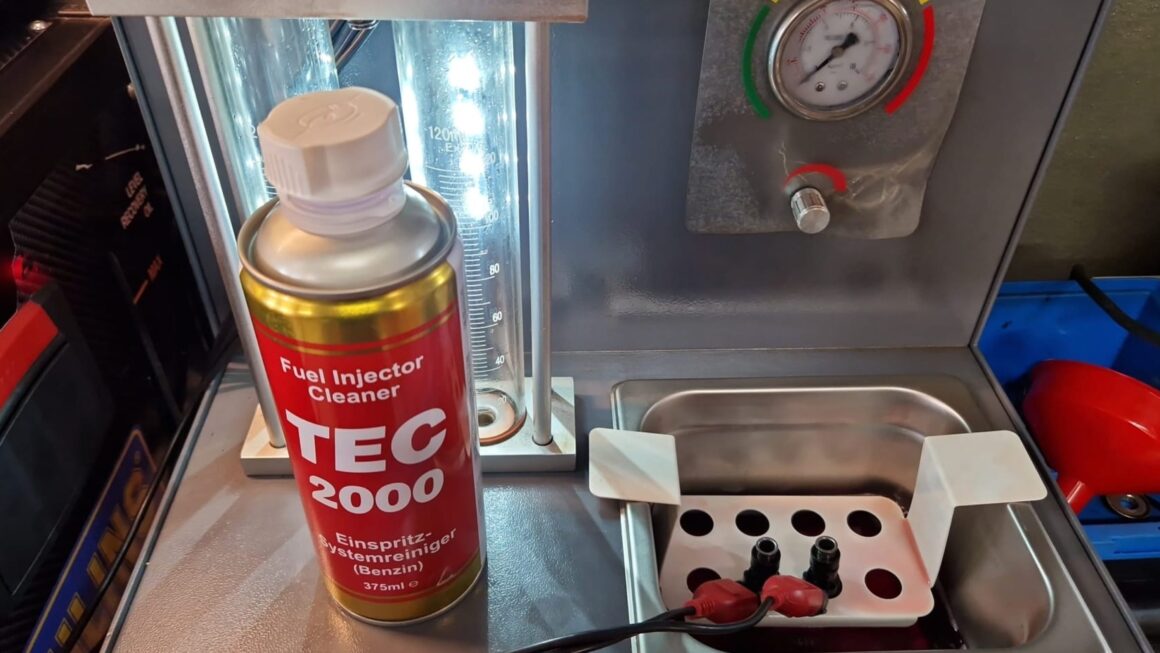
In short: both TEC 2000 and Liqui Moly sell several injector products, so the right pick depends on your fuel and the method. TEC 2000 has strong through-the-tank cleaners (Diesel System Cleaner, Fuel System Cleaner) and gentler service concentrates fed from the can (Diesel Injector Cleaner, Fuel Injector Cleaner). Liqui Moly’s petrol tank additive Jectron lines up with TEC 2000 Fuel System Cleaner, while the service concentrate Diesel Purge lines up with TEC 2000 Diesel Injector Cleaner. Each one removes deposits. None repairs a mechanically worn injector.
TEC 2000 has four injector products - which does what?
Before you line TEC 2000 up against Liqui Moly, it helps to know that TEC 2000 does not sell a single “injector product” but four, arranged on two axes: fuel (diesel or petrol) and how they work (a strong through-the-tank cleaner, or a gentler service treatment fed from the can).
| TEC 2000 product | Fuel | Strength and method | Liqui Moly counterpart |
|---|---|---|---|
| Diesel System Cleaner | diesel | strong cleaner, poured into the tank | - |
| Fuel System Cleaner | petrol | strong cleaner, poured into the tank | Jectron (tank additive) |
| Diesel Injector Cleaner | diesel | gentler, service treatment from the can | Diesel Purge (service treatment) |
| Fuel Injector Cleaner | petrol | gentler, service treatment | - |
That gives you the full map. Drive a petrol car and want a simple pour-in-the-tank dose, and you reach for Fuel System Cleaner instead of Jectron. Run a diesel and want a proper service treatment, and you pick Diesel Injector Cleaner instead of Diesel Purge. The rest of this article breaks down the most common question, the diesel service duel between TEC 2000 Diesel Injector Cleaner and Diesel Purge.
The question “TEC 2000 or Liqui Moly for injectors” comes up in the workshop every day, and it almost always starts with two misunderstandings. The first: that “Liqui Moly” is a single product. The second: that TEC 2000 goes into the tank like any other additive. Neither is true. Below I take it apart piece by piece, working from the official safety data sheets and product sheets, with none of the marketing gloss.
TEC 2000 or Liqui Moly for injectors: what should you actually pick?
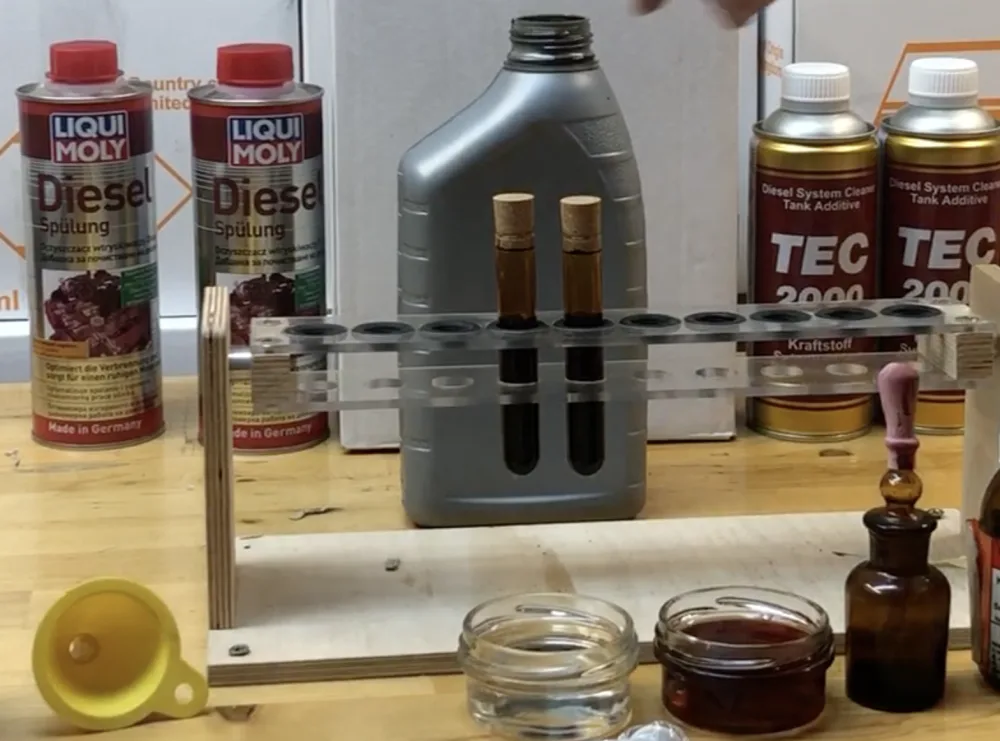
For a diesel, the real head-to-head is TEC 2000 Diesel Injector Cleaner against Liqui Moly Diesel Purge, because both work the same way: the engine runs fed by the product directly from the can. Jectron is a completely different category, a petrol tank additive, so it simply does not fit a diesel. Before you compare “TEC 2000 vs LM”, settle two things first: your fuel, and whether you want a workshop service treatment or just a top-up in the tank. That is not a detail, it is the whole decision.
How do these products differ (fuel, method, base)?
The difference starts with the fuel and how you feed it in, and only then with the composition. TEC 2000 Diesel Injector Cleaner is a diesel concentrate in a 375 ml can, fed straight into the engine after you disconnect the fuel lines, or through an injector cleaning machine. Diesel Purge works in exactly the same way, as a workshop treatment for diesels. Jectron is petrol and goes into the tank. The table below lays out what the official documents actually confirm.
| Product | Fuel / type | Base and composition (confirmed from SDS) | Hazard classification | How it is applied | Limits |
|---|---|---|---|---|---|
| TEC 2000 Diesel Injector Cleaner | Diesel, service concentrate, 375 ml | Full CAS / % breakdown: no confirmed data in the product sheet. The maker (a British brand) states it contains strong lubricating components that do not dry out the injectors. | Patrz karta produktu | Engine runs fed by the product straight from the can (lines disconnected, or an injector cleaning machine); roughly 375 ml over 20 minutes of running | Diesel engines only; does not repair mechanical wear |
| Liqui Moly Jectron | Petrol, tank additive | Heavy hydrotreated naphtha (CAS 64742-48-9) 80-100%, heavy aromatic solvent naphtha (CAS 64742-94-5) 3-7%. PEA as the active detergent per the maker’s description (below the disclosure threshold in the SDS). | Patrz karta produktu | Poured into the petrol tank | Petrol engines only; does not repair mechanical wear |
| Liqui Moly Diesel Purge | Diesel, service concentrate | Heavy hydrotreated naphtha (CAS 64742-48-9) ≥80%, aromatic solvent naphtha (CAS 64742-94-5) 1-5%, 2-ethylhexyl nitrate (CAS 27247-96-7) 1-5% as an ignition improver. | Patrz karta produktu | Engine draws the product directly from the can (workshop treatment) | Needs to be plumbed into the fuel system; does not repair mechanical wear |
There is one thing here worth remembering. For a diesel, the closest match to TEC 2000 Diesel Injector Cleaner is not Jectron, it is Diesel Purge, because both are service treatments with direct feeding rather than tank top-ups. The documents also show an honest difference in the base. That tells you the TEC 2000 base is more volatile, lighter and more strongly aromatic. It is information about the hazard and storage, not a rating of “cleaning power”. You can find the full composition breakdowns for both brands in the safety data sheet library.
What does an injector cleaner really do, and what will it never do?
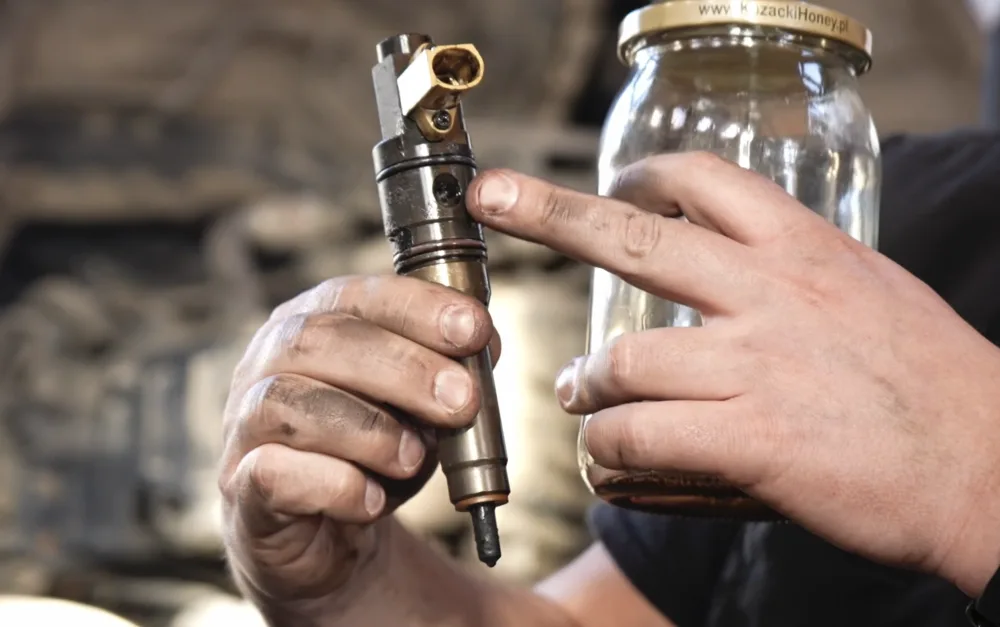
An injector cleaner removes and reduces deposits, but it does not reverse mechanical wear. That is the single most important sentence on the whole topic, and the point where most people waste their money. Deposits are the carbon and varnish on the injector tips and in the nozzle passages. Detergents, PEA included, genuinely dissolve them and make it harder for new ones to build up, which brings back proper fuel atomisation and a smoother idle.
Mechanical wear is a completely different story. A worn needle, play in the nozzle, a seized tip, a tired piezo element, a drop in pump pressure: no cleaner rebuilds any of that. Fuel on its own does not “wash” an injector in any meaningful, restorative sense. If an injector is over-fuelling because its precision pair is worn, the only way out is bench reconditioning or replacement. More cans of chemistry change nothing here except how much is left in your wallet.
Telling the two apart is easier than it sounds. If the symptoms crept in gradually, the engine runs rough, smokes when cold and loses a bit of power, it is usually deposits, and a cleaning treatment makes sense as the first step. If the problem appeared suddenly, an injector is over-fuelling badly, there is a fault code pointing at one specific cylinder, or you can hear knocking, then it goes on the test bench first, not into the chemistry aisle.
TEC 2000 Diesel Injector Cleaner: what the official data tells us
The key thing is how you use it. This is not a tank top-up. The procedure is to disconnect the feed and return lines and run the engine straight from the can, either on its own or through an injector cleaning machine. One 375 ml can lasts around 20 minutes of running, and with badly fouled injectors you repeat the treatment. It is the same philosophy as Diesel Purge.
The maker, a British brand, describes it as a product that cleans and unblocks injector tips and nozzles, with lubricating components meant not to dry out the parts while it runs. That matters on a diesel, where the fuel itself lubricates the precision pair in the pump and injectors. What the product sheet does not give you is a composition breakdown with CAS numbers and concentrations. So I am not stating a detailed composition for TEC 2000 Diesel Injector Cleaner as fact, because that would be inventing it. The maker also claims reduced smoke and better performance, but those are marketing claims, not results I have verified, so I will not present them as hard numbers.
Liqui Moly: which product is for injectors?
With Liqui Moly you have to pick the variant first, because “Liqui Moly for injectors” hides several different products. Jectron is a petrol tank additive whose SDS-confirmed base is heavy hydrotreated naphtha with a small aromatic fraction, and its active detergent is PEA. That is the classic choice for a petrol injection system when you are dealing with deposits on the injectors and in the chamber.
Diesel Purge is a different philosophy and the direct rival to TEC 2000. Its SDS confirms a naphtha base with added 2-ethylhexyl nitrate, an ignition improver, and the treatment itself has the engine running for a good ten to fifteen minutes fed straight from the can. It is a workshop clean of a diesel system that needs plumbing in and the know-how to do it safely. If all you want is a top-up in the diesel tank, that is a separate category of service products for the tank, and it is neither Jectron nor Diesel Purge.
Petrol or diesel: matching the product to the fuel
The most common mistake is picking a product that does not match the fuel. TEC 2000 Diesel Injector Cleaner is a diesel product. Jectron is a petrol product. Diesel Purge is a diesel product, but a service treatment with direct feeding, not an everyday additive. Before you buy anything, check that the packaging clearly names your fuel, because the detergents and bases are chosen for a different kind of deposit and a different fuel system. For a diesel, if you want a proper injector cleaning treatment, TEC 2000 lands squarely in that scenario.
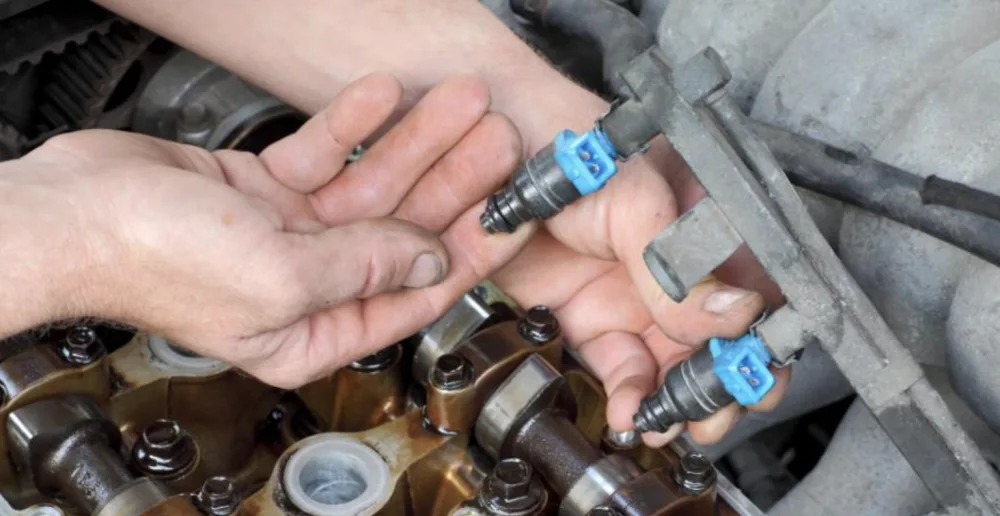
How to use it so it actually works
For a service treatment like TEC 2000 Diesel Injector Cleaner or Diesel Purge, stick to the procedure on the product sheet: disconnect the lines, feed the engine from the can, watch the running time. This is a job for someone who knows where and what to connect, because you are dealing with a pressurised fuel system. For a tank additive like Jectron, you follow the dosing on the label. I am not going to quote specific millilitres per litre here, because it depends on the product and the capacity, and inventing a dose would be misleading. Check the label.
The rules that actually hold up in the workshop: do not expect a miracle from one can in a badly neglected car, and with a tank additive, give the product a proper run under load on a longer drive. If there is no improvement after the treatment, or after one or two tank fills, that is a sign the problem is not in the deposits, and it is time for injector testing on the bench. Chemistry is cheap. Guessing forever is not.
Common mistakes and the myth that fuel cleans the injectors on its own
The most dangerous myth goes like this: “good fuel with additives will clean the injectors by itself, so there is nothing to do”. That is not true, and it is worth saying plainly: fuel does not wash injectors. There is no such thing as “fuel that cleans”. At best, the additives present in fuel can only slow down the ageing of the fuel itself, not remove deposits from the nozzle.
Fuels do not carry real cleaning additives. What producers add is mainly ethanol in petrol and cetane improvers in diesel, and that serves combustion parameters, not injector cleaning. Ethanol is also hygroscopic, meaning it draws moisture from the air, so water gets into the system more easily.
Worse still, the biocomponents in fuel can actually speed up its ageing. Research by PIMOT (the Polish Automotive Industry Institute), carried out on commonly available fuels with biocomponents (B7 and B20), indicates that biocomponents are an additional factor intensifying fuel ageing, which makes the product cloud, stratify and form sediments that settle at the bottom of the tank. Even a 7% share of FAME (fatty acid methyl esters, the bio-component of diesel) in ultra-low-sulphur diesel lowers oxidative stability and accelerates fuel degradation during storage, distribution and use, while the secondary oxidation products can block fuel filters. In short, simply pouring in fuel does not so much clean as add deposits across the whole fuel system, from filters to injectors (including the so-called IDID, Internal Diesel Injector Deposits).
The conclusion is simple: since fuel does not clean, actually removing a deposit requires a dedicated product used deliberately, not faith that the tank will do the job for us. And that brings back the split between two worlds: the deposit, which an injector cleaner genuinely acts on, and mechanical wear of the nozzle, which nothing fixes except reconditioning or replacement.
The second common mistake is buying blind. Someone hears “Liqui Moly for injectors” and buys Jectron for a diesel, even though Jectron is a petrol product. Or someone treats a workshop treatment with direct feeding like an ordinary top-up into the tank. Those are two different levels of intervention.
The third mistake is treating a symptom with chemistry when it is already a failure: a check-engine light on one specific injector, hard knocking, a clear drop in power from one day to the next. In that case it is diagnosis first, chemistry only afterwards, never the other way round.
The fourth mistake is impatience with tank additives. Deposits come off gradually, over several refuelling cycles, not after ten kilometres. If two or three full tanks with a correctly matched product make no difference at all, stop pouring in more cans and take the car to a test bench. That is the cheapest route to the truth about the state of your injectors.
Sources (PIMOT, the Polish Automotive Industry Institute):
- “Ocena zmian wybranych właściwości paliw w czasie ich magazynowania” (Assessment of changes in selected fuel properties during storage): biocomponents in fuel are “additional factors initiating or intensifying the ageing processes taking place in the fuel”, leading to clouding, stratification and sediments at the bottom of storage tanks.
- “Wpływ miedzi na stabilność oksydacyjną handlowego oleju napędowego” (The influence of copper on the oxidative stability of commercial diesel): a 7% (V/V) share of FAME in ultra-low-sulphur diesel “reduces oxidative stability and causes accelerated fuel degradation during storage, distribution and use”.
The verdict (honestly)
For a proper diesel injector cleaning treatment, TEC 2000 Diesel Injector Cleaner is a sensible pick: a diesel service concentrate with a lubricating package, fed straight from the can, with a clear purpose confirmed in the maker’s sheet. Its direct equivalent at Liqui Moly is Diesel Purge, which works by the same method, has a base with a higher flash point, and adds an ignition improver instead of the emphasised lubricity. For petrol there is a separate product, Jectron with PEA, poured into the tank. So which is better for injectors depends on your fuel and on whether you are fighting deposits or already fighting wear. For deposits, any of these products makes sense. For a mechanically worn injector, none does, and here honesty matters more than selling another can. If you want to try the TEC 2000 diesel injector cleaner, you will find it in the TEC 2000 shop. You can compare the full safety data sheets for both brands in the SDS library.
Frequently asked questions
TEC 2000 or Liqui Moly for diesel injectors?
For a diesel, the real head-to-head is TEC 2000 Diesel Injector Cleaner against Liqui Moly Diesel Purge. Both are service concentrates that feed the engine straight from the can, not tank top-ups. Jectron is out, because it is petrol.
Does TEC 2000 Diesel Injector Cleaner go into the tank?
No. Per the product sheet it is a service treatment: you disconnect the fuel lines and the engine runs fed by the product straight from the can, around 375 ml over 20 minutes. That is the same method as Liqui Moly Diesel Purge, not a simple tank top-up.
Will an injector cleaner fix a worn injector?
No. A cleaner removes and reduces deposits, but it does not reverse mechanical wear. A worn needle, play in the nozzle or a drop in pressure need bench reconditioning or replacement. No can of chemistry rebuilds that.
Is Jectron suitable for a diesel?
No. Jectron is an additive for a petrol system, poured into the tank. For diesel injectors, use a clearly diesel product, for example TEC 2000 Diesel Injector Cleaner or the Liqui Moly Diesel Purge treatment.
How does TEC 2000 Diesel Injector Cleaner differ from Diesel Purge?
The method is the same: the engine is fed straight from the can. The base differs. TEC 2000 emphasises lubricating components, Diesel Purge adds an ignition improver (2-ethylhexyl nitrate).
What does PEA do in injector additives?
PEA (polyetheramine) is a detergent that dissolves deposits on the injectors and in the chamber and makes it harder for new ones to form. It genuinely improves fuel atomisation. It does not repair mechanical wear, though, because that is a different problem.
Will good fuel clean the injectors on its own?
Only partly, and only deposits. Detergents in fuel slow carbon build-up and wash off a thin layer, but they do it slowly. Thick varnish or a mechanically worn nozzle will not be undone by fuel.