You can flush a high-mileage engine, but the chemistry you pick matters more than the flush itself. A worn engine suits a flush whose safety data sheet documents an anti-wear additive, ZDDP or sulfurized olefin, because it protects the looser friction pairs during the short, controlled flush before an oil change. Unknown history or wear symptoms: go gentler, and diagnose first.
As of July 2026. Last updated: 16 July 2026.
The question about flushing a high-mileage engine lands in our shop a few times a week. Someone just bought a car showing 145,000 miles, someone else has owned theirs since new and just rolled past 130,000, and both read online that a flush will “dissolve the deposits that are holding the engine together.” There is a grain of truth in that caution, but it is served up so vaguely that nothing useful comes out of it. The real question is not whether to flush. It is what you flush with. Below I break it down: at what mileage you actually start being careful, how to read the chemical base of a flush off its safety data sheet, and why the lubricant package inside a flush counts for a lot more on a worn engine than on a fresh one.
Should you use an engine flush on a high-mileage engine?
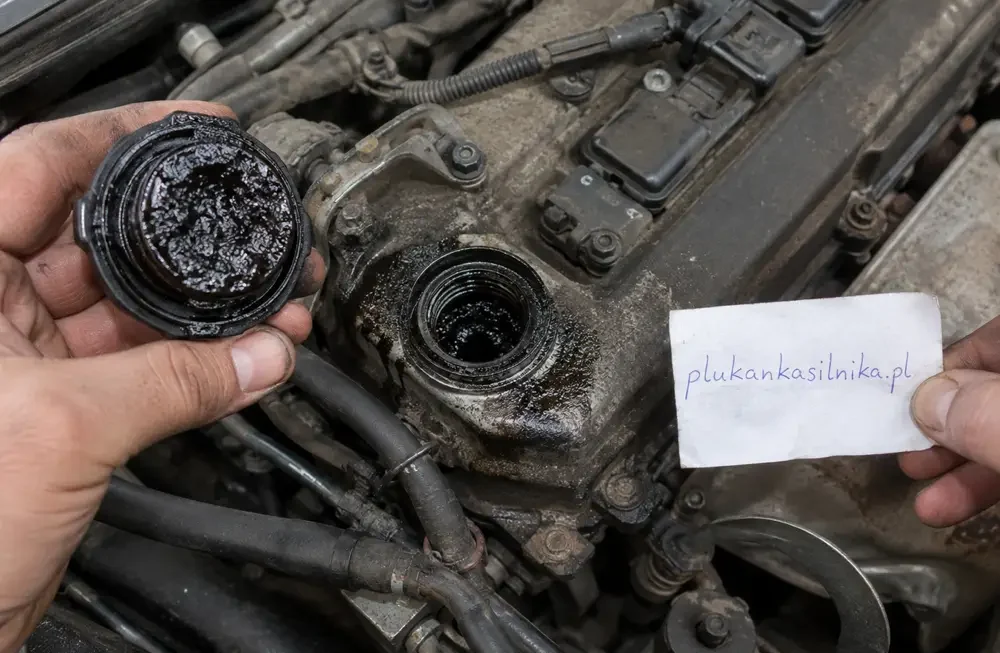
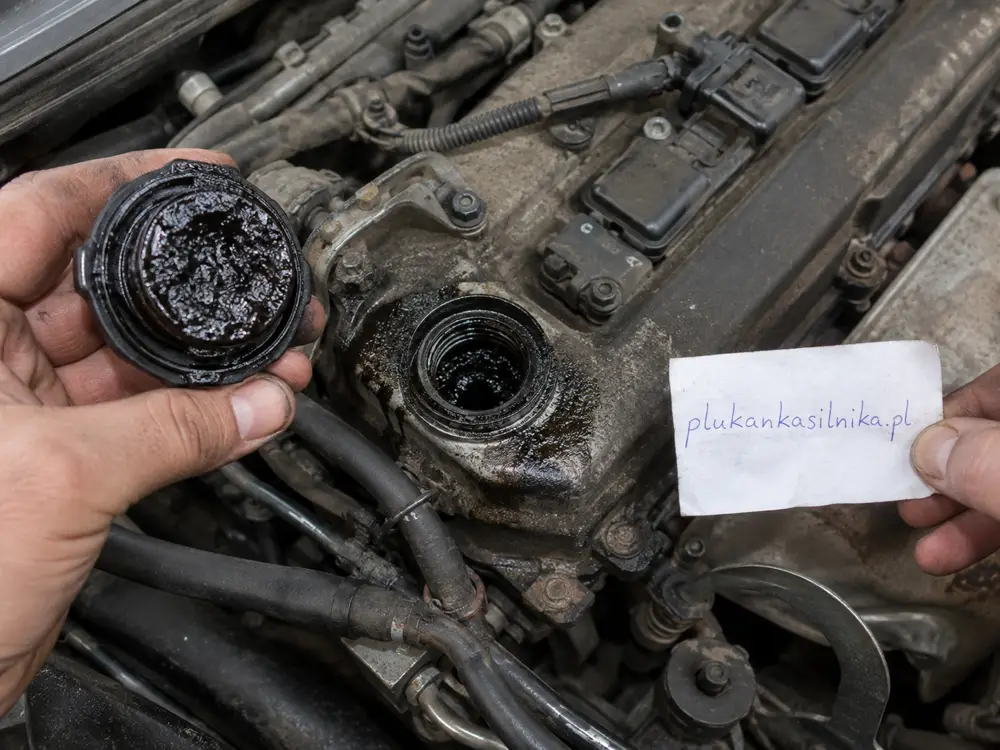
Yes, you can, as long as you match the chemical base to the engine’s condition and keep the run time short. A flush earns its place when there is black sludge under the oil filler cap, when the car has lived a stop-start city life on short trips, when the service history is unknown or patchy, or when you want to prep an old engine before switching to a better oil. In every one of those cases the crankcase collects deposits and varnish that a plain oil change leaves behind.
There is a hard limit a flush will not cross, though, and this is where the most common misunderstanding sits.
What a flush actually does, and what it does not
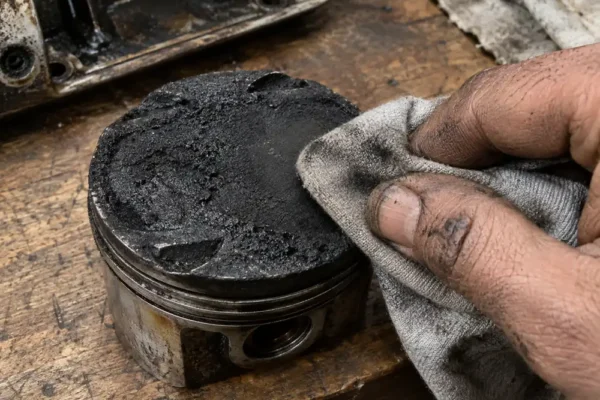
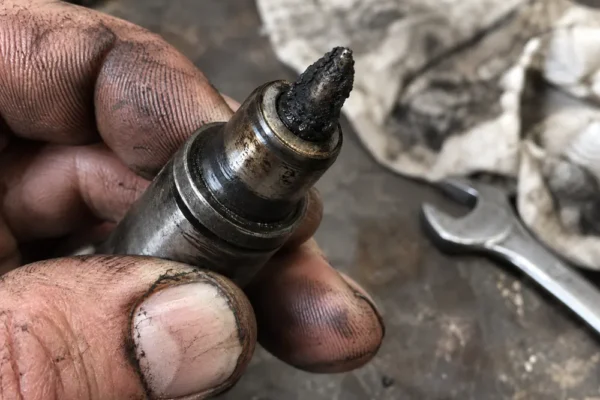
A flush dissolves deposits and sludge. That is it. The warm, thinned cleaning fluid reaches spots that fresh oil no longer gets to, lifts carbon off the rings, oil galleries and valve cover, and carries the lot out when you drain the oil. That is the whole job, and it does it well.
What it does not do: reverse mechanical wear. It will not close up bearing clearances, rebuild rings, or “rejuvenate” an engine. There is no such thing as a self-cleaning oil or additive that keeps a tired engine in shape indefinitely. PEA-based additives can genuinely cut deposits on injectors, but a deposit is one thing and worn metal is another. If an engine is drinking oil through worn valve guides, no flush is going to walk that back. Get that straight before you pour anything into the filler neck, because half the disappointment people have with flushes comes from expecting them to fix what they cannot touch.
What counts as “high mileage”?
Loosely, from around 90,000 to 125,000 miles (150,000 to 200,000 km) upward, and higher again on diesels, but that is only a rough marker. A car is generally treated as high-mileage past roughly 150,000 km, even though plenty of engines cruise past 125,000 miles on decent maintenance without any drama (Cam Clark Ford). Diesels often get counted higher, into the 185,000-mile range, because they are usually built for long hauls. Valvoline, for its part, talks about the “unique challenges” engines face from 150,000 miles on: wider clearances, a thinner oil film, more heavily loaded friction pairs.
Why the odometer alone is not enough
Mileage is a proxy, not a diagnosis. I have seen engines past 180,000 miles that were cleaner inside than plenty of 75,000-mile cars fed nothing but city driving and stretched oil intervals. What decides it is the change regime, the driving style, and the history. A highway car serviced every 6,000 miles on a good oil is in better shape at 155,000 miles than a neglected city runabout at 75,000 with an oil change “every couple of years when it comes to mind.” So treat the numbers above as the point where you get more careful, not a hard line that says “now it is off limits.”
Will an engine flush cause leaks in an old engine?
A flush on its own does not create a leak. It can expose one that was already there, if deposits were masking the fault. That distinction is the heart of the whole fear around flushing a high-mileage engine, so let me walk through the mechanism instead of just waving a warning flag.
How deposits “seal” leaks
In a high-mileage engine, a layer of sludge and varnish settles into the gaps around aged, hardened seals and gaskets: under the valve cover, at the oil pan, around the crank seals. That deposit acts like a makeshift, accidental seal. It fills the play in the stiffened rubber, and as long as it sits there, the oil stays put. A strong flush dissolves it along with the rest of the carbon. Once the makeshift plug is gone, oil starts weeping through a seal that was genuinely worn out already.
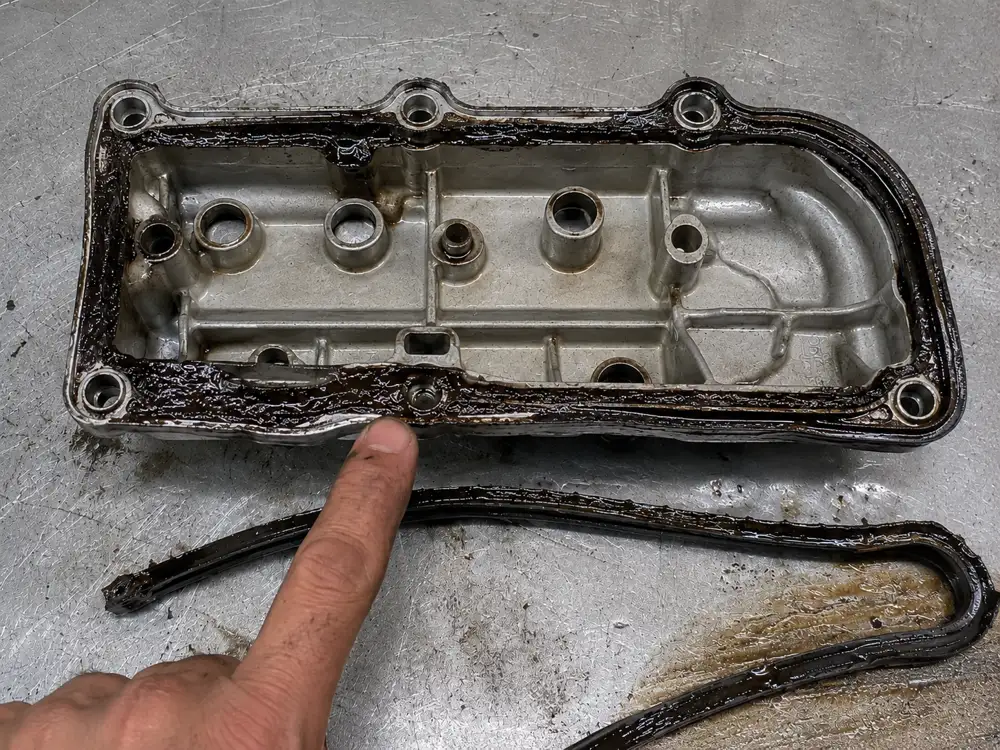
Reman Engine HQ describes it plainly: in old engines, sludge is sometimes the only barrier keeping oil from seeping through tired seals, and removing it exposes the seals for what they really are. AMSOIL puts it even shorter: the seals were already bad, and the flush simply revealed their true condition. The driver ties the leak to the flush because it showed up the day after, but the cause is the existing wear. The flush revealed it, it did not create it. I go deeper on this in a separate piece on whether an engine flush causes leaks.
There is a second real risk here, and this one is mechanical. A large chunk of dislodged deposit can settle on the pump pickup screen and partly block it, and that is a short road to oil starvation, knocking and accelerated wear. It will not reach the oil galleries, because they sit downstream of both the pickup screen and the filter. So on an engine with heavy carbon and an unknown history, the sensible move is to flush gentler and shorter, and to change the filter no matter what.
Which engine flush should you pick for a high-mileage engine?
There are two reasonable routes: a mild chemical base with less bite, or a strong base with a documented lubricant additive that pairs cleaning power with protection for the friction pairs. What to avoid on a worn engine is a strong aromatic solvent with no declared lubricant at all, because that is raw power with no cushion for the moment when the oil film is at its thinnest.
So this is not just talk, I pulled together eight real flushes and tagged each one with its chemical base and its lubricant additive, straight off the safety data sheet. That is the part a typical guide on this topic skips: it treats “flush” as one thing, when it is really five different chemical profiles, each acting differently on an old engine.
| Brand / Product | Chemical base | Strength (inferred from chemistry) | Lubricant per the safety data sheet | Note for high mileage |
|---|---|---|---|---|
| Moje Auto - MA Professional Engine Flush | GTL synthetic C18-C50, low aromatic | Mild | None declared | Gentle on seals, moderate cleaning power; no lubricant declared |
| Mannol - Motor Flush 9900 | Mineral oil base (sparse sheet) | Medium | Calcium sulfonate (sparse sheet) | Little SDS data to go on |
| Wynn’s - Oil System Cleaner | Kerosene base + C10 aromatics + diethanolamine | Medium | None declared | Kerosene base with an amine; questions over compatibility with modern seals |
| Motul - Engine Clean Auto | C10-C13, under 2% aromatics + paraffinic distillate | Medium | None per the sheet | Clean solvent base, no declared lubricant |
| Liqui Moly - Pro-Line Engine Flush | Mixed C10-C13 | Strong | ZDDP 1-5% + calcium sulfonate (on the sheet) | Declared ZDDP protects surfaces during the flush |
| Bardahl - Engine Flush | Kerosene/heavy C10-C13 + naphtha | Strong | None per the sheet | No declared lubricant for the cycle |
| K2 - Motor Flush T371 | Aromatic (ethylbenzene + xylenes) | Very strong | None per the sheet | Strong aromatic solvent, higher handling and safety profile (xylenes) |
| TEC 2000 - Engine Flush | Aromatic C9 + additive package | Very strong | Sulfurized olefin under 2.5% + ZDDP under 0.5% (SDS v3.1) | Strong solvent + a documented anti-wear package = protection for worn friction pairs during the flush |
This is a classification of the chemical base from the safety data sheets, not a ranking of how well each one cleans. “None per the sheet” is an objective fact taken from that particular sheet, not a verdict that the product will harm your engine. A missing ingredient on a data sheet does not mean it is missing from the product. I state strength as an inference from the chemistry: an aromatic solvent dissolves harder than an oil base by its nature. You can find the full sheets for these flushes in the same pillar guide on choosing the best engine flush.
Why the lubricant package matters on worn friction pairs
An engine past 180,000 miles has wider clearances, a thinner oil film, and more heavily loaded camshafts and bearings. During a flush, the oil spends a good ten to fifteen minutes thinned by cleaning fluid and loaded with dissolved deposits. That is a short window where the friction pairs are protected less than usual. On a fresh engine with tight clearances, no big deal. On a worn one, it is a different story.
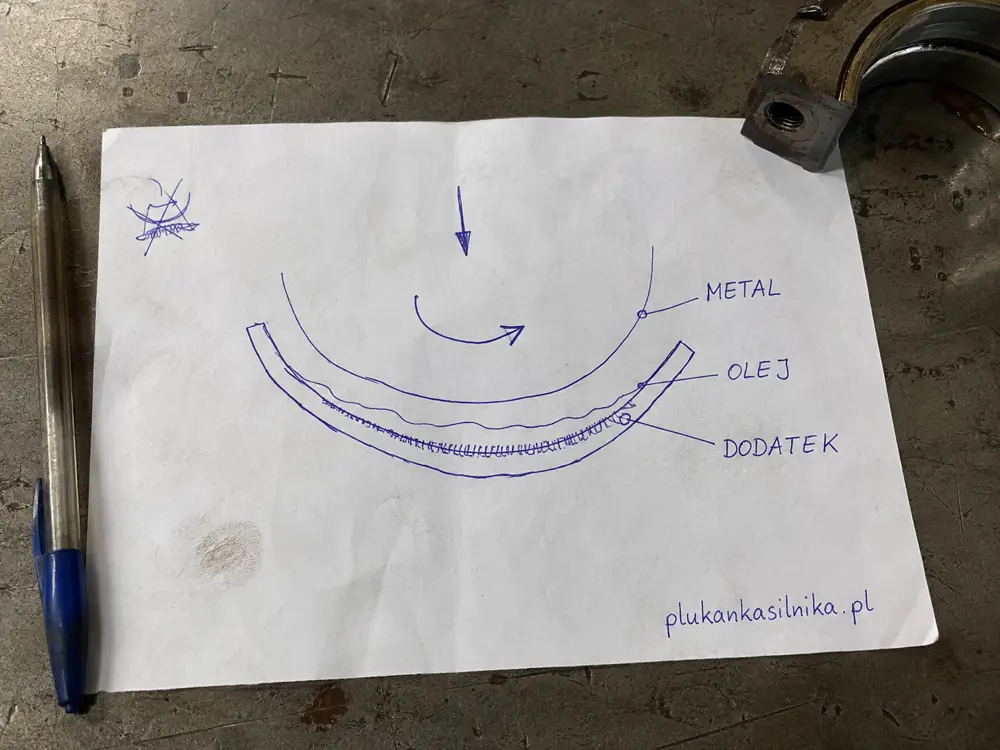
This is where the anti-wear package comes in. ZDDP (zinc dialkyldithiophosphate) and sulfurized olefin are additives that build a protective film on the metal surfaces, one that holds up under high contact pressure. A flush whose data sheet documents such an additive adds that protection over exactly those critical few minutes. A flush that is pure solvent with no lubricant just cleans. For a new engine that is irrelevant. For an engine with clearances it matters, because it lands on the weakest moment of the whole job.
Where TEC 2000 Engine Flush fits
TEC 2000 Engine Flush is a strong aromatic solvent, and at the same time one of the few flushes whose safety data sheet openly documents an anti-wear lubricant package. The formula is an advanced blend of hydrocarbon solvents on an aromatic base, with an additive package in which the v3.1 sheet documents sulfurized olefin and ZDDP. In plain terms: the cleaning power of an aromatic base plus documented protection for worn friction pairs. Liqui Moly declares ZDDP on its sheet; TEC 2000 has ZDDP and, on top of that, sulfurized olefin. On a high-mileage engine that is a sensible pairing, because you get both the muscle for the carbon and a cushion for the flush window.
One thing I will spell out: what shows on a data sheet is not a full description of a product, and the absence of some ingredient on someone else’s sheet does not make their product worse. A safety data sheet is a hazard document, not a marketing recipe. TEC 2000 is a finished, formulated product that the manufacturer declares safe for seals. If you want to buy it, the Engine Flush is here: TEC 2000 Engine Flush. And a naming note while I am at it: “Pro-Tec” is a separate brand, not short for TEC 2000, so do not mix the two up when you are searching a shop.
How to flush a high-mileage engine safely
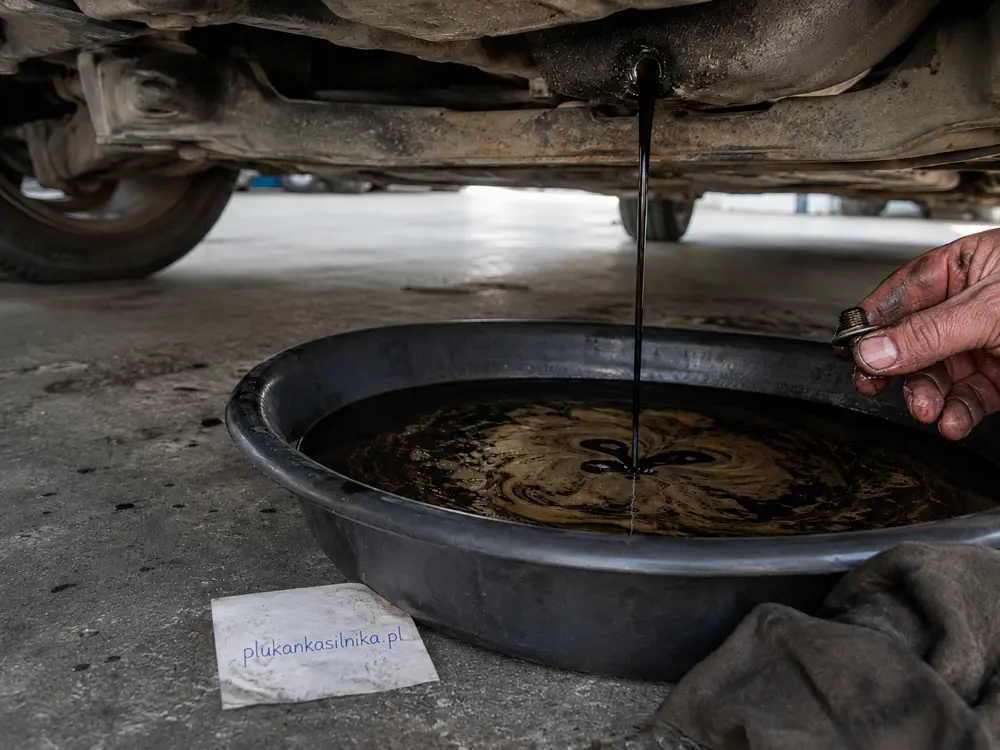
Short and controlled. The method is simple: pour the flush into warm oil right before a planned oil change, let the engine idle for about ten to fifteen minutes with no load, drain the oil along with the flush, always change the filter, and fill with fresh oil. There is no room to freelance on the time, and none for “I’ll drive it a few more miles so it cleans better.” Take the dose and the pack size from the instructions on the specific product, because they differ between brands and there is no single number that fits all of them.
Why changing the filter is mandatory
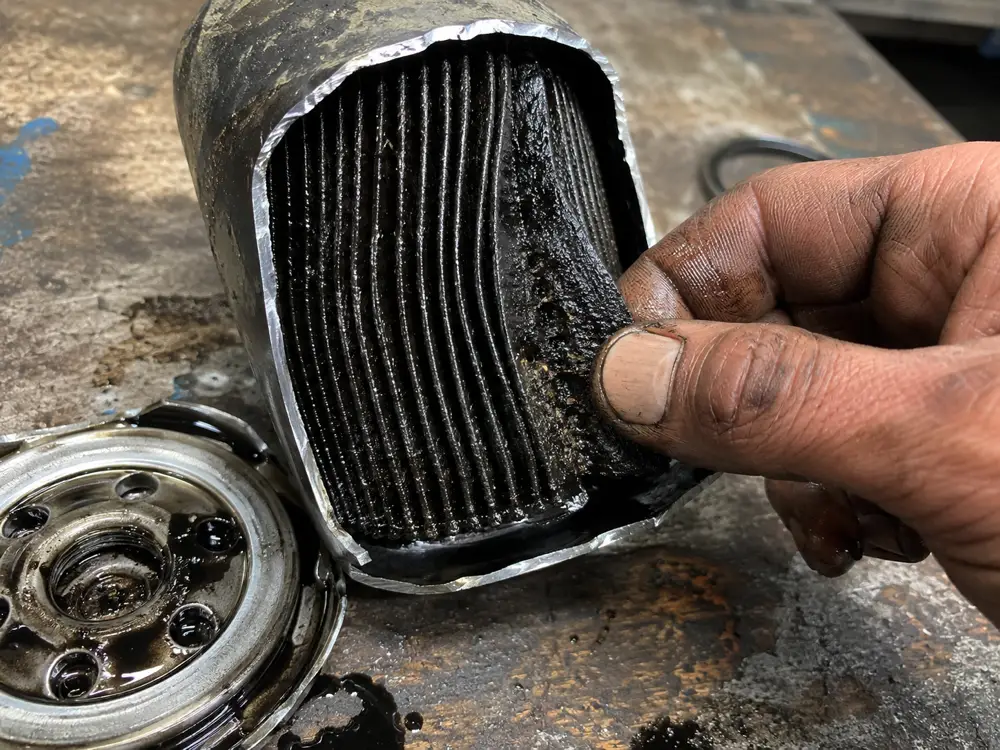
A flush loads dissolved deposits into the oil so they leave the engine when you drain it. Some of that ends up in the filter. Leave the old filter in and you leave a batch of dirt in the system that you just washed loose, and on a high-mileage engine there is a fair amount of it. A new filter is not a nicety here, it is the condition that makes the whole exercise worth doing. Drain the dirt, fit a clean filter, pour clean oil. That closes the loop.
What not to do
Do not drive on the flush. Do not exceed the time the maker states. Do not leave it in for a second cycle “to be sure.” All of that extends the time the engine runs on thinned oil, and on worn friction pairs every extra minute works against you. A flush is designed as a short, one-time clean before an oil change, and that is how it should be used. For the wider question of when it even makes sense to reach for a flush, I cover that in the engine flush guide.
When not to flush: the warning signs
When there are signs of advanced wear or active leaks, flushing can do more harm than good, so diagnose first and decide after. Carbon under the cap is one thing, but knocking, dropping oil pressure or a weeping seal are signals where a flush is not your first move. Here are the common symptoms and what to do with them.
| Symptom | What it might mean | Flush, or diagnose first |
|---|---|---|
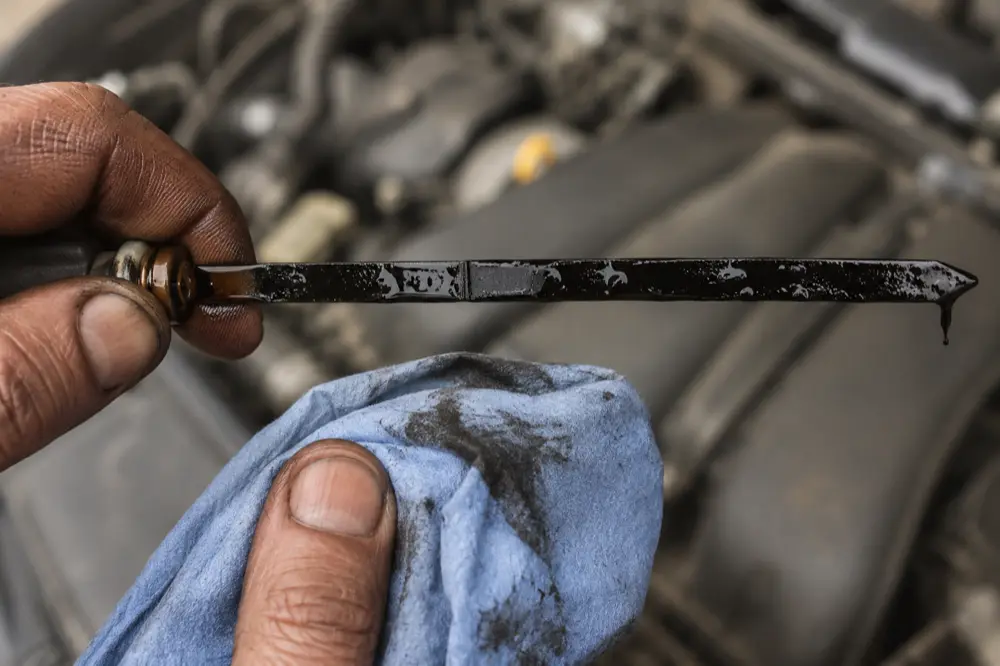
| Visible carbon / black sludge under the filler cap | Backlog of deposits, city driving | A flush makes sense (short, with a filter change) |
| Active leak from the crank seals | Worn / hardened seals | Diagnose first, a flush can worsen the leak |
| Falling oil pressure, hydraulic lifter knock | Worn bearings / oil pump | Mechanical diagnosis first |
| High oil consumption, blue smoke | Worn rings / valve guides | A flush will not fix it, diagnose |
| Milky oil under the cap | Possible water / head gasket | Do not flush, diagnose |
The logic of this table is one thing: a flush solves a deposit problem, not a worn or cracked metal problem. If the symptom points at mechanics, a flush at best reveals it faster, and at worst adds the risk of a dislodged deposit on an engine that is already on the edge. In those cases you check the oil pressure first, look over the seals, run a compression or leak-down test if needed. The flush can wait.
Engine flush vs high-mileage oil: how they differ
They are two different things, and they do not replace each other. A flush is a short-lived cleaning agent, added to the old oil for a few minutes of running before a change and drained out with it. High-mileage oil is a full service oil for the whole interval, with additives aimed at older engines. Mixing them up is a classic: someone pours in a high-mileage oil thinking it will “flush” the engine on the side, or the other way round, tries to drive on a flush as if it were oil.
The heart of a high-mileage oil is its seal conditioners, mostly esters and select polymers that swell and soften the hardened seal rubber a little, plus a stronger antioxidant package and viscosity modifiers for the wider clearances (Motor Oil Guide, JD Power). There is a limit worth knowing about, though: those conditioners work on seals that have dried and hardened, that is chemical damage. They will not repair a seal that is torn or crumbling, because that is mechanical damage. Motor Oil Guide states outright that seal conditioners do not repair torn or cracked seals. Same principle as the flush: no additive reverses worn metal.
When one, when the other, when in sequence
Most of the time the sensible answer is a sequence, not a choice. Flush first to clear the carbon and sludge out of the old engine, then fresh oil, and if the car has high mileage and is starting to sweat its seals, move to a high-mileage oil for ongoing use. Two stages of the same job: the flush cleans up, the high-mileage oil maintains. Treating them as alternatives (“I’ll run high-mileage oil instead of flushing”) misses the point, because neither one does what the other does.
FAQ
Should I flush a high-mileage engine if I do not know its history?
You can, but carefully. With an unknown history, pick a milder base and a short run time, change the filter without fail, and watch for a leak showing up after the change. If the engine has wear symptoms, diagnose first and decide on the flush after.
At what mileage is an engine “high mileage”?
Loosely from around 90,000 to 125,000 miles (150,000 to 200,000 km), and on diesels closer to 185,000 miles. That is only a rough guide, though. An engine serviced every interval on good oil and driven on the highway is in better shape at 155,000 miles than a neglected city car at 75,000.
Can an engine flush cause an old engine to leak?
A flush on its own does not create a leak. It can expose one that was already there, if deposits were masking a worn seal. Once the carbon is gone, oil starts weeping through a seal that was tired anyway. More on that in the piece on whether an engine flush causes leaks.
Which engine flush is best for high mileage?
One that pairs a base strength suited to the engine’s condition with a lubricant documented on the safety data sheet. On a sound engine with heavy carbon, a strong base with an anti-wear package works well, for example TEC 2000 Engine Flush with sulfurized olefin and ZDDP per its SDS. On an engine with an unknown history the answer is not a milder base but a protocol. Keep the first flush to ten minutes rather than the full fifteen. Change the oil and filter straight away, while hot. If the design allows it, inspect the pump pickup screen while the sump is off. Leave the second flush until 1,000 to 2,000 km later, because deposits come off in layers and one treatment will not take everything anyway.
How long do you leave a flush in the engine?
About ten to fifteen minutes at idle, with no load and no driving, and take the exact time from the specific product’s instructions. Running it longer on a high-mileage engine works against you, because it extends the time on thinned oil.
Do you have to change the oil filter after a flush?
Yes, always. A flush loads dissolved deposits into the oil, and some of them settle in the filter. Leaving the old filter in means leaving freshly washed dirt in the system, which on a high-mileage engine defeats the whole exercise.
Will high-mileage oil replace a flush?
No. High-mileage oil is a service oil with seal conditioners for the whole interval, and a flush is a one-time cleaning agent used before an oil change. The sensible approach is to use them in sequence: flush first, then fresh oil or a move to high-mileage oil.