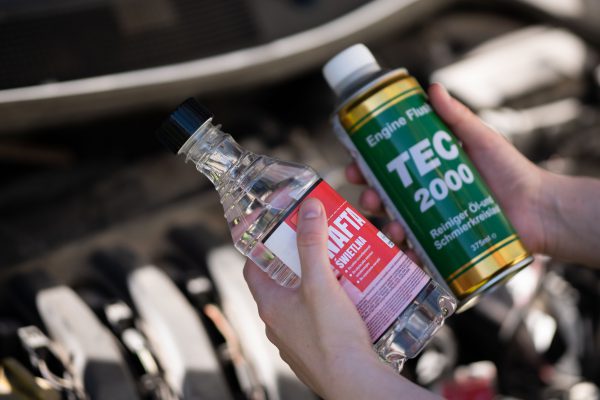
In this article, we will discuss the practical process of engine flushing in a tractor, which is a key element of the regular maintenance of this important machine used in sectors such as agriculture and construction. We will discuss the importance and benefits of regular engine flushing, paying particular attention to improving performance, extending the equipment’s lifespan, and reducing the negative impact on the environment. We will describe in detail the steps we should take to carry out an effective engine flush, starting from choosing the right flushing fluid, through bringing the engine up to operating temperature, all the way to draining the fluid safely. This article also includes a description of potential problems and risks that may be associated with engine flushing, so that every tractor owner can make informed decisions about maintaining their equipment.
- Three different “flushes” in a tractor - do not confuse them
- Steps for an effective engine flush (oil-system flush)
- Why is it worth flushing the engine in a tractor?
- Engine flushing - pros and cons
- Potential problems and risks
- Changing the oil, even when the tractor sits idle
- Seasonality, fuel ageing and cleaning injectors through the tank
- ORLEN study: the TEC 2000 additive and fuel oxidation stability
- Cooling-system flush - beware of water
- Summary: what to choose and when
Three different “flushes” in a tractor - do not confuse them
In a tractor, the word “flush” covers three completely different jobs, in three different systems. Before you reach for any product, decide which system you want to clean - a product made for one system will not work in another, and a mix-up can do harm.
| Type of flush | What it does and how | When to use it |
|---|---|---|
| Oil flush (lubrication system) | Poured into the old oil for a dozen or so minutes before the oil change. Dissolves sludge, carbon and deposits, which drain out together with the used oil. | At every oil change, especially after a season or when the oil has run for a very long time. |
| Injector cleaning (fuel system) | An additive poured into the tank, or a service procedure. Dissolves deposits on the injectors and in the combustion chamber, restoring an even fuel spray. | After winter standing, with smoking, hard starting, or a drop in power. |
| Cooling-system flush | Circulates in the cooling system instead of coolant. Removes scale, rust and deposits before you add fresh coolant. | When water has been used in the radiator, with overheating, before a coolant change. |
Steps for carrying out an effective engine flush
In order to carry out an effective engine flush, you first and foremost need a suitable engine flushing fluid. This specialized product is available on the automotive market and is intended exclusively for this type of work. The purpose of this fluid is to remove all deposits and contaminants that may be harmful to the engine’s continued operation. Before you pour anything in, bring the engine up to operating temperature. That is a condition, not a detail: cold oil is thick, the product spreads unevenly and deposits in the cooler corners are left untouched.
The common advice to let the engine cool first comes from somewhere else, from the fear of getting burnt, and that fear is entirely justified. It just belongs to draining the oil, not to pouring the flush in. The fluid goes in through the filler at the top, well away from the hot sump and the drain plug.
With the engine warm, pour the fluid in through the oil filler. The amount should match the engine’s capacity and usually ranges from half a litre to a litre. Leave it idling for about 15 minutes, under no load and with no driving, so the product has time to work its way through the system.
Then switch off and drain straight away, while it is still hot. That matters, because at that moment the dissolved deposits are suspended in the oil and will leave with it. Let the machine stand for an hour and some of them settle back to the bottom of the sump, wasting half the work. Hot oil and a hot drain plug genuinely do burn, so wear gloves, use a long drain pan and take care undoing the plug. The risk is something you guard against, not something you dodge by waiting. After draining, rinse the engine with clean oil, change the filter and fill with fresh oil.
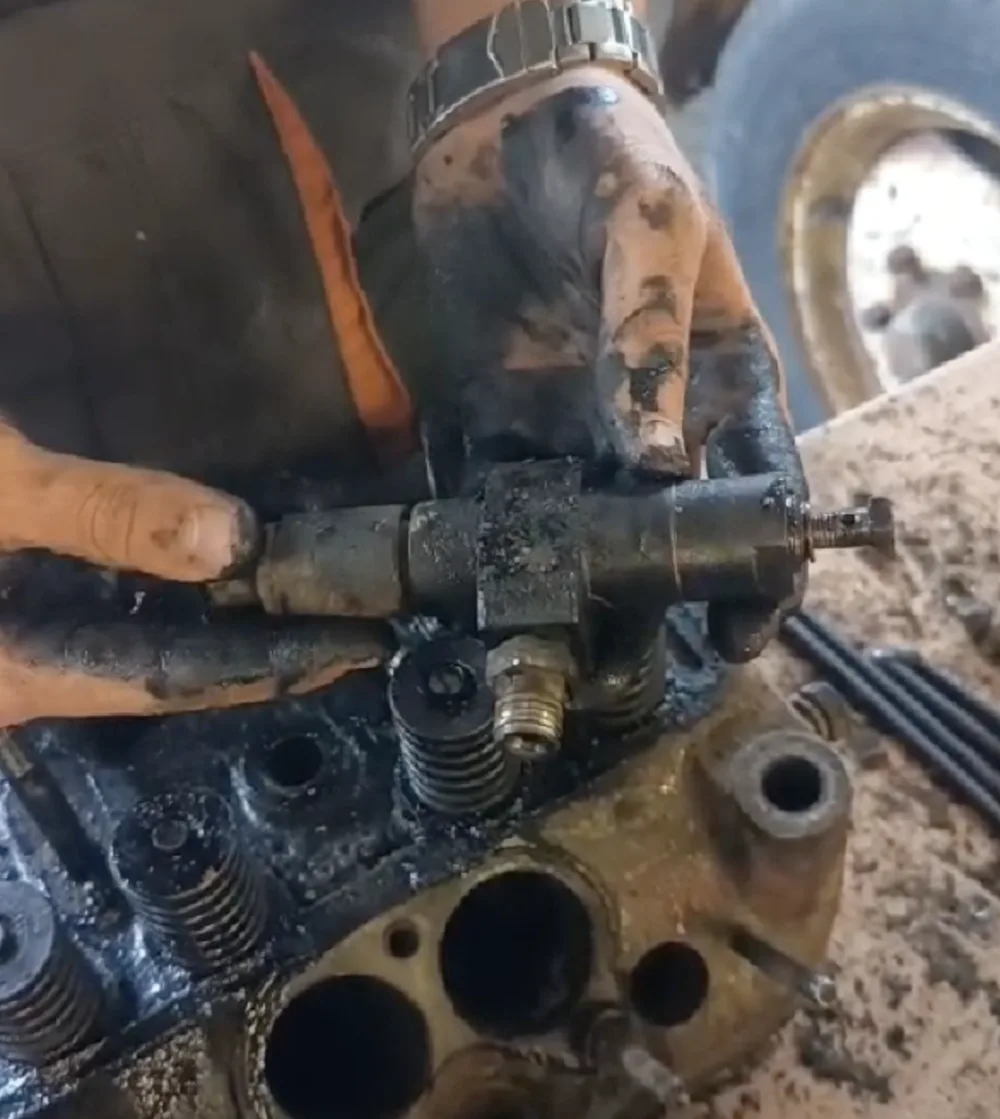
Why is it worth flushing the engine in a tractor?
Flushing the engine in a tractor is a key aspect of its regular maintenance, which must not be underestimated. These actions are extremely important in the context of managing and optimizing the tractor’s performance - a machine whose role is invaluable in many sectors, such as agriculture and construction. The tractor’s engine is one of the components most exposed to wear and damage, due to continuous and intensive use. Regular engine flushing helps remove contaminants and deposits that can cause engine parts to wear down, thereby leading to a gradual deterioration of its performance.
Flushing the engine in a tractor not only increases its efficiency but also extends the lifespan of the entire piece of equipment. Deposits and contaminants that gradually accumulate in the engine can over time lead to serious damage that is difficult and costly to repair. Regular engine flushing helps keep it clean, ensuring a smooth flow of oil and other fluids, thanks to which the engine runs more smoothly and the tractor consumes less fuel. In the long run, this translates into financial savings, as well as environmental benefits, by reducing the emission of harmful substances. By choosing to flush the engine in a tractor regularly, we take care not only of our equipment but also of our wallet and the natural environment.
Engine flushing - pros and cons
A lubrication-system flush is a cheap and, in most cases, beneficial procedure, but it is not a cure-all. It is worth knowing both sides before you use it, especially in an older tractor.
| Pros (when it helps) | Cons (what to watch out for) |
|---|---|
| Removes sludge and carbon before you add fresh oil - the new oil goes into a clean interior. | In a severely neglected engine, loosened sludge can load the oil pump pickup screen. It will not reach the oil galleries, because those sit downstream of both the pickup screen and the filter. Such an engine is cleaned mechanically, not with a flush. |
| Helps free lightly stuck piston rings and restore oil flow. | It will not fix mechanical wear (bore ovality, clearances, worn bearings). That is a job for a rebuild, not a flush. |
| Smoother running, lower fuel consumption and emissions after the procedure. | Cheap, aggressive products based on pure solvents can stress old, hardened seals. |
| Very cheap prevention compared with the cost of an engine rebuild. | It has to be done correctly: on a warm engine, with no driving, draining immediately and a full oil and filter change straight afterwards. |
That is why, with older machines, it is better to reach for a gentle, lubricating formula. TEC 2000 declares a package of lubricating components and that the product does not dry out the engine - such a recipe is safer for worn seals than pure, strong solvents.
Potential problems and risks associated with engine flushing in a tractor
Flushing the engine in a tractor is a process aimed at removing accumulated contaminants, such as engine oil deposits, sludge, and gumming, which can affect the performance and lifespan of the engine. Although this is a routine practice for many farmers and mechanics, it carries many potential problems and risks that can result in serious failures and costly repairs.
One of the key threats associated with this is the risk of engine damage. Engine flushing, if carried out improperly, can lead to loosened deposits loading the oil pump pickup screen. That screen is the one place in the lubrication circuit without a bypass valve, which is why it matters and why the galleries, sitting downstream of it, do not. This, in turn, can lead to engine overheating, which definitely involves the risk of damage. This means that in the case of improper flushing, you must invest in professional diagnosis and repair, which can turn out to be quite costly.
Another potential risk associated with engine flushing is the possibility of introducing moisture into the system. Water is undesirable in an engine, and its presence can lead to so-called “hydrolocking,” that is, a process in which water enters the engine’s cylinders, leading to a significant increase in pressure, damage to the pistons, and other important parts. This is particularly dangerous if the machine is exposed to prolonged low temperatures. In winter, water can freeze and cause cracks in the engine block.
Finally, engine flushing, if it occurs without proper planning and consideration, can lead to unforeseen problems related to mess, both on a personal and environmental level. Used engine flushing fluids are usually toxic and can pose a serious threat to human health and the environment if they are not disposed of properly. Throwing them into the sewage system or onto the ground is illegal and can lead to serious legal consequences.
In summary, carrying out an effective engine flush requires the right fluid and an engine brought up to operating temperature, then drained with proper care while the oil is still hot. Flushing a tractor’s engine is an important element of maintenance that contributes to improved performance and increased equipment lifespan. However, engine flushing carries certain risks, such as the possibility of engine damage due to improper execution of the process, the risk of hydrolocking associated with water getting into the engine, or issues related to the threat to human health and the environment posed by the fluids used. Therefore, this procedure should be carried out with great care and in accordance with the rules and regulations, in order to effectively counteract these threats.
Changing the oil, even when the tractor sits idle
Engine oil ages not only from the hours it works, but also from the simple passage of time. Even in a tractor that just stands still, the oil oxidises, thickens and loses its additives. Over time it can turn into a greasy, jelly-like layer. Sometimes it is still liquid, but after a long standstill it drains off the cylinder walls, the shaft and the bearings - it is no longer distributed around the engine. The first start-up after years then happens practically “dry”, which damages the mating surfaces.
That is why we recommend changing the oil roughly once every 5 to 10 years, even if the machine is only standing. Fresh oil with active additives protects the metal against corrosion and keeps a proper oil film, instead of hardening at the bottom of the sump.
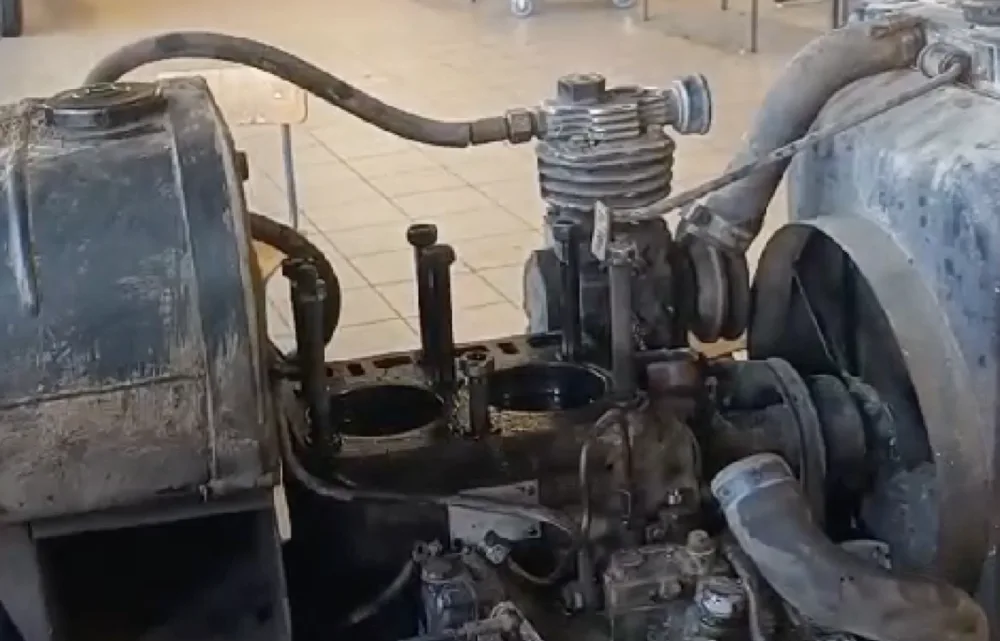
The second rule concerns starting the engine itself. Standing parts that are never turned can seize - corrosion “welds” the rings to the bore and the valves to their guides. That is why even a machine taken out of service should be started up from time to time, so that the oil spreads around the engine and nothing seizes. A tractor that has stood for 5 to 10 years should be started with great care: first check whether the crankshaft can even be turned, and distribute the oil before you start it. Otherwise it is easy to “snap” a seized part. The photo above shows exactly this kind of ending - an engine left for years, without movement and with water getting in.
Seasonality, fuel ageing and cleaning injectors through the tank
Tractors work seasonally - intensively during harvest or root-crop lifting, and then they stand for months with fuel in the tank. This is a real problem, because fuel ages too.
Today, at the fuel station, you can buy practically only diesel with a biocomponent (B7, up to 7% FAME) - pure mineral diesel B0 is no longer on sale. FAME, that is fatty acid methyl esters, is less stable than purely mineral fuel: it absorbs water more readily and oxidises faster.
This is confirmed by research from PIMOT (the Automotive Industry Institute in Poland) and other institutes. In a study on fuel ageing, biocomponents are described as “additional factors that initiate or intensify” ageing processes - the result is cloudiness, phase separation and deposits at the bottom of the tank. A second study showed that 7% FAME in ultra-low-sulphur diesel reduces oxidation stability and causes accelerated fuel degradation during storage. Secondary oxidation products - aldehydes, organic acids, oligomers of fatty acids - block fuel filters.
For a tractor that stands idle, the conclusion is simple: after a longer standstill, it is worth cleaning the fuel system and the injectors before you head into the field. The easiest way to do this is through the tank - a strong cleaning additive poured into the tank, such as TEC 2000 Diesel System Cleaner, dissolves deposits on the injectors and in the combustion chamber during normal driving. When a stronger, service procedure with direct feeding of the product is needed (fuel lines disconnected), TEC 2000 Diesel Injector Cleaner is used.
It has to be said clearly, though: no additive will “repair” mechanically worn injectors - it dissolves deposits, it does not regenerate mechanics. But keeping the spray nozzle clean genuinely improves starting, running and combustion after a seasonal standstill.
ORLEN study: the TEC 2000 additive and fuel oxidation stability
Since fuel ages through oxidation, it is best to check this with a measurement rather than a claim. TEC 2000 commissioned an independent test of diesel oxidation stability at the ORLEN laboratory (ORLEN Laboratorium S.A.). It compared diesel without any additive and with the TEC 2000 Diesel System Cleaner additive - the same tank product mentioned above. The samples were prepared so that the additive was the only difference: the fuel came from a single ORLEN station, one litre was split into two identical jars, and TEC 2000 Diesel System Cleaner went into one of them. That is why the gain in stability can be attributed to the additive itself, not to a difference in the fuel.
By the reference Rancimat method (PN-EN 15751, accelerated ageing at 110 °C), the fuel’s resistance to oxidation rose after adding TEC 2000 from 65.09 to 111.94 hours, that is by 72%. For comparison, the PN-EN 590 standard requires a minimum of 20 hours, so both fuels - without and with the additive - meet it with a large margin.
| Sample (Rancimat, 110 °C) | Oxidation stability | PN-EN 590 requirement |
|---|---|---|
| Diesel without additive | 65.09 h | min. 20 h |
| Diesel with TEC 2000 additive | 111.94 h | min. 20 h |
| Difference | +46.85 h (+72%) | - |
The same order also used a second, much harsher method - PetroOXY (PN-EN 16091, 140 °C, pure oxygen) - in which the additized sample scored lower (a drop from 113.33 to 68.15 minutes). This is sometimes linked to the evaporation of the product’s volatile components at the high temperature of that method. Importantly, both samples meet the PN-EN 590 requirements in both methods (PetroOXY requires a minimum of 60 minutes).
How to read this result: the test was carried out by the ORLEN laboratory on behalf of TEC 2000. In the official report, both Rancimat values are reported as “>48.0 h” (the upper limit of the reporting range); the figures 65.09 h and 111.94 h are raw results. The statements of conformity with PN-EN 590 were made in relation to a non-accredited result. ORLEN measured only the fuel’s oxidation stability - it did not test injector cleaning, lubricity or FAME content.
Cooling-system flush - beware of water
Out in the field, when you suddenly run out of coolant, it is tempting to top up with plain water. This is a short-term rescue that causes long-term harm. Water, especially hard water from a well, deposits scale in the system, promotes corrosion, has a lower boiling point and freezes in winter - and ice can crack the block or the head.
If water has been used in the cooling system, flush the system with a dedicated radiator flush before you add fresh coolant. It will remove the scale, rust and deposits that restrict flow and lead to overheating. Only then fill the system with proper coolant - with corrosion inhibitors and antifreeze protection - and not water. It is a short procedure that protects the radiator, the pump and the seals from a costly replacement.
Summary: what to choose and when
Flushing a tractor engine is not one procedure, but three different ones. An oil flush - at every oil change, so that fresh oil goes into a clean engine. Injector cleaning through the tank - after a seasonal standstill, when the fuel has had time to age. A cooling-system flush - when water has been used in the radiator. On top of that comes the care of a machine that stands idle: an oil change every 5 to 10 years and starting it up periodically, so that nothing seizes.
If you are choosing products, the TEC 2000 range covers both a lubrication-system flush and cleaning additives for the fuel system - Diesel System Cleaner for the tank and the service-type Diesel Injector Cleaner. The choice depends on the fuel (diesel or petrol) and the method of application (a top-up into the tank or a service procedure). We compare the composition of oil flushes, based on their data sheets, in the engine flush ranking.
Frequently asked questions about engine flushing in a tractor
Should the flush go into a cold or a warm tractor engine?
A warm one, brought up to operating temperature. Cold oil is thick, the flush spreads unevenly and deposits in the cooler corners are left untouched. After the procedure the oil is drained straight away, while hot, with gloves on, because hot oil and the drain plug really do burn.
How long should the flush run in a tractor engine?
Roughly 15 minutes at idle, with no load and no driving. Then you switch the engine off, drain the oil while it is hot, change the filter and fill with fresh oil.
When should you not flush a tractor engine?
In a severely neglected engine, because loosened sludge can load the oil pump pickup screen, which has no bypass valve. Such an engine is cleaned mechanically, not with a flush. A flush also will not help with mechanical wear, or in an engine seized after years of standing with water in the cylinders.
What should you do with a tractor after a long standstill?
Change the oil: even a machine that only stands should get fresh oil roughly once every 5 to 10 years. Before starting after years, first check by hand that the crankshaft turns. After a seasonal standstill it is also worth cleaning the fuel system through the tank, and if water has been used in the radiator, flush the cooling system with a dedicated radiator flush.