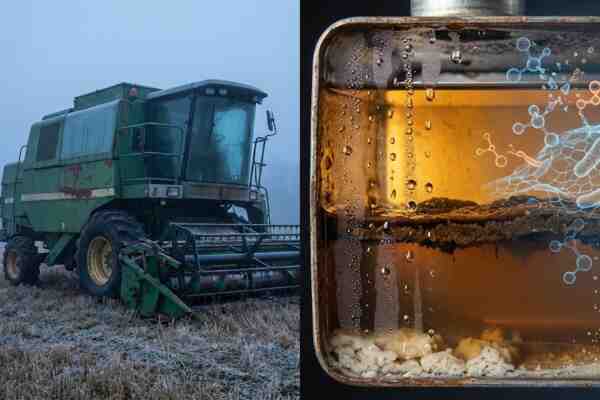
Modern diagnostics of compression-ignition (CI) engine fuel supply systems demonstrate that maintaining the design fuel atomization geometry in Common Rail systems is a critical condition for preserving overall efficiency and reducing harmful emissions. The cleanliness of injector tips remains a strategic tribochemical challenge, as their precision orifices are exposed to extreme thermal and chemical loads. Understanding the cascade of reactions leading to the formation of hard deposits requires an analysis of fuel aging processes, from the loss of oxidation stability through to the microbiological reinforcement of deposit structures.
1. Origin of contaminants: From oxidation stability to deposit precursors
The fundamental indicator of the operational quality of diesel fuel is its oxidation stability, defined by the standard PN-EN 590 + A1:2017-06. It requires a minimum induction period of 20 hours (tested using the Rancimat method according to EN 15751 for fuels containing more than 2% FAME).
- Influence of composition and temperature: The presence of fatty acid methyl esters (FAME) drastically increases the fuel’s susceptibility to aging. As demonstrated in studies by the Oil and Gas Institute (Sacha, 2013), raising the test temperature by just 10°C (from 110°C to 120°C) results in a twofold reduction in oxidation stability. Under the operating conditions of the injector tip, where temperatures significantly exceed laboratory thresholds, the process of fuel degradation and the formation of organic acids, resins and gums undergoes rapid acceleration.
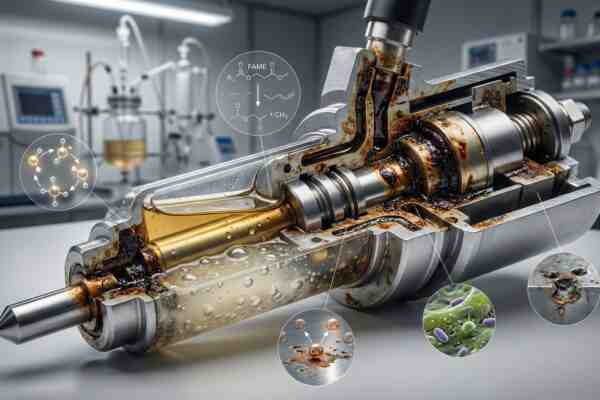
- The catalytic role of copper (Cu): The dynamic contact of fuel with copper, present in seals, sensors and valves, constitutes a critical factor (Sacha, 2020). Copper acts as a catalyst that repeatedly accelerates the oxidation reactions of unsaturated bonds in FAME. Studies show a decline in stability of several to a dozen or so percent after contact with Cu, which makes the use of metal deactivators (e.g. of the N,N-disalicyliden-1,2-diaminopropane type) the only effective remedy for catalytic aging.
- Free-radical mechanism: The aging process is initiated by free-radical chain reactions, leading to the polymerization of bioesters. The high-molecular-weight oxidation products formed in this way constitute the foundation for the formation of durable structures on precision components.
2. The transformation process: The hardening mechanism of “soft” contaminants
The high pressure prevailing in the Common Rail system, together with the thermodynamics of the injector tip, force the physicochemical evolution of deposits. The primary “soft” contaminants (gums and resins) undergo condensation and thermal degradation processes, transforming into hard, insoluble lacquers.
- Microbiological reinforcement (EPS): The hardening process is intensified by the activity of microorganisms, such as the bacterium Pseudomonas aeruginosa and the fungus Hormoconis resinae (Cladosporium resinae). They secrete extracellular polymeric substances (EPS), which act as a binder (“cement”). The EPS matrix traps within its structure corrosion products (e.g. iron sulfides) as well as particulate matter present in the fuel.
- Biocorrosion and pitting: The presence of a biofilm on metal surfaces leads to the formation of so-called oxygen concentration cells. Differences in electrochemical potentials beneath the deposit trigger the phenomenon of under-deposit biocorrosion (pitting), which permanently damages the metal structure and increases the adhesion of subsequent deposit layers.
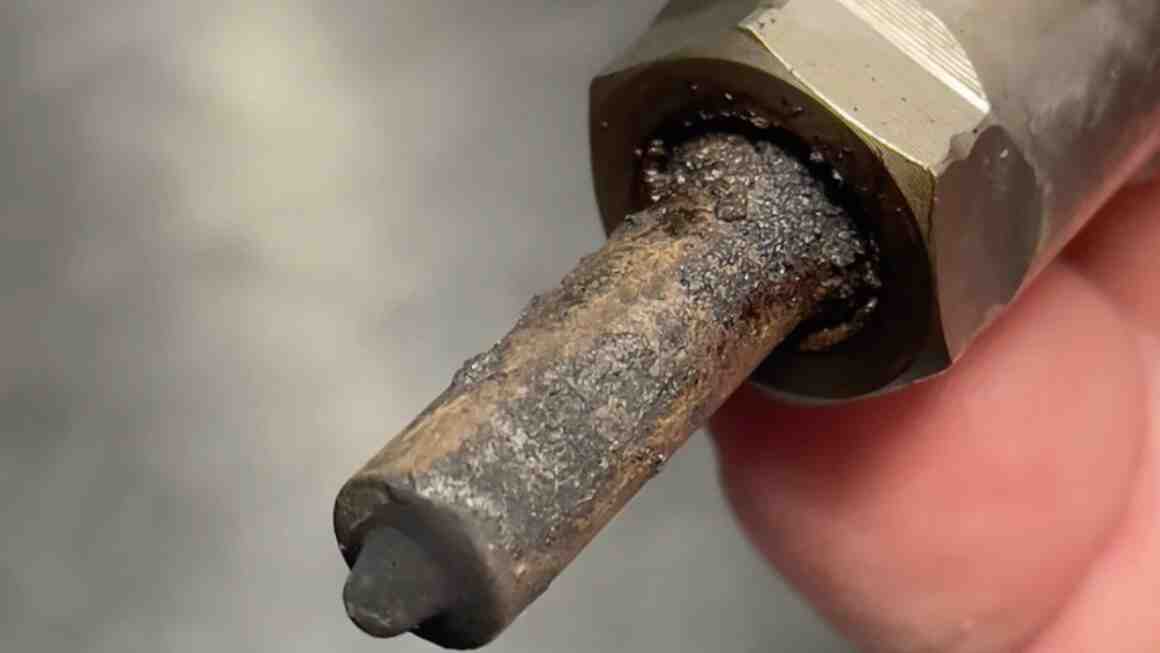
- Carbonization: The final stage of evolution is the carbonization of the polymerized gums. The resulting layer is completely resistant to the flow forces of the base fuel, which makes its removal impossible without the use of dedicated industrial chemistry.
3. Chemical mechanisms for softening and removing hard deposits
Effective in situ injector regeneration requires the use of detergent-dispersant packages capable of neutralizing aging products and penetrating hardened polymer matrices.
- The role of phenolic and amine antioxidants: These components interrupt the free-radical chain reactions of oxidation, stabilizing the fuel directly in the area of the injector needle. Detergents based on aliphatic amines exhibit a strong capacity for adsorption on polar metal surfaces, forming a protective film that prevents the re-deposition of polymerized gums.
- The micellization and dispersion process: The “dissolving from within” mechanism relies on the penetration of the hard deposit structure by detergents. The active molecules surround the contaminant particles (micellization), detaching them from the substrate and keeping them in suspension. The lacquers and carbon deposits softened in this way are safely transported to the combustion chamber, where they undergo complete combustion.
- Acid neutralization: A key element of professional chemistry is the ability to neutralize the organic acids formed during FAME degradation, which halts corrosion processes and the degradation of seals.
4. The role of advanced cleaning technologies illustrated by Diesel System Cleaner
Modern fuel chemistry has evolved towards multifunctional cleaning systems that integrate oxidation inhibitors, metal deactivators and powerful detergent components. An example of a technology with high tribochemical efficacy is Diesel System Cleaner.
This product was designed to cope with insoluble polymer deposits that standard base fuel is unable to remove. Thanks to its high concentration of active components, the product effectively neutralizes the acidic aging products of FAME and dissolves the lacquers deposited in the precision channels of the injectors. In addition, regular application improves the lubricity and cetane number of the fuel, which directly translates into optimization of the combustion process and a reduction in smoke (particulate matter emissions).
5. Consequences of injector dysfunction and technical summary
Insufficient chemical hygiene of the fuel system leads to a cascade of technical problems:
- Disruption of the spray pattern: Deformation of the fuel jet leads to an uneven temperature distribution in the combustion chamber and a decline in thermodynamic efficiency.
- Increased smoke and particulate emissions: A result of insufficient atomization of fuel droplets.
- Risk of mechanical damage: Acidic oxidation products destroy seals, and internal biocorrosion may lead to seizure of the injector needle.
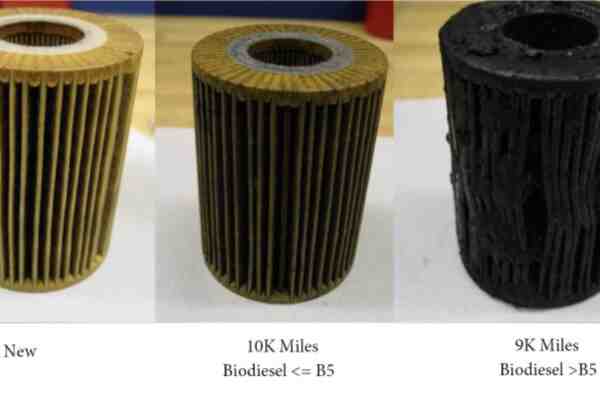
- Filter clogging: A result of the transport of microbiological sludge and undispersed biofilm fragments.
Final conclusions: The process of fuel aging and deposit hardening is an inevitable process given the current composition of B7 fuels (containing FAME). This phenomenon is amplified by the catalytic influence of copper and the high operating temperature of the system. The only effective method of protecting modern Common Rail systems is the systematic use of professional cleaning chemistry, which ensures the chemical softening and micellization of deposits before their full carbonization. Maintaining oxidation stability and the cleanliness of the tips is essential for preserving engine longevity and meeting stringent emission standards.