A Compendium of Knowledge on FAME (Biodiesel): Stability, Operation and Impact on Fuel Systems
Modern internal combustion engine engineering and fuel technology stand at a critical juncture, driven by stringent exhaust emission standards and EU energy policy (including Directive 2003/30/EG). The implementation of fatty acid methyl esters (FAME) as a biocomponent in diesel fuel is an irreversible process; however, from the standpoint of operating technology, it introduces a range of physicochemical risks. This study constitutes a technical compendium of knowledge on degradation mechanisms, testing methodology and stabilization strategies for biodiesel-type fuels.
1. Introduction to FAME: Origins and role in the fuel sector
The strategic significance of FAME stems from the need to reduce greenhouse gas emissions and from the drive to diversify energy sources. As an alternative fuel, FAME is produced in the process of transesterification of vegetable oils or animal fats. In fuel engineering we distinguish pure biodiesel (B100), subject to the rigors of the EN 14214 standard, and blends of the B7 type, which are the market standard under the EN 590 standard (FAME content up to 7% V/V).
Although FAME exhibits a favorable environmental profile, its unsaturated chemical structure determines its low oxidation stability. For engine designers, this means having to contend with a fuel that is far more susceptible to aging than classic petroleum distillates.
2. Oxidation stability: Degradation mechanisms and the critical impact on Common Rail systems
Oxidation stability is the parameter that determines a fuel’s operating durability. Its absence leads to cascading degradation whose products are catastrophic for precision high-pressure injection systems.
- Organic acids: The oxidation products of esters raise the fuel’s acid number, which induces biocorrosion of metal components and accelerates the degradation of elastomer seals.
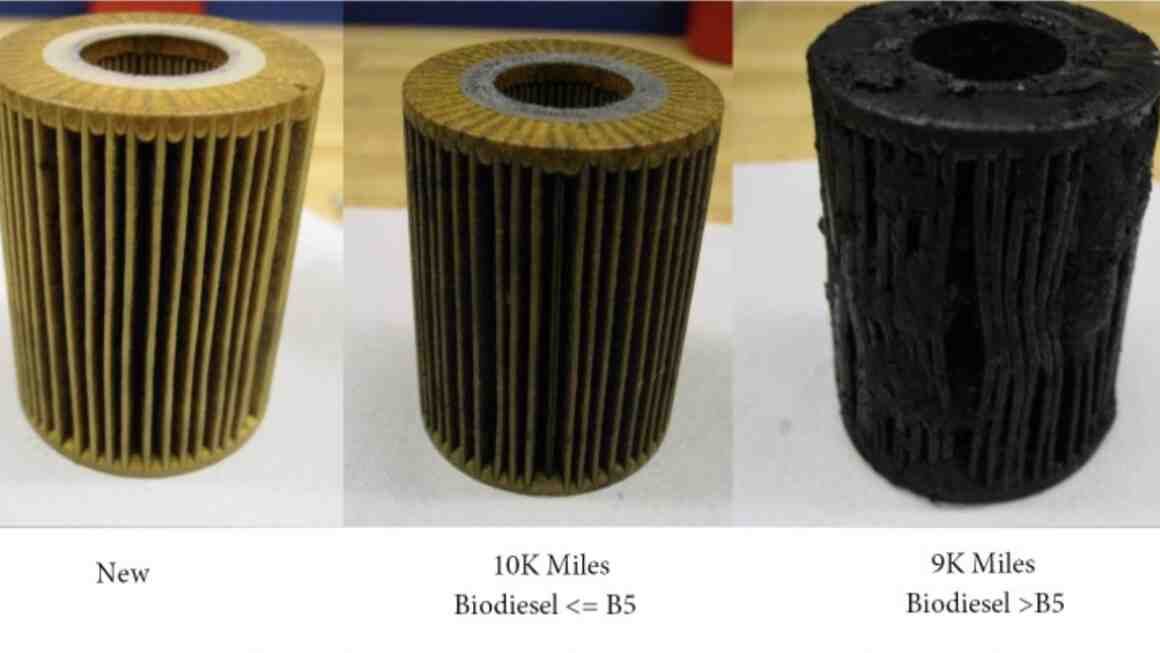
- Gums and polymerization: Radical processes lead to the formation of insoluble deposits and high-molecular-weight compounds (sludges) that block filters and fuel lines.
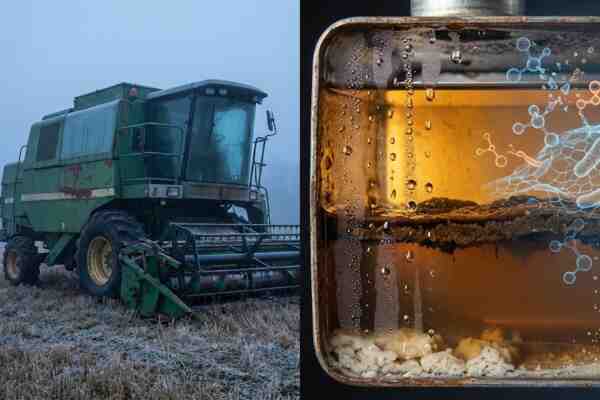
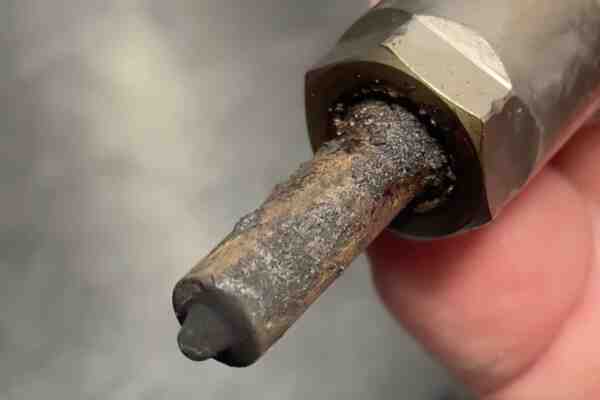
- Internal Diesel Injector Deposits (IDID): This is the most critical phenomenon. IDID-type deposits form inside the injectors, leading to their seizing (stuck injectors). This results in disruption of the fuel spray geometry, problems with “cold starting” and, in extreme cases, damage to the power unit.
3. Methodology for assessing stability: A comparative analysis of normative tests
The evolution of testing methods has forced a move away from classic tests for diesel fuel toward procedures dedicated to FAME, characterized by greater measurement precision.
| Testing Method | Standard | Parameters and Requirements | Technical Specifics |
| Storage stability | PN-EN ISO 12205 | Limit: max 25 g/m³. | Largely insensitive to FAME content; does not reflect the real risk of IDID. |
| Rancimat Method | PN-EN 15751 | B7: min 20h<br>B100: min 8h (per EN 14214:2012). | Measurement of the conductivity of volatile products at 110°C. Modern apparatus requires the use of fluorinated tubing (instead of silicone), 7.5g samples and 60ml of absorption water. |
| PetroOxy Test | PN-EN 16091 | Suggested limit: approx. 50 min. | A fast, small-format method (5 ml). Measurement of a 10% drop in oxygen pressure at 140°C. Universal for all distillates. |
4. Metallic catalysis: The destructive impact of copper and the role of the “blank test”
Non-ferrous metals, and copper and its alloys (brass, bronze) in particular, act as strong catalysts for ester polymerization. The use of copper in biodiesel transfer systems is a design error with strategic consequences.
Studies (Sacha, 2020) on the dynamic contact of B7 fuel with copper demonstrated a decline in oxidation stability of as much as 15.9%. In order to prove that the degradation is solely the result of catalysis, the so-called blank test is used in the studies (a test without the participation of a metal plate under the same thermal conditions). The results unequivocally indicate that the presence of copper ions accelerates fuel aging many times over compared to thermal degradation alone.
5. The tank ecosystem: Microbiological contamination and biogenic limits
Biodiesel is hygroscopic (B100 absorbs up to 500 mg/kg of water, whereas diesel fuel only 200 mg/kg). The presence of water combined with FAME creates an ideal environment for microorganisms.
- Limiting factors: A key constraint on microflora growth is the availability of phosphorus (P), whose concentration in the fuel is usually below 1 ppm. However, performance-enhancing additives supply nitrogen (N) and phosphorus, removing this barrier.
- Species succession: In the first phase, aerobic bacteria develop (Pseudomonas). Once the oxygen is exhausted, the baton is taken up by obligate anaerobes - sulfate-reducing bacteria (SRB, including Desulfovibrio).
- Pathomechanism: The production of biosurfactants causes emulsification of the fuel, while biogenic hydrogen sulfide induces rapid pitting biocorrosion of the tank walls.
6. Stabilization strategies: Inhibitors and deactivation of metal ions
Ensuring commercial stability requires the use of additive packages that protect the fuel throughout the entire distribution chain.
- Synthetic antioxidants: BHT (butylated hydroxytoluene), TBHQ and Bioxiten - a proprietary additive developed by the Oil and Gas Institute - National Research Institute. Their task is to interrupt radical chain reactions.
- Metal deactivators: Additives such as Keromet MD 100 work through the mechanism of chelation (complexation) of metal ions. They form stable complexes with copper ions, neutralizing their catalytic potential. In tests, the deactivators made it possible to limit the copper-induced loss of stability to a marginal level of 0.9%.
The production standard should be to achieve stability above 30h (Rancimat), which provides a safety margin guaranteeing that the normative 20h is retained at the end user.
7. Final conclusions and operating recommendations
Managing the quality of fuels containing biocomponents requires a move away from passive monitoring toward active technical oversight.
Key engineering guidelines:
- Rigorous control of water content: Keeping the moisture level below the microbiological activation threshold is a priority (biodiesel absorbs water faster than diesel fuel).
- Elimination of catalytic metals: Absolute exclusion of copper and its alloys from storage and supply systems.
- Strict Thermal Management: The logic of the Q10 factor must be taken into account - a temperature increase of 10°C (e.g. from 110°C to 120°C) results in a twofold acceleration of fuel degradation processes.
- IDID monitoring: Regular inspection of injector cleanliness in modern compression-ignition engines.
Other topics:
- Common Rail and biofuel quality - why does precision demand cleanliness?
- Copper catalysis in theory and practice - the mechanism of ester destruction.
- The quiet life in the tank - Desulfovibrio bacteria and anaerobic corrosion.
- The PetroOxy method - the future of rapid fuel diagnostics.
- Bioxiten, BHT and TBHQ additives - chemistry in the service of FAME durability.
Ensuring the failure-free operation of modern Common Rail systems requires a holistic approach to the quality of biocomponents. Only the synergy of advanced chemical stabilization and rigorous fuel-system hygiene allows for the safe operation of biodiesel in modern transport.