A flush is worth doing when there is something to dissolve, and when you want to stop there ever being something. A car with no documented service history, stretched oil changes, short city trips, LPG, a high-mileage diesel. On an engine serviced on time, one treatment changes little; done at every oil change it keeps the ring grooves clear before carbon sets hard in them.
When a flush actually changes something
The situations where it earns its place can be listed plainly.
- You bought a car with no confirmed service history. You do not know what was used or how often, and a service book full of stamps proves nothing. The first oil change after purchase is the moment.
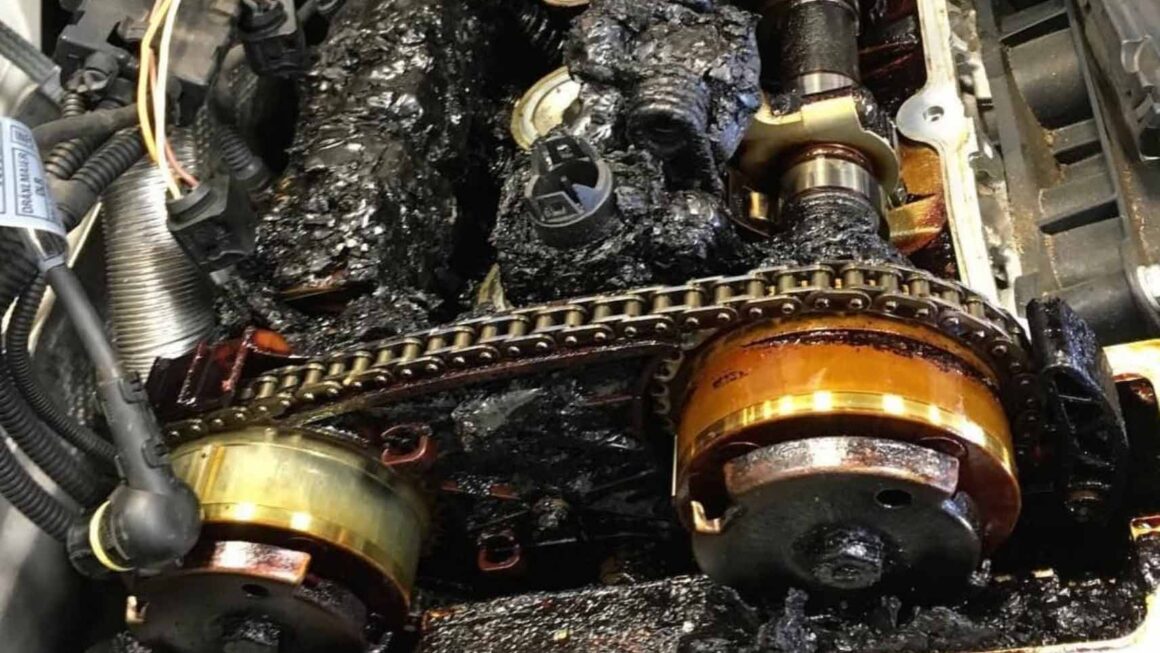
- Previous changes were stretched. Oil past its interval oxidises and leaves varnish on hot components. That is no longer sludge, it is a coating.
- The car does mostly short trips. The engine never reaches operating temperature, fuel and condensation water stay in the oil, and deposits build faster than on a run.
- You can see deposit under the filler cap. A greasy film or brown staining on the valve cover means the same thing is happening deeper in.
- The engine runs on LPG. Gas burns hotter and drier, the oil ages faster and the deposit tends to be harder.
- A high-mileage diesel used in town. Soot from exhaust gas recirculation reaches the oil, and DPF regeneration adds fuel to the sump. The oil thickens and darkens faster than in a petrol engine.
When you do not need to bother
Something the additive makers do not say loudly: on a car serviced on schedule, a one-off flush changes little. There is simply nothing to dissolve. If you change the oil every ten to fifteen thousand kilometres, drive a mix of roads, and see clean metal under the cap, you will spend the money without a result you could notice.
That does not make a flush useless there. It means its role shifts from rescue to prevention, which is a different calculation entirely. More on that under frequency below.
When to be careful, and when it is already too late
There are cases where a strong flush is a worse idea than none at all.
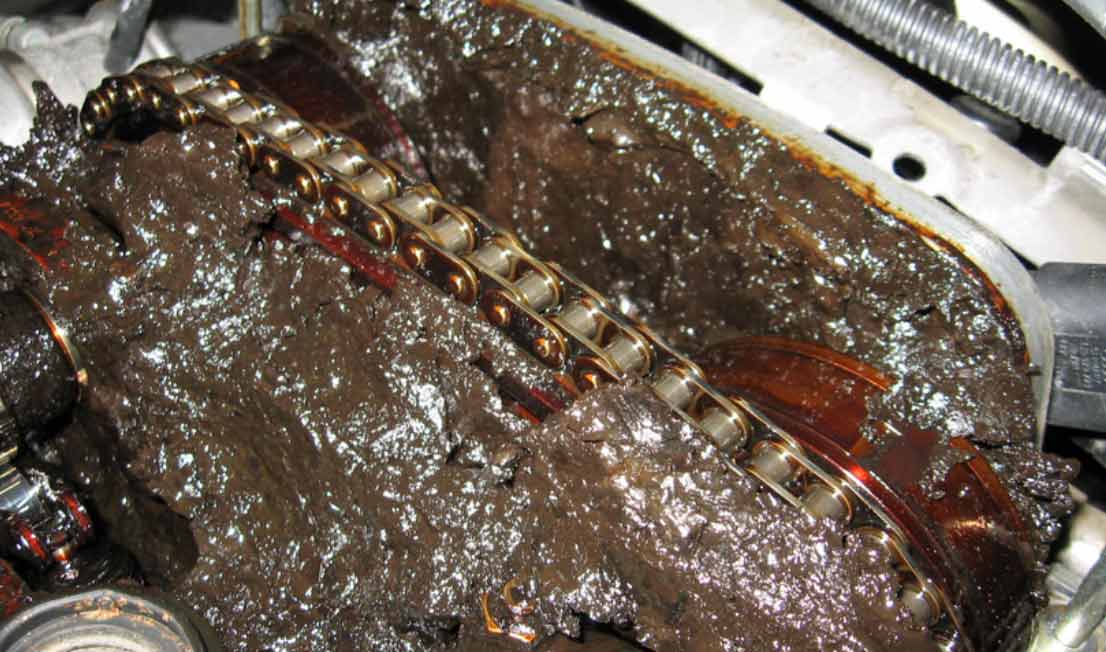
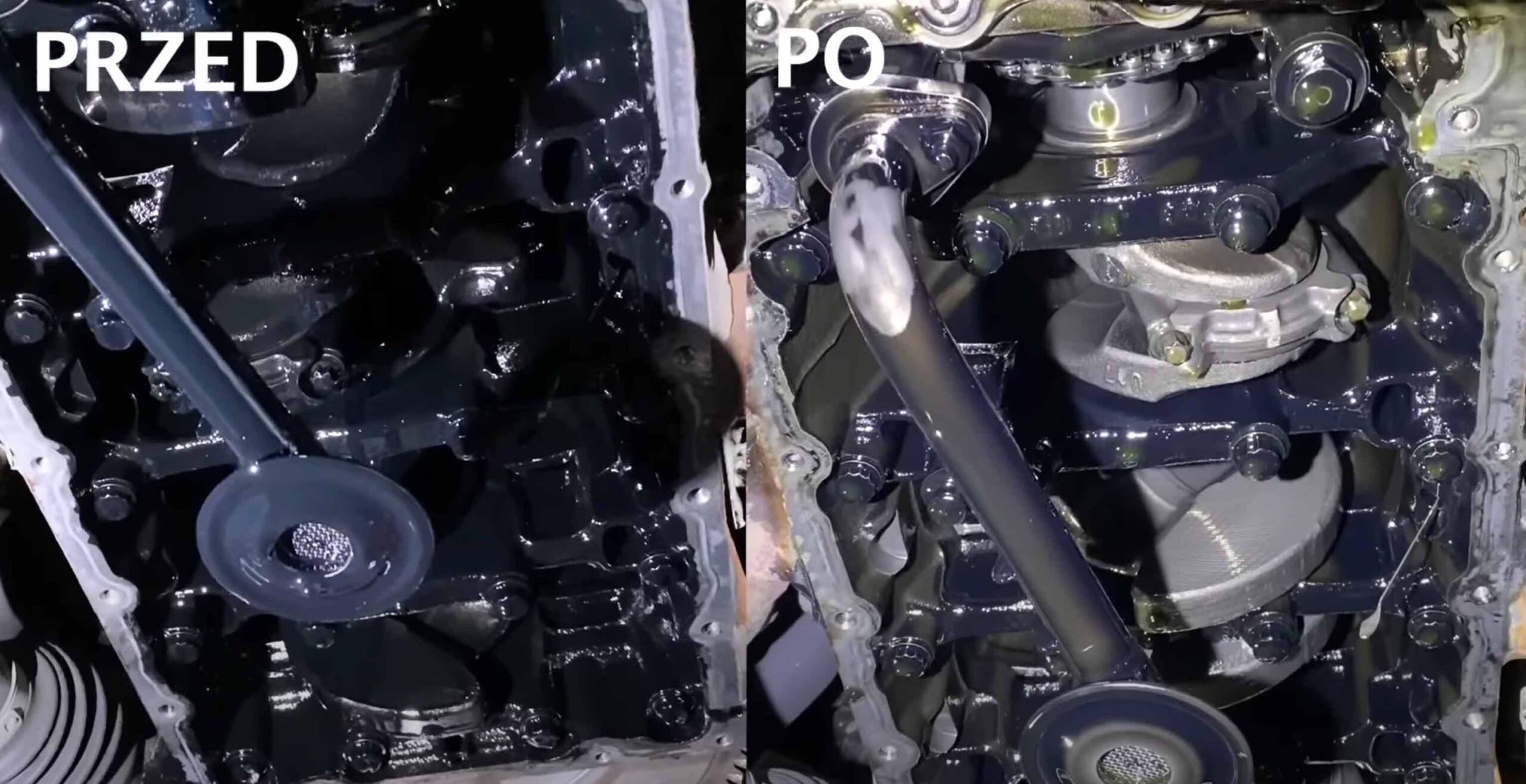
In a badly sludged engine, after years of neglect, the risk is less about hard carbon and more about soft sludge already sitting in the sump. A hard layer comes off gradually and does not peel away in flakes. Soft deposits move straight away and can settle on the pickup screen, and that screen is the one place in the whole circuit with no bypass valve, which makes it the only one that can genuinely cut off oil.
It is worth knowing the other half of this story. Workshops that strip down blocked pickups most often find not carbon but silicone on the mesh, squeezed inwards while the sump was being sealed. Excess sealant pushes into the engine, breaks off and lands exactly there. In that case the cause is the previous repair, not the chemistry.
Either way it shows up as low oil pressure or a knock right after the change. On a badly neglected engine, two gentle treatments at consecutive oil changes usually beat one aggressive one.
Then there are the seals. Old, hardened seals are sometimes held in place by the deposit itself. Once it is gone they start weeping, and the flush did not ruin them, it revealed a condition that was already there. Worth knowing before the job rather than after.
It is too late when the problem stopped being deposit. Scored bores, slack clearances and tired bearings are geometry. No product reverses that.
How often, or why regular beats rescue
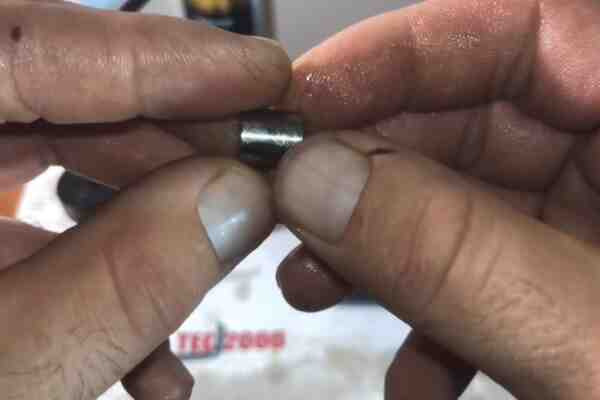
Here is the part most guides skip. The oil control ring scrapes oil off the cylinder wall, and that oil drains back to the sump through small holes drilled in the piston behind the ring groove. A little oil is left in the groove every time, and the groove is one of the hottest places in the engine. At high revs that little bit bakes into hard carbon.
This starts from the first kilometres, including in an engine that looks well kept. Carbon fills the groove, blocks the holes, the ring loses freedom and stops following the wall. Oil stays on the bore and gets burnt.
Hence the practical conclusion: flushing at every oil change, or every second one, never lets carbon set hard in the grooves. One treatment at a hundred thousand kilometres, on an engine whose rings already sit in a solid crust, is often late. We take this apart further in the piece on which engine flush is the best.
Symptoms that should make you think about it
These are not symptoms of a condition that requires a flush, because no such condition exists. They are signals that more is building up inside than should be.
- The oil darkens very quickly after a change, within a few hundred kilometres.
- The level drops between changes with no visible leak.
- The engine is noisier cold and only quietens after a while.
- There is a greasy deposit or brown staining under the filler cap.
- The car has documented stretched changes, or no documentation at all.
Every one of these has other possible causes, and a flush is not a diagnosis for them. It is a procedure that, alongside an oil change, removes one variable.
What a flush will not do
It will not repair mechanical wear, rebuild compression, seal an engine, or replace changing the oil on time. There is also no self-cleaning oil that would do the job instead.
Remember the filter, too. A flush loosens deposit and that deposit heads straight for the element. The filter is changed with the oil, every single time, no exceptions and no saving money on that part.
You can check the composition of any given product in our safety data sheet database. Look for two things: an anti-wear additive and a detergent. Bear in mind that a substance missing from the sheet does not prove it is absent from the product, because only components classified above a concentration threshold are disclosed.
FAQ
How often should an engine flush be done?
Taking the preventive approach, at every oil change or every second one. On a car bought without service history, start with the first change after purchase and then watch how fast the oil darkens.
Is a flush safe for an old engine?
At high mileage a gentler base and two treatments are safer than one strong one. The risk is not in the product itself but in how much deposit can come away at once.
Will a flush help if the engine burns oil?
Sometimes, if the cause is rings coked up with carbon, because there the solvent has something to work on. It will not help if the rings or bores are mechanically worn, nor if the oil escapes past the valve stem seals.
Is a diesel flush the same product as a petrol one?
Usually yes, because it dissolves the same kind of dirt, the products of oil oxidation. The difference is not the fuel but how much of that dirt has built up.
Do I have to drain the oil straight after a flush?
Yes, immediately after the idling period. If the car stands overnight, the dissolved deposit settles back and part of the effect is lost. With a lot of sludge it settles exactly where it is hardest to get it out again: the bottom of the sump, right next to the pickup screen.