Sometimes the way a car behaves and the sounds coming from under the hood can indicate that the engine is not in the best condition. However, it does not always have to mean a serious breakdown. Very often the problem is carbon deposits. Find out what cleaning carbon deposits from an engine looks like and what is best to use.
What are carbon deposits?
Carbon deposit is a term that may raise certain concerns. In more accessible language, it refers to the carbon residue that forms as a result of the sintering and coking of unburned particles of fuel and engine oil. Carbon deposits accumulate on the internal parts of the powertrain and, in excess, can lead to a serious breakdown. The main cause of carbon deposit build-up is the use of the wrong engine oil and poor-quality fuel containing soft contaminants and semi-solid substances.
How do carbon deposits form?
The main reason carbon deposits form is an excessively high engine oil temperature. When the cooling system does not work properly or the car is driven too aggressively, the lubricant can overheat and, as a result, carbon deposits settle on the powertrain components. The risk of carbon deposits appearing on the engine is greater in older cars with high mileage. Leaks between the pistons and the cylinder surfaces lead to oil getting into the chamber and being burned. In turn, if micro-cracks have formed on the piston rings, this can cause the deposit to spread further into the engine and wreak havoc.
Carbon deposits and new cars
Modern engines are also exposed to carbon deposit build-up. This concerns units equipped with direct fuel injection. They generate lower fuel consumption, but a topic that is reluctantly raised is the fact that the injectors are very prone to carbon deposit formation. The fuel goes directly into the combustion chamber and does not wash the intake valves and cylinder head ports of carbon residue. This leads to a gradual build-up of a layer of carbon deposits on the engine.
Removing carbon deposits from an engine - how to do it?
Carbon deposits that have accumulated on the engine surface over several years can take the form of a very thick layer, or even a hard crust. Removing the deposit is difficult and time-consuming, but most importantly it is possible. In theory, you can use a mixture of kerosene and extraction gasoline to clean the engine. After all, these two substances have almost identical properties to professional flushes. The whole catch, however, lies in the word “almost”. Home methods of removing carbon deposits and pouring kerosene into the engine may indeed work, but they may just as easily lead to serious breakdowns. There is therefore no point in taking the risk, and it is worth using a specialized product every now and then. Thanks to it, removing carbon deposits from a gasoline engine will be much safer.
Cleaning carbon deposits from an engine - how to do it?
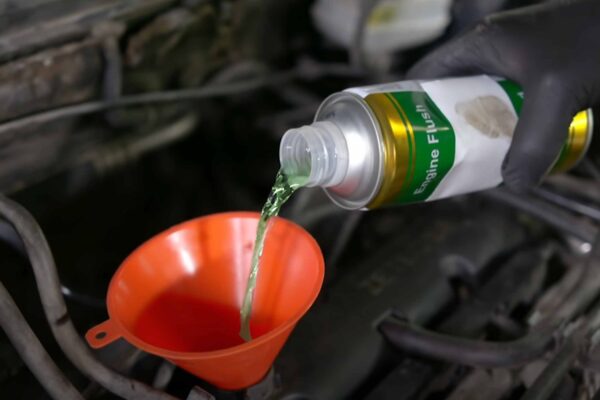
The most important thing to remember when using flushes is to follow the manufacturer’s recommendations. Of course, you do not have to measure the amount of flush you pour in with pharmaceutical precision, but do try to maintain the proportions of product to oil that are stated on the packaging.
Common opinion holds that flushes should be used in the face of 3 situations:
- Buying a new car - flush the engine before you start using the vehicle.
- Changing the engine oil used so far - if you want to switch to an oil with different parameters, it is a good idea to flush the engine with a specialized product.
- Strange noises from the engine - if while driving you hear that the engine is not running as it should, a flush can help and restore it to good condition.
Removing carbon deposits from an engine - does a one-time flush make sense?
You may be wondering whether a one-time engine flush will bring measurable benefits, or whether long-term action is necessary. If you decide on a flush, you will certainly notice:
- reduced smoke from the exhaust pipe,
- improved compression within the engine.
- flushes also extend the engine’s lifespan and support the properties of the oil.
Take care of the engine’s condition
As you can see, carbon deposits are a serious problem that, however, you can deal with relatively easily. All you need to do is decide to use professional flushes. The best products handle even the thickest layers of deposit without any trouble and have a beneficial effect on the operation of the entire engine.