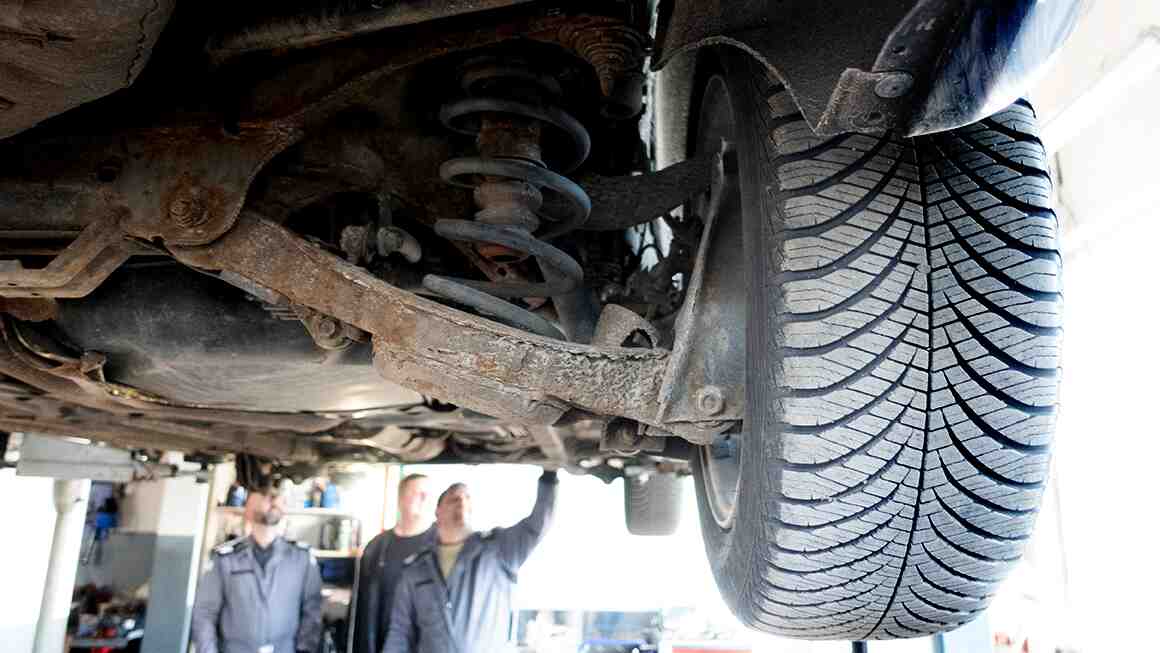
There are four ways to settle this and they differ in how conclusive they are. The most reliable takes five minutes with a diagnostic tool, the simplest needs nothing but a look underneath. We start with two pieces of advice circulating online, though, because one is useless and the other can damage an engine.
Two myths to discard first
A VIN tells you nothing about a filter. A claim goes round that a VIN beginning “WVW” means the car has a DPF. The first three characters of a VIN are the manufacturer and production location code. “WVW” simply means a Volkswagen passenger car. A 1998 Golf with no filter carries it just as a 2015 Passat with one does. That part of the number does not encode equipment and never did.
Never block the exhaust. You may come across advice to seal the exhaust and measure pressure. Do not do this. An engine with a blocked exhaust has no way to expel its gases, back-pressure climbs, and the exhaust valves and turbocharger overheat. The real measurement is taken differently: the differential pressure sensor is read through the diagnostic socket, and back-pressure is measured with a gauge screwed into the sensor port, with the engine running and the exhaust clear.
With that out of the way, here are the methods that work.
A diagnostic tool, the most conclusive answer
Plug an interface into the diagnostic socket and look through the engine ECU’s live data for parameters named along the lines of: soot mass in filter, calculated filter loading, distance since last regeneration, differential pressure across the filter, temperature before the filter.
If any of them appears and shows a sensible value, the matter is closed: the filter is fitted and the ECU is managing it. This is the only method that answers both questions at once, because it tells you not just “it is there” but “it works and the electronics can see it”.
A cheap interface and a phone app suffice, provided the app supports manufacturer parameters rather than generic readings alone. Basic diagnostic data usually does not show filter loading.
A parts catalogue by VIN
Here the VIN genuinely helps, just not the way the myth claims. A VIN identifies one specific car with its equipment, so a catalogue that accepts the full number will show the list built for your vehicle.
If the exhaust system listing includes a “particulate filter” entry, you have one. If the catalogue shows only a catalytic converter and silencers, you do not. The method is free and needs no trip anywhere.
The registration document
Look in the annotations for an emission level or Euro standard entry. It is indirect evidence but strong: on a diesel, Euro 5 or higher practically always means a filter. Where that comes from and exactly when it took effect is set out in the article on which cars have a DPF.
The standard is not always noted. Its absence proves nothing, and you then fall back on one of the other methods.
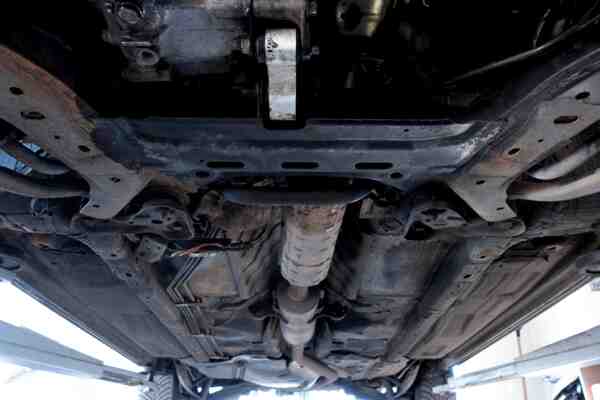
Looking underneath
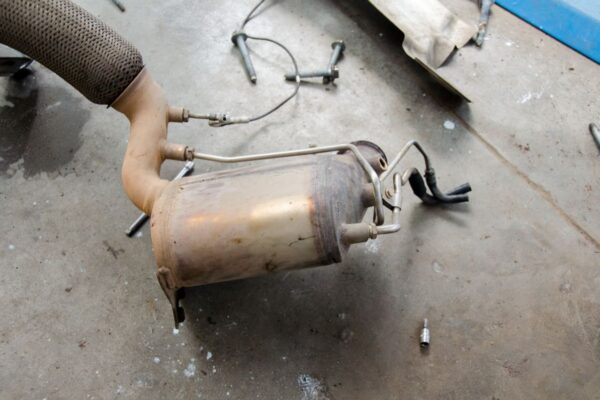
The filter is a swelling in the exhaust pipe, usually just after the catalytic converter or built into the same housing. It resembles a catalytic converter, which is why the two get confused. What tells them apart is what is bolted to them.
| catalytic converter | particulate filter | |
|---|---|---|
| screwed in | oxygen sensors | temperature sensor, often two |
| thin pipes | none | two, to a differential pressure sensor |
| position | closer to the engine | after the converter or combined with it |
Those two thin pipes, one tapped in before the swelling and one after, are the surest giveaway visible to the naked eye. They run to a small sensor usually mounted higher up in the engine bay.
How to check whether the filter has been gutted
This mainly concerns used car buyers, and it is worth asking, because the consequences land on the new owner.
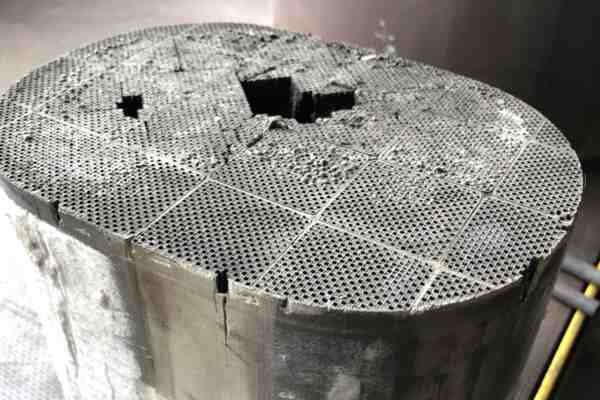
Look inside through the sensor port. With the temperature sensor removed, an endoscope or a torch reveals the ceramic substrate. An empty pipe means a gutted filter.
Look for a weld. To remove the substrate the housing must be cut open and welded shut again. A fresh, uneven seam on an old corroded exhaust is a signal in itself.
Check the ECU parameters. With the filter removed and the ECU reprogrammed, loading parameters usually disappear or sit frozen at zero at every engine speed. A healthy filter shows values that move.
Tap the housing. A crude method, but it tells you something. A full filter sounds dull, an empty housing rings.
It is worth knowing what you are taking on. Removing the filter is unlawful in Poland and across the European Union, the car fails its roadworthiness test, and an insurer has grounds to dispute a claim. Buying such a car means inheriting that problem along with the keys.
What next, once you know
If the filter is there, two things help. First, the filter warning light usually means not a failure but a regeneration that did not complete, and a longer drive is normally enough. Second, what gets called a filter failure is really four different states and only one of them means replacement. We separated them in the article on DPF failure symptoms, and the symptoms and consequences of blockage itself are gathered in the article on a clogged filter.
If you are wondering what that filter costs you in fuel, the answer is less obvious than it looks, and we set it out in the article on DPF and fuel consumption.