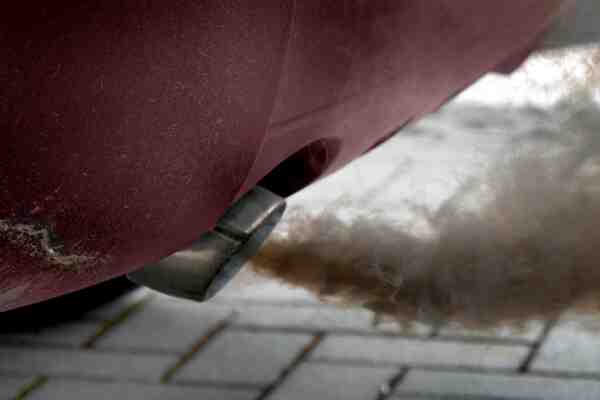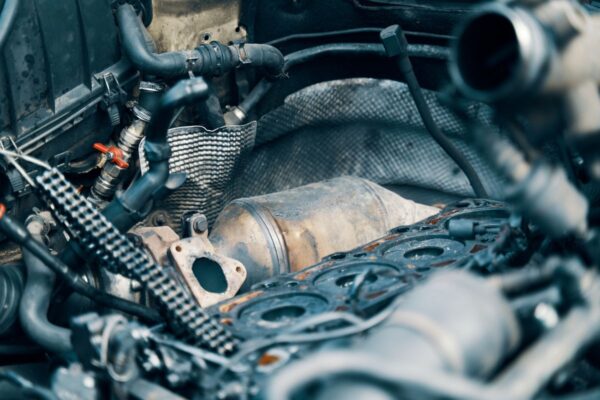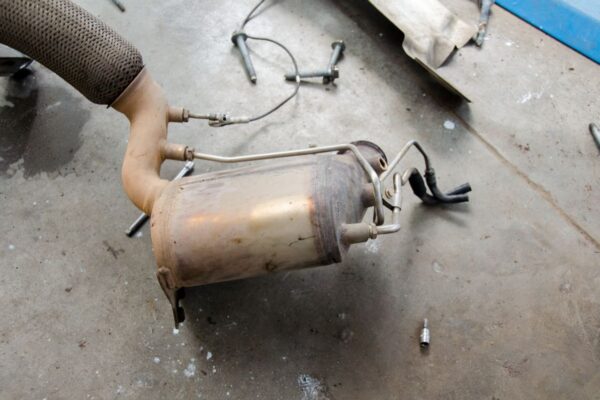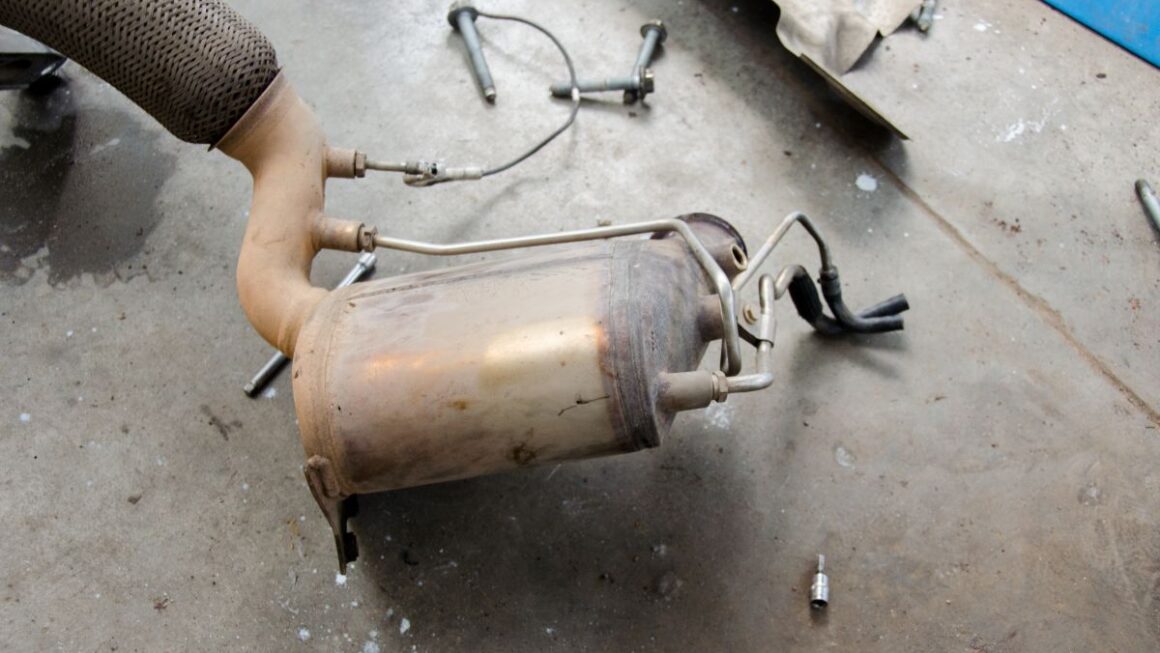
The DPF warning light is one of the most important devices in your vehicle. It is used to monitor the condition of the diesel particulate filter (DPF) and to alert the driver when it requires regeneration. Thanks to this, the DPF warning light helps keep the exhaust gases clean and reduces the emission of pollutants into the atmosphere. In this article, we will discuss what the DPF warning light is, how it works, and what the most common causes of it illuminating are. Read carefully and learn how to care for the diesel particulate filter in your vehicle.
What is the DPF warning light?
The DPF warning light is an indicator that informs the driver about the condition of the diesel particulate filter in the vehicle. This filter is used to clean the exhaust gases of particulate matter that is produced during fuel combustion in the engine.
How does the DPF warning light work?
The DPF warning light works on the principle of a differential pressure sensor. In the diesel particulate filter, it measures the difference in pressure before and after the filter. The more soot in the filter, the harder it is for exhaust gas to pass through it, so pressure before the filter rises while pressure after it stays roughly the same. Once that difference crosses the threshold stored in the ECU, the filter counts as clogged and needs regenerating. It cannot work the other way round: exhaust gas flows from higher pressure to lower, so there will never be more of it after the filter than before. At this point, the DPF warning light signals to the driver the need to carry out filter regeneration.
What are the most common causes of the DPF warning light illuminating?
The most common cause of the DPF warning light illuminating is clogging of the diesel particulate filter. This may be caused by low driving speeds, short distances travelled by the car, poor-quality fuel, as well as faults in the injection system.
How to care for the diesel particulate filter?
To avoid the DPF warning light illuminating, it is worth taking care of regular filter regenerations. This can be done by driving longer distances at higher speeds, avoiding traffic jams and frequent gear changes. It is also worth paying attention to the quality of the fuel and sourcing it only from trusted suppliers.
What to do when the DPF warning light comes on?
When the DPF warning light starts to illuminate, filter regeneration should be carried out without delay. If we are unable to carry out the regeneration ourselves, it is worth using the services of a car repair shop.
What are the ways to regenerate the diesel particulate filter?
Regeneration comes in two kinds, and the difference is easy to get wrong.
Passive regeneration happens on its own, with no involvement from the ECU. On a longer run under load the exhaust gas is hot enough that soot burns off as it goes. That is why a car used for longer journeys rarely has filter trouble.
Active regeneration is a procedure the ECU forces when passive regeneration is not enough. The engine injects extra fuel late in the cycle to raise exhaust temperature and burn off the accumulated soot.
A separate category, easily confused with these, is additives that lower the ignition temperature of soot, either poured into the fuel or dosed from a small separate tank in FAP-type systems. That is not a third kind of regeneration, just a way of making active regeneration succeed at a lower temperature.
Does the DPF warning light affect the car’s performance?
Yes, an illuminated DPF warning light can affect the car’s performance. The filter sits in the exhaust system and passes all the exhaust gas through itself, not air. As it clogs, back pressure rises: the engine has to push exhaust through a blocked element, and that costs power. At an advanced stage the ECU also drops into limp mode and limits performance itself.
Can the DPF warning light affect fuel consumption?
Yes, an illuminated DPF warning light can affect fuel consumption. Two things add up here. Higher back pressure raises consumption on its own, and on top of that every failed attempt at active regeneration is fuel injected that went out of the exhaust instead of driving the car.
Why does the light come back even though the filter regenerated?
That is the commonest question after a first successful regeneration, and the answer lies in a distinction that rarely gets mentioned. Two different things build up in the filter.
Soot is carbon from incompletely burnt fuel. It burns off, and after a regeneration the filter really is clear of it.
Ash is mineral residue, mostly from the additive package in engine oil, small amounts of which always find their way into the combustion chamber. Ash does not burn at any temperature achievable in an exhaust system. It stays in the filter permanently and takes up more and more room with every thousand kilometres.
Hence the typical course of events. At first regenerations succeed every few hundred kilometres, then more and more often, until the light comes back almost immediately. The filter is not faulty, it is simply full of ash that cannot be burnt away. At that point the options are off-car cleaning or a replacement element.
What engine oil has to do with it
More than you would think, and it works both ways.
Ash in the filter comes largely from the additive package in the oil. That is why engines with a particulate filter require Low SAPS oils, with reduced sulphated ash, phosphorus and sulphur. Filling such an engine with ordinary full-additive oil speeds up the ash loading that nothing can then remove.
The other way round: every active regeneration means extra fuel injected late in the cycle. Some of it runs down the cylinder walls into the sump and dilutes the oil. On short journeys, where regenerations keep starting and being interrupted, the oil level can rise while its viscosity falls. If the dipstick shows more oil than you put in, that is usually why.
One misunderstanding is worth clearing up while we are here. A lubrication-system flush does not clean a particulate filter and is not meant to. It works in the oil circuit, and the filter sits in the exhaust. Two separate systems, and separate products for each.
The DPF warning light is an extremely important component in the vehicle, which informs the driver about the condition of the diesel particulate filter. Thanks to this, the DPF warning light helps keep the exhaust gases clean and reduces the emission of pollutants into the atmosphere. It is worth remembering about regular filter regenerations, which allow you to maintain its efficiency and avoid the DPF warning light illuminating.