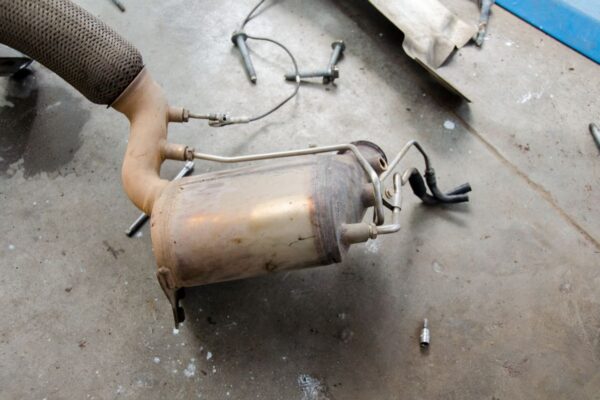
So you ask: “What are the risks of driving with a damaged DPF?” And this is a question that every driver should ask themselves. After all, you’d like to protect your car from possible damage, wouldn’t you? But more importantly, you are responsible for your environment. In the end, none of us wants to contribute to air pollution, right? What happens when a DPF is damaged? In today’s post, we reveal the truth.
How does a DPF work?
Before we dive deeper, let’s take a look at what a DPF actually is - the diesel particulate filter is an important part of the exhaust system in cars with a Diesel engine. Its main task is to filter out the particulate matter produced during fuel combustion. It works on the principle of a filter that traps contaminants and then subjects them to a regeneration process, which involves burning them off at a high temperature. It is extremely important, because it helps reduce the emission of harmful substances into the atmosphere. Thanks to it, our cars are more environmentally friendly.
What are the risks of driving with a damaged DPF?
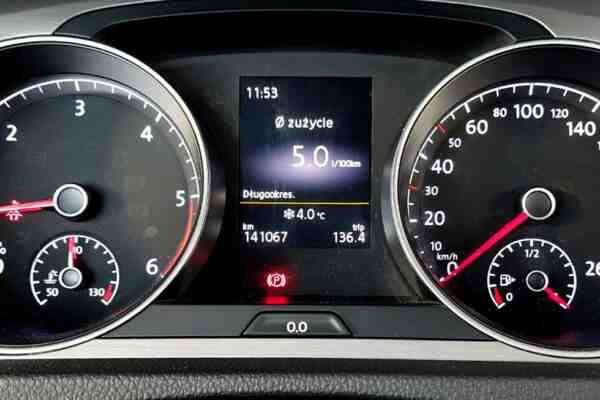
A damaged DPF is one that does not work properly. This can be caused by a clogged filter or by damage to mechanical components. Driving with a damaged particulate filter is like walking along the edge of a cliff - there is always a risk that something will go wrong. Symptoms of a damaged DPF may include a loss of engine power, an increase in fuel consumption, and even the DPF warning light lighting up on the dashboard. But let’s get back to the question - what are the risks of driving with a damaged DPF?
Increased environmental pollution
When the DPF is damaged, particulate filtration does not work properly, which leads to increased emission of particulate matter. Is that dangerous? It certainly is! Particulate matter is very harmful to our environment and to human health.
Increased fuel consumption
You know what they say: “the grass is always greener on the other side”. If the DPF does not work properly, the engine has to work harder, which leads to increased fuel consumption. And that will definitely hit you in the wallet.
Possible damage to other components of the car
What is small is not always beautiful, and a damaged DPF can lead to more serious problems with your vehicle. A damaged DPF will cause the exhaust system to become blocked, which in turn can lead to engine damage.
Can I drive with a damaged DPF?
You can, but really you shouldn’t. Driving with a damaged DPF is dangerous for your car and for the environment. In addition, a filter failure can negatively affect your car’s performance and reduce its capabilities.
Can I repair a damaged DPF?
In many cases yes, but it is worth consulting a professional mechanic about it. Most often it needs to be cleaned - that is, a process must be carried out during which contaminants are removed from the filter. This is often an effective way to restore the proper operation of the DPF. In some cases, when the DPF is heavily contaminated or mechanically damaged, replacing it may be necessary.
What are the legal consequences of driving with a damaged DPF?
In some countries, including Poland, driving with a damaged DPF is illegal and may lead to financial penalties.
Have you asked yourself what the risks of driving with a damaged DPF are? I hope so, because the consequences can be serious - both for your car and for the environment. Take care of your DPF the same way you take care of the rest of your car. Remember that this is your responsibility as a driver - safety and protection of the environment begin with you!