Most of what drivers call a DPF failure is not a failure. The filter may be mid-regeneration, it may be loaded with soot, it may be saturated with ash, and sometimes the problem lies in a sensor rather than the filter. Those are four different states, four different bills, and only one of them genuinely means replacement. This article shows how to tell them apart.
Four states that get lumped together
| what is happening | what the driver notices | what to do |
|---|---|---|
| regeneration in progress | raised idle, a smell, hot exhaust, briefly higher consumption | nothing, just keep driving |
| soot loading | power loss, DPF light, sometimes limp mode | regeneration, forced if necessary |
| ash saturation | the same, but it returns right after a burn-off | service cleaning or replacement |
| sensor or pipe fault | a fault code and a light on a physically clean filter | fix the sensor, the filter stays |
The biggest expense comes from confusing the two middle rows. The workshop burns the filter off, the customer pays, and two hundred kilometres later the light returns, because there was no soot in there to begin with.
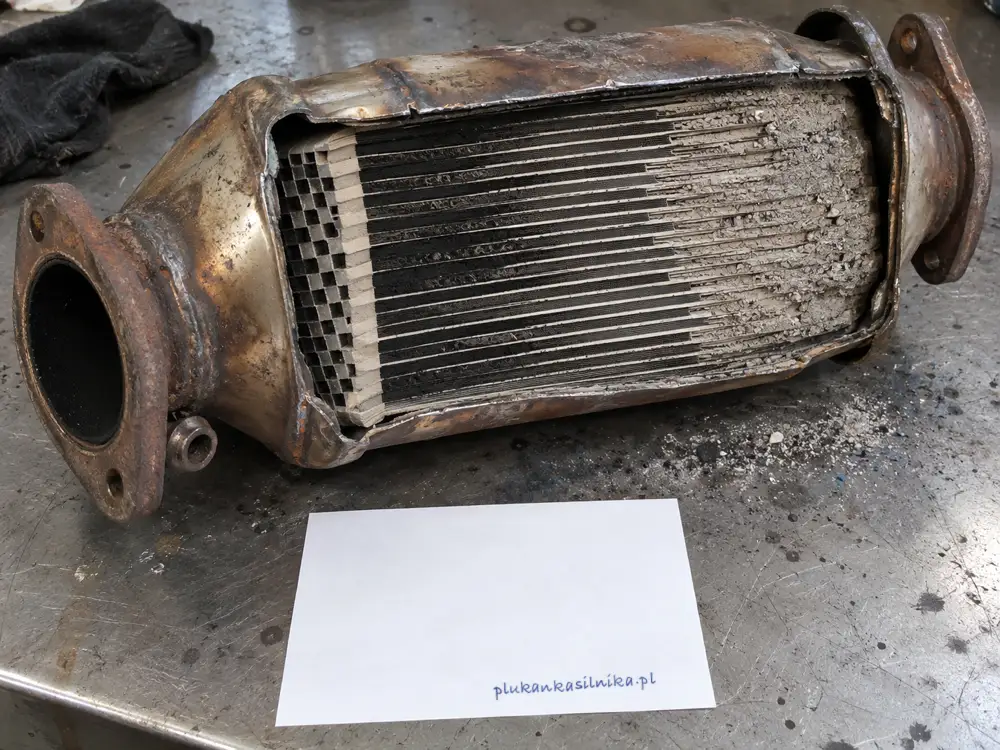
What the driver notices
- Power loss. A blocked filter raises exhaust back-pressure, so the engine struggles to expel its gases. The ECU also limits power itself to protect the system.
- The DPF light. It usually does not mean “the filter is broken” but “loading has passed the threshold and regeneration is not completing”. It is a call for a longer drive rather than for a workshop.
- Raised idle and a smell. Most often this is regeneration in progress, which is entirely normal.
- Limp mode. Restricted revs and power, usually at high loading or on a sensor fault.
- Higher fuel consumption. Frequent regenerations cost fuel, because burning soot off requires an injection after the main one.
One claim circulating on forums is untrue and worth correcting here. With a blocked filter, exhaust gases do not “escape through other channels”. The exhaust has one route and no alternative, and rising emissions come from the engine running outside its optimal point, not from gases bypassing the filter.
The differential pressure sensor, the number that settles it
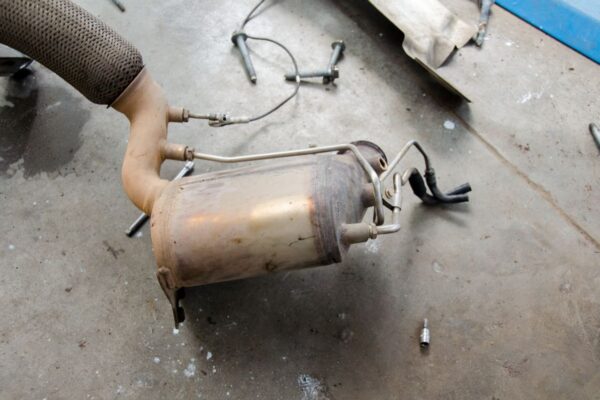
Two thin pipes connect to the filter, one before it and one after. The sensor measures the pressure difference between them, and that number tells you how freely the substrate flows. Any diagnostic tool displays it.
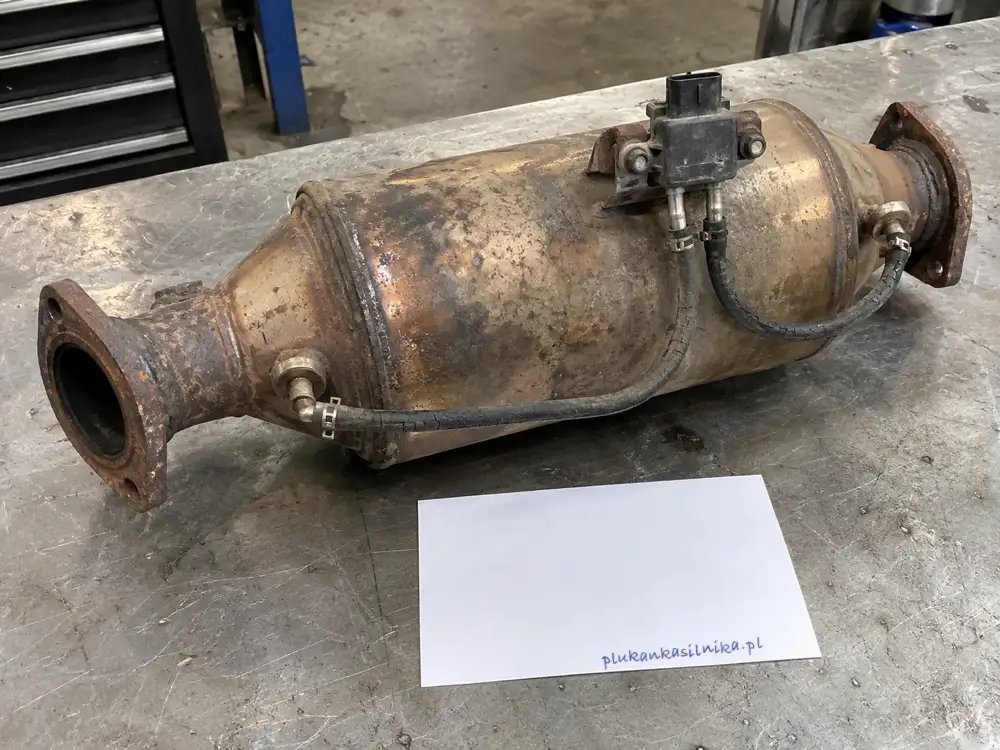
The rule is simple: a healthy filter at idle shows a difference of a few millibar, a heavily loaded one several tens. Exact thresholds depend on the model, so compare against the manufacturer’s figure rather than a number from the internet.
Before declaring the filter blocked, though, check those little pipes. They clog with soot, crack from heat and can slip off a spigot. A damaged pipe produces a reading identical to a blocked filter even though the substrate is perfectly clean. It is one of the most common and cheapest causes of a DPF light, and it sometimes ends in a filter replacement costing thousands.
Soot versus ash, or why burning off sometimes fails
Two different things collect in the filter, and this is the heart of the whole subject.
Soot is carbon. It burns at around six hundred degrees, and that is exactly what regeneration exists for. The ECU raises exhaust temperature and the soot disappears.
Ash is the incombustible residue, mostly from metallic compounds in engine oil additives. It does not burn at any temperature reachable in an exhaust system. It stays in the channels permanently and takes a little more volume with every thousand kilometres.
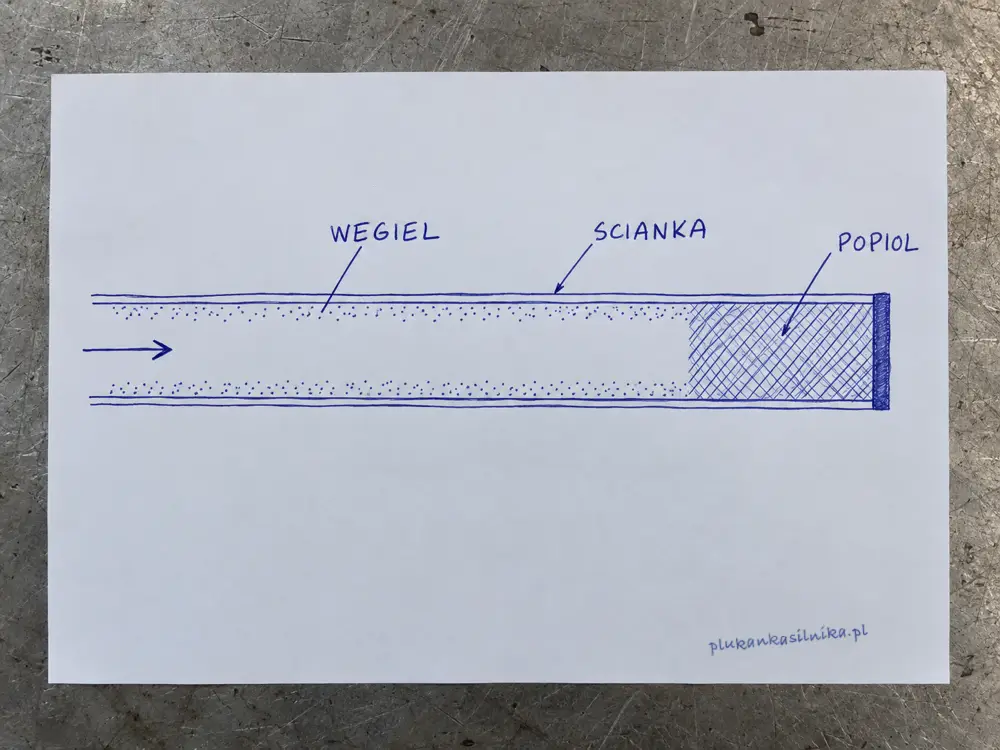
Hence the typical sequence in an older car. For the first hundred thousand kilometres regenerations suffice. Then ash occupies enough of the volume that even a soot-free filter is tight, so regenerations grow more frequent until they stop achieving anything. Burning off fails not because something broke, but because there is nothing left to burn.
Ash comes out only through service cleaning, usually a water-based process on a rig, or by replacing the substrate. Where exactly that ash comes from and how to slow its build-up is covered in the article on DPF and oil consumption. It is also worth knowing that excess oil sometimes reaches the intake by another route, through a blocked breather, and then the filter fills with ash faster than the mileage would suggest. We describe that scenario in the article on a leaking crankcase breather.
The symptom that looks harmless: a rising oil level
This one is worth knowing, because it can be more dangerous than the blocked filter itself.
To burn off soot, the ECU injects an extra dose of fuel after ignition, during the exhaust phase. Some of that fuel does not burn in the cylinder but runs down the bores into the sump. With a single completed regeneration the amount is negligible. With interrupted ones, because the driver reached home and switched off halfway through, fuel is added to the oil over and over.
The result shows on the dipstick: the oil level rises even though nobody topped it up. Diluted oil has lower viscosity and lubricates worse, and in extreme cases an engine can run away on its own vapours.
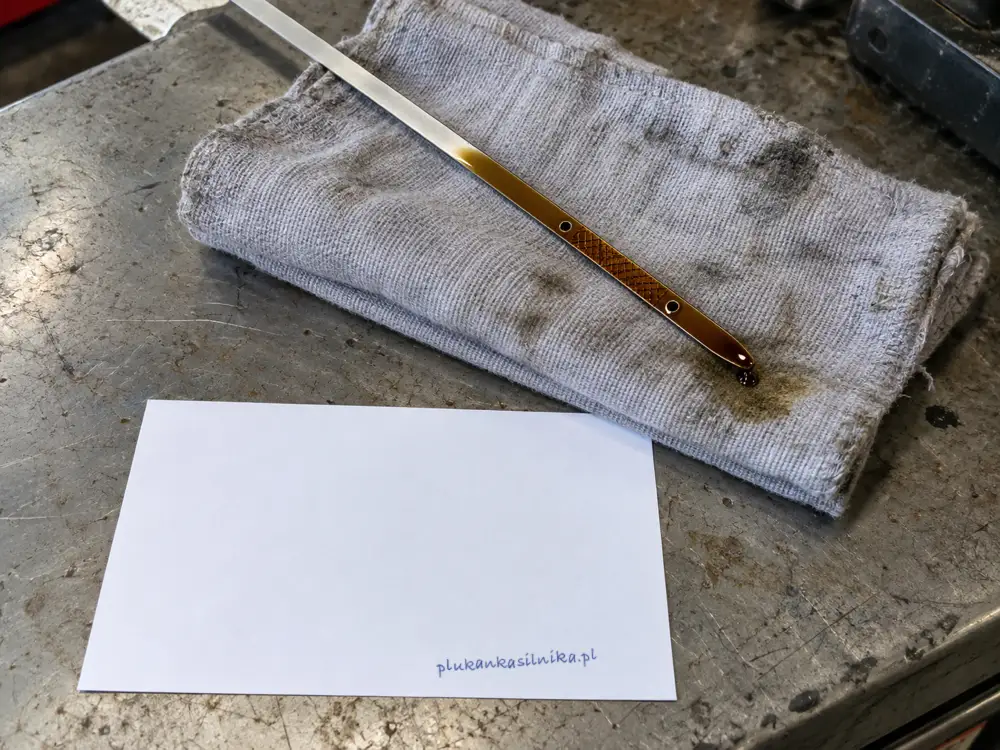
So if the car mostly does short trips and the dipstick keeps creeping up, do not wait for the service interval. Change the oil and rethink how you finish your daily journeys.
What no product will do
This has to be said plainly, because the internet promises otherwise. No fuel additive and no engine flush will unblock a filter saturated with ash. Ash is incombustible and chemically inert, and a flush works in the oil circuit, so it never reaches the exhaust at all.
DPF products that genuinely work do something narrower: they lower the ignition temperature of soot, so regeneration succeeds in conditions where it otherwise would not. That is real help with soot loading and no help at all with ash. The difference between those two cases decides whether you spend a hundred zloty or several thousand.
How to avoid blocking it
The most important habit is letting regenerations finish. If the idle has risen and you can smell it, do not switch off the moment you arrive. A few more minutes of driving, or even of running at higher revs, completes the process and saves your oil.
Beyond that: use oil of the specification the car with a filter requires, because that is what decides how fast ash accumulates. Do not ignore the DPF light, because the longer you drive with a loaded filter, the greater the chance regeneration stops succeeding on its own. And deal with other engine faults, injectors and turbocharger above all, since each of them increases soot production.
If you are after a broader account of blockage itself, its consequences and the repair, we have gathered that in the article on a clogged DPF.