Have you ever wondered how to take care of a turbocharged engine in your car? Flushing a turbocharged engine is done at the oil change: the flush goes into the old oil just before it is drained. In a turbocharged engine the flush also reaches the turbo, because it sits in the same oil circuit. This article covers what a flush gives you, how the procedure runs step by step, when it is better not to do one, and what happens in the turbocharger’s oil circuit.
1. What are the benefits of flushing a turbocharged engine?
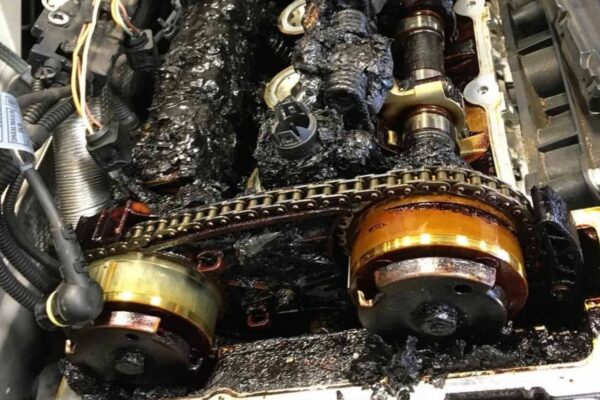
A flush removes deposit from the oil circuit, and the turbocharger is part of it, because the same oil lubricates it. Used regularly, it slows carbon build-up at one of the hottest points of the lubrication system, right where the turbo sits.
Deposit in the engine can also increase oil consumption. A flush will not add power or repair compression.
2. The process of flushing a turbocharged engine: step by step.
Flushing a turbocharged engine, diesel or petrol, works the same way as in an engine without a turbo. The aim is to remove the contaminants that build up in the engine during use, such as sludge, oil deposits or combustion residues.
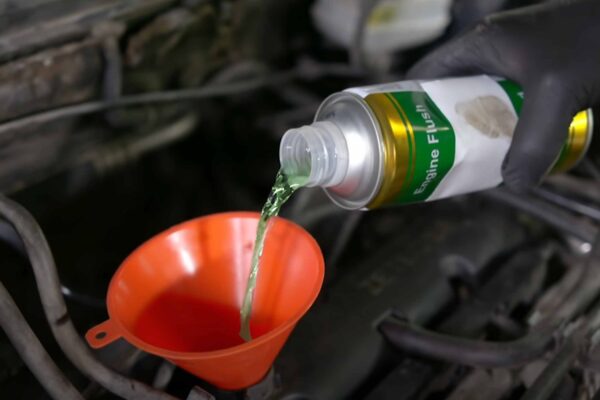
To begin with, before starting the flush, it is necessary to prepare all the required tools and materials. For this purpose, you will need a suitable engine flush fluid, new engine oil, an oil filter, as well as a basic set of wrenches and screwdrivers. The procedure begins by warming the engine up to operating temperature. The flush is poured into the warm, old oil, not after the oil has been drained. The engine is then left to idle, with no revving and no driving. Each product may have a slightly different specification, so the time is given in the instructions on the packaging. It is usually 10 to 15 minutes. Oil pressure drops during that time because the oil is thinned, and that is normal. Next, the oil is drained straight away, still hot, together with the deposits. The next step is to replace the oil filter. This is always done, because after the flush the filter is loaded with the deposit it has caught. A clogged filter will not cut the engine off from oil, because it has a bypass valve, but the oil then goes around the element unfiltered. The final stage is filling the engine with new oil. After pouring it in, you should start the engine and check whether the oil pressure is correct, as well as whether there are any visible leaks. Low pressure on the fresh oil is a reason for diagnostics. If everything has gone correctly, the process of flushing a turbocharged engine can be considered complete.
3. Does every turbocharged engine require flushing?
No. A flush is not an obligation and there is no mileage threshold at which you must do it. It makes most sense as a routine at the oil change, because deposit builds up in the piston ring grooves from the first kilometres.
It is not done straight after a rebuild, where the seals already leak, or in a badly sludged engine, which is cleaned mechanically. If worn bearings are suspected, the oil pressure is measured first instead of flushing blindly.
4. Cleaning the turbocharger’s oil circuit: what a flush does and what it does not
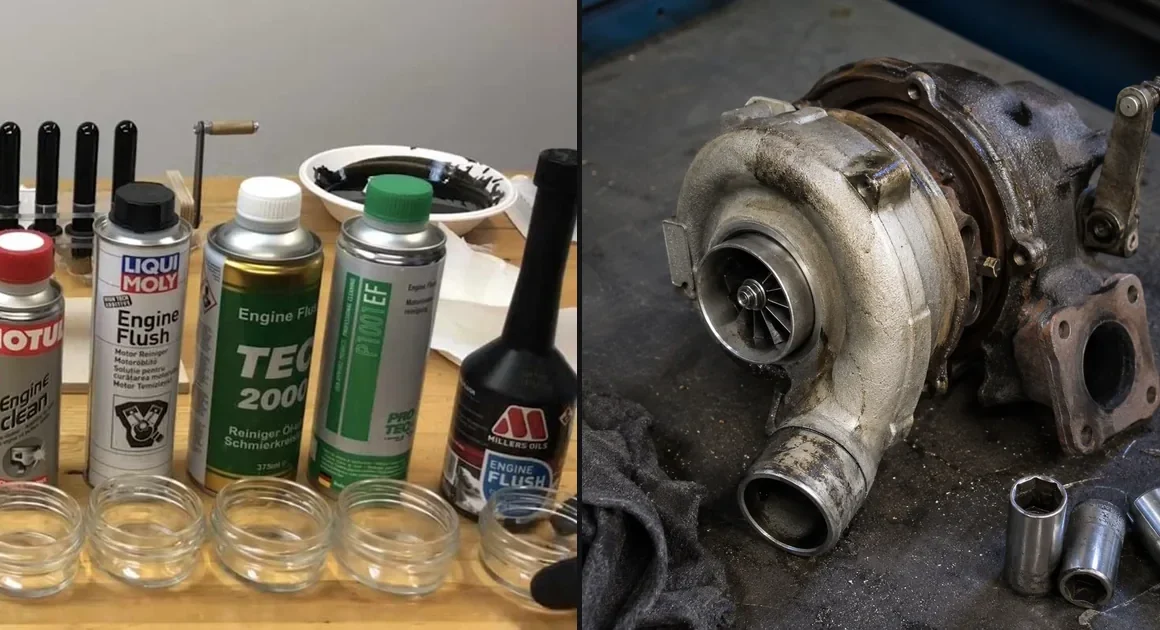
A turbocharger is lubricated by the same oil as the rest of the engine, so the flush circulates through it along with the oil: through the feed line, the bearing housing and the return line. On the way it lifts fresh deposits before they harden. The procedure does not cover the particulate filter or the injectors, because those sit in the exhaust and in the fuel system.
Not flushing does not destroy a turbocharger overnight, because deposit builds up gradually. A feed line that has coked solid is another matter: a flush will not clear it, and the line has to be replaced. Oil cokes in that line when you switch the engine off straight after a hard run and the oil is left standing against the hot turbo housing. So after a hard run, give the engine a minute at idle before you switch it off. The habit costs nothing.
5. In short
Flushing a turbocharged engine serves the same purpose as it does in any other engine: it is prevention at the oil change, every change or every second one, with no obligation and no mileage threshold. The turbocharger sits in the same oil circuit, so the flush reaches it too. The flush will not undo mechanical wear or add power. The time and the dose are given in the instructions on the packaging.
If you are wondering which product to use, see our guide on how to choose an engine flush and the full ranking of engine flushes by safety data sheets.