Have you ever wondered how to take care of a turbocharged engine in your car? Flushing a turbocharged engine is an important maintenance task that contributes to the longer, uninterrupted operation of our machine. In the case of turbocharged engines, regular flushing helps improve engine performance and also extends the life of the turbine. This process is intended to remove accumulated contaminants that can affect the engine’s performance as well as its longevity. In this article, you will learn what benefits flushing a turbocharged engine brings, what can happen if we forget about it, and how to carry out this process correctly. Read on to learn more on this topic.
1. What are the benefits of flushing a turbocharged engine?
Flushing a turbocharged engine is a process that brings many benefits. Above all, it allows you to optimize the car’s performance, improving its acceleration and reducing fuel consumption. Getting rid of accumulated contaminants inside the engine, which can build up over time, helps keep the turbo in better condition and extends its service life. The individual components of a turbocharger are expensive to replace, which is why it is worth taking care of their technical condition, and flushing the engine is one of the effective ways to do so.
Flushing a turbocharged engine is also effective at removing accumulated deposits and soot, which can increase oil consumption, which in turn results in greater operating expenses. Removing these contaminants from the engine improves its operating performance and ensures better distribution of the engine oil. Moreover, the flushing process makes it possible to detect minor damage and imperfections, giving the vehicle owner the opportunity for early service intervention. Let us remember that regular engine flushing allows the turbocharger to be kept in good condition, which provides us with better performance, greater fuel efficiency, and a longer lifespan for our car.
2. The process of flushing a turbocharged engine: step by step.
The process of flushing a turbocharged engine is extremely important for its proper operation and for extending its service life. Flushing should be carried out regularly, at least once a year, as well as during every oil change. It consists of removing any contaminants that may have accumulated in the engine during its operation, such as sludge, oil deposits, or combustion residues. All kinds of contaminants can lead to damage and thus to a deterioration in the performance of the engine and the entire turbo system.
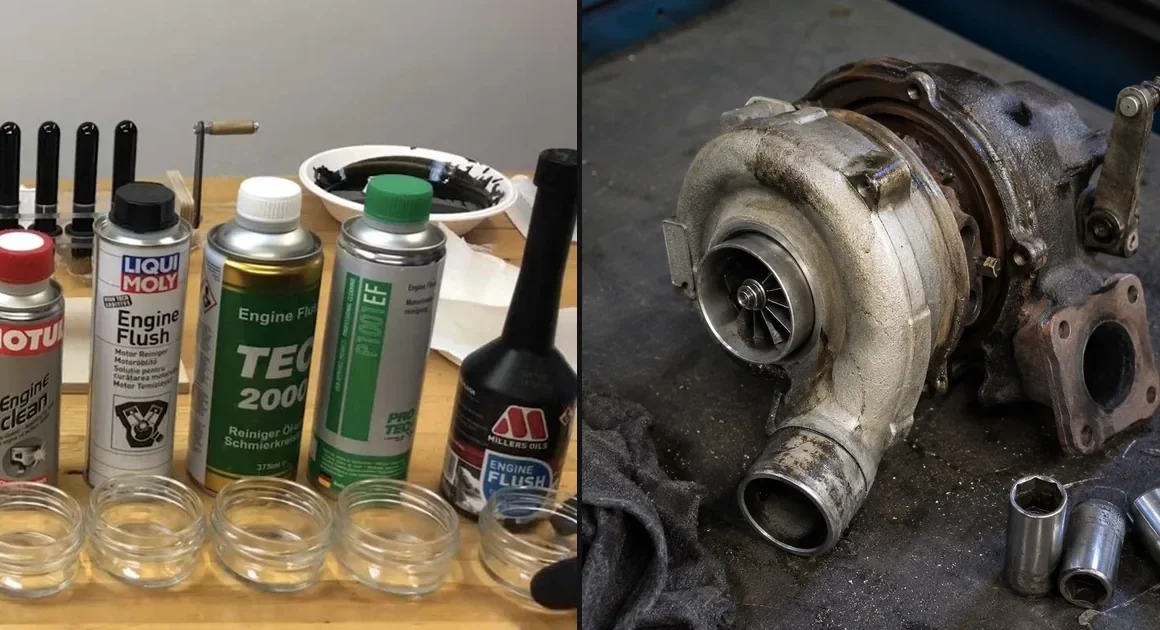
To begin with, before starting the flush, it is necessary to prepare all the required tools and materials. For this purpose, you will need a suitable engine flush fluid, new engine oil, an oil filter, as well as a basic set of wrenches and screwdrivers. The flush begins by starting the engine and allowing it to warm up briefly - usually about 10 minutes is enough. Next, the old oil is drained from the engine. After this stage, you can proceed to applying the flushing fluid. It is important to carefully follow the instructions on the packaging, since each product may have a slightly different specification. Usually, the fluid is introduced into the system, and then the engine is run for a specified period of time. After this process is complete, the fluid together with the deposits is drained from the engine. The next step is to replace the oil filter. In cars with a turbocharger, this element is often underestimated, whereas the performance and durability of the turbocharger system largely depend on its condition. The final stage is filling the engine with new oil. After pouring it in, you should start the engine and check whether the oil pressure is correct, as well as whether there are any visible leaks. If everything has gone correctly, the process of flushing a turbocharged engine can be considered complete.
3. Does every turbocharged engine require flushing?
Turbocharged engines are complex and technologically advanced, yet among professionals in the mechanical industry there is an almost unanimous belief that carrying out regular flushing of such an engine is an indispensable element of its proper operation. The cleanliness of the engine is extremely important, because even minor dirt can lead to damage and low performance. Oil, dust, and various kinds of particles accumulating in the engine can block the airflow system and, as a consequence, lead to power losses, increased fuel consumption, or even serious failures.
Flushing a turbocharged engine is a complicated process that requires the intervention of mechanical specialists. It is not just ordinary cleaning, but a precise process consisting of the removal of unwanted substances such as dried oil, metal shavings, or fuel deposits, which can affect the operation of the turbine. Flushing a turbocharged engine should be carried out at regular intervals, which are most often specified by the manufacturer of the given engine model. If these guidelines are not followed, we may expose the engine to serious damage, which in the worst case can lead to its complete failure. This applies in particular to engines that operate in extreme conditions, such as high temperatures or high air humidity. In such a case, the process of flushing a turbocharged engine definitely increases its durability and reliability.
4. The potential risk of not flushing a turbocharged engine.
Not flushing a turbocharged engine is a mistake that can lead to serious failures. Both the engine and the turbocharger are critical points of every car and demand specialized care. Almost every part of the vehicle is exposed to daily wear, which frequently results from our inattention or lack of knowledge regarding basic maintenance. We often find out about such issues only after serious failures that entail considerable repair costs. In the worst case, the failure to flush a turbocharged engine can lead to a serious breakdown or even permanent damage to these components.
While driving, the engine oil flows through the turbine, cooling it and lubricating its components. If we do not change it at appropriate intervals, it begins to lose its ability to remove accumulated contaminants. Not flushing the engine regularly can lead to cracking, abrasion, overheating, or clogging of the oil layer on the surface of the turbocharger. In extreme cases, accumulated contaminants can block the oil flow completely, which inevitably leads to severe overheating of the turbocharger and the engine and, as a result, to their complete destruction. In addition, oil contaminated with particles of burned fuel, metal, and solid debris causes abrasion of the internal surfaces, accelerating the wear process.
Not flushing a turbocharged engine, especially for high-power engines, also means a greater risk associated with contamination of the oil system, which leads to serious mechanical consequences. Complete blockage of the oil flow is the most critical situation, which can lead to the destruction of the turbocharger and the engine. In short, regular engine flushing is necessary not only for optimal performance, but also for maintaining its longevity. Not flushing a turbocharged engine contributes to shortening the lifespan of these components, which can not only cause the driver many problems, but also entails the need to incur additional, often high, repair costs.
Flushing a turbocharged engine is a process that is essential for the proper functioning and long service life of a car. Thanks to it, accumulated deposits and contaminants are eliminated, which has a positive effect on the car’s acceleration, fuel consumption, and engine performance. Flushing makes it possible to detect minor damage that can be repaired without delay, and it also significantly extends the life of the costly turbocharger.
The flushing process should take place regularly, preferably once a year and at every oil change. It requires a specialized flushing fluid, new engine oil, an oil filter, and a basic set of tools. After warming up the engine, the old oil is drained and the flushing fluid is added. After the fluid has acted for a specified period of time, it is drained together with the deposits. The oil filter is then replaced and the engine is filled with new oil. With this, it is important to check the oil pressure and make sure that there are no leaks.
It is important that an indispensable element of operating turbocharged engines is their regular flushing, because accumulated particles can block the airflow system, which causes power losses, increases fuel consumption, and can even lead to serious failures. The flushing process should be carried out in accordance with the engine manufacturer’s guidelines.
Not flushing a turbocharged engine is a serious mistake that can lead to failure. Accumulated contaminants, if they are not removed regularly, can lead to cracking, abrasion, overheating, or clogging of the turbocharger. Built-up particles can completely block the oil flow, which inevitably results in engine overheating and, consequently, its complete destruction. Contamination of the oil system increases the risk of serious mechanical problems, so flushing a turbocharged engine is a necessity not only for optimal performance, but also for preserving its longevity.